From a Princeton Basement to 70,000 at Soldier Field
Trey Anastasio went to Princeton Day School. John Popper and Chris Barron were at Princeton High. Same town, same decade — and in 1990 alone, there were eight Popper-Phish collaborations at a single club in lower Manhattan. This is how the Grateful Dead’s system survived Jerry Garcia.
The Dead Built a System, Not a Sound
For 30 years, the Grateful Dead proved that improvisational music could sustain a $285 million touring economy. They played 2,350 shows. Fans taped 2,200 of them. Along the way they built a system with three components: a philosophy that treated improvisation as identity, a taping culture that turned fans into archivists, and infrastructure that proved live music could scale without radio hits.
Touch of Grey Changes Everything
When Touch of Grey broke through in 1987, the average Deadhead age dropped from 27 to 18 almost overnight — flooding the market with young fans hungry for more. The Dead couldn’t satisfy that demand alone. Jerry Garcia had collapsed into a coma in 1986, and the band’s capacity was finite. But the kids from Princeton and Burlington were ready.
Four Kids in a Basement
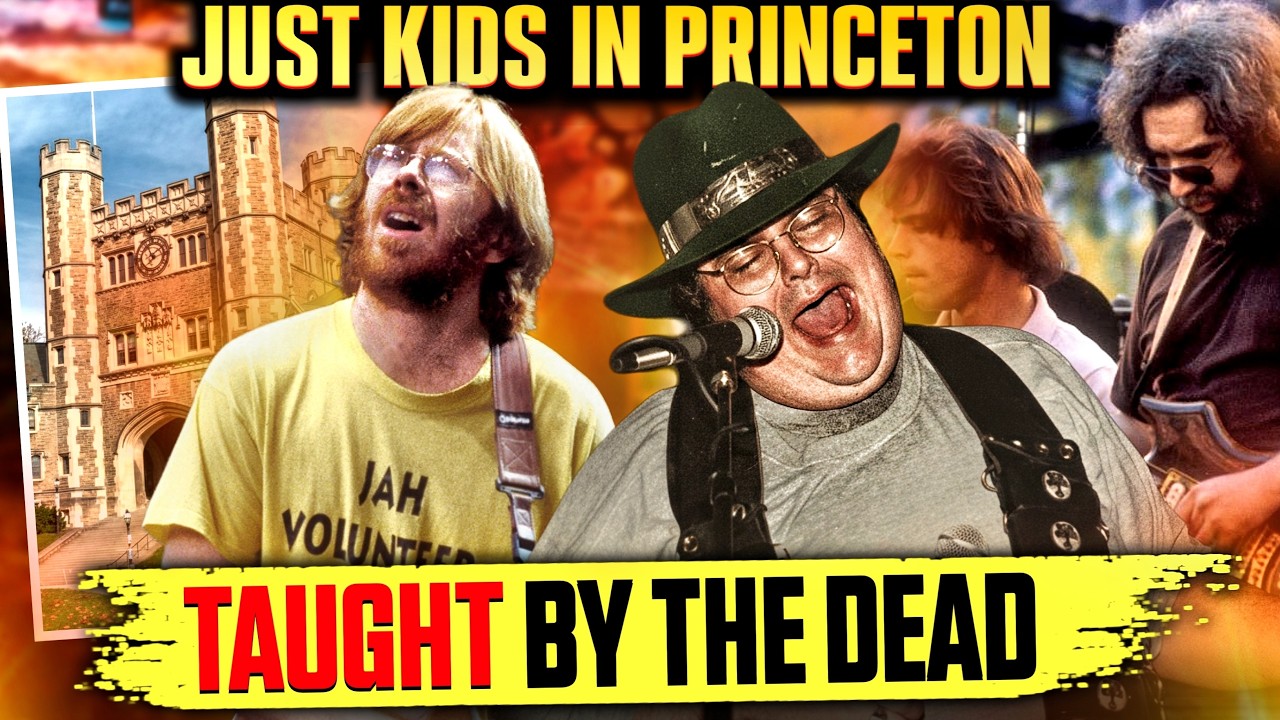
John Popper, Chan Kinchla, Brendan Hill, and Bobby Sheehan had been jamming in a Princeton basement with no setlists for years — they became Blues Traveler. Chris Barron launched Spin Doctors from the same town. Up in Vermont, Trey Anastasio, Jon Fishman, Mike Gordon, and Page McConnell built Phish around the same principle: follow the jam wherever it goes.
Wetlands and the Road to H.O.R.D.E.
Wetlands Preserve in Tribeca gave them all a room — Larry Bloch’s weekly residencies starting in 1989. Bill Graham discovered Blues Traveler and got them signed to A&M Records. In 1992, Popper launched the H.O.R.D.E. festival with Phish, Spin Doctors, and Col. Bruce Hampton’s Aquarium Rescue Unit, taking the Dead’s touring model national.
The Inheritance
By 2015, when the surviving members of the Grateful Dead asked Trey Anastasio to fill Jerry Garcia’s role at Fare Thee Well, 70,000 packed Soldier Field in Chicago. The inheritance was complete. The system the Dead built — improvisation as identity, fans as archivists, live music as the product — didn’t die with Garcia. It migrated to a generation of musicians who’d grown up inside it.
The Shakedown Archives publishes new research on Grateful Dead history each week. If you enjoyed this essay, you can subscribe to the companion YouTube channel below.
Subscribe on YouTube