The Grateful Dead’s Most Debated 20 Minutes
For seventeen years, the Grateful Dead stopped playing songs for twenty minutes every night. Mickey Hart, Bill Kreutzmann, custom instruments, and the ritual that came back to the Sphere in 2024.

The Grateful Dead’s catalog looks small on paper and infinite in performance. A hundred-plus original songs, each one elaborated across decades of live improvisation, plus covers drawn from blues, country, folk, reggae, jazz, and the American songbook. This archive covers the origin stories, lyric analyses, and cover-versus-original histories of the songs that defined the band — from Dark Star through New Speedway Boogie, Friend of the Devil, Scarlet Begonias, Sugar Magnolia, Terrapin Station, and the dozens of others that Deadheads can hum from memory. Songs are where the Dead’s story gets specific.
For seventeen years, the Grateful Dead stopped playing songs for twenty minutes every night. Mickey Hart, Bill Kreutzmann, custom instruments, and the ritual that came back to the Sphere in 2024.

Ripple was the Grateful Dead’s most beloved song — and one of their rarest. Garcia wrote it on railroad tracks near Saskatoon, and the band played it maybe 40 times in 2,400 shows.

A Musical Discovery That Shaped Everything For decades, few people understood that Indian classical music fundamentally shaped the Grateful Dead’s approach to improvisation. The band’s exploration of ragas and North Indian classical traditions created the theoretical foundation for their free-form jamming that would become their signature. What started as a passionate listening habit turned into…

The Warlocks Discover a New Kind of Freedom Before the Grateful Dead became synonymous with 20-minute guitar solos and endless jam sessions, they were a bar band called the Warlocks who stumbled upon something entirely unexpected. On November 27th, 1965, a group of musicians showed up to a Halloween party in California with no instruments,…
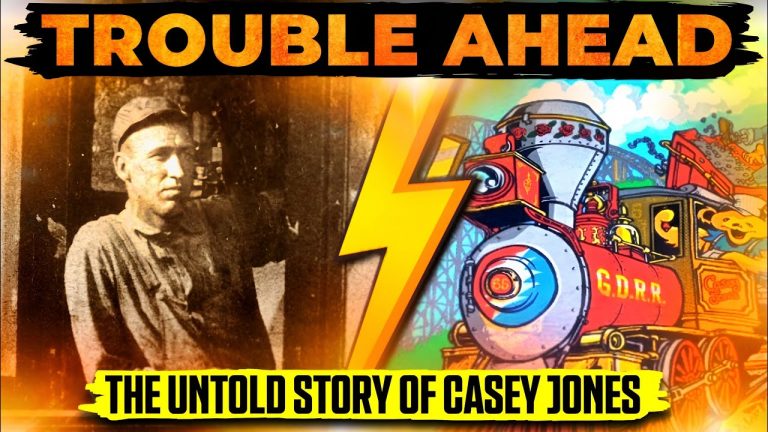
From Railroad Hero to Drug Cautionary On April 30th, 1900, a railroad engineer named John Luther Jones saw disaster ahead. His passenger train was barreling toward a stalled freight train near Vaughn, Mississippi, and there wasn’t enough track to stop. Jones told his fireman to jump, stayed at the controls, and slowed the locomotive just…

From Throwaway Single to Cultural Touchstone In 1970, the Grateful Dead released a song that wasn’t supposed to matter. A three-minute Chuck Berry knockoff edited down for radio because Warner Brothers needed a single. Something strange happened on the way to obscurity. That throwaway track became a 20-minute jam vehicle, a phrase quoted on Monday…

Uncovering the Lost Verses: Phil and Grahame Lesh Recover Hidden Verses of ‘Friend of the Devil’ In a fascinating and revealing musical archaeology and research session, Phil Lesh—the Grateful Dead’s foundational bassist and one of the band’s primary creative forces—and his son Grahame Lesh explored the deep and extensive catalog of Grateful Dead compositions, working…

A Song Written for Someone Else One of the Grateful Dead’s most iconic songs almost never became theirs. In late 1969, lyricist Robert Hunter sat in a San Francisco rehearsal space with the New Riders of the Purple Sage, working through a new tune he’d drafted. Hunter, who served as the Dead’s primary lyricist, was…
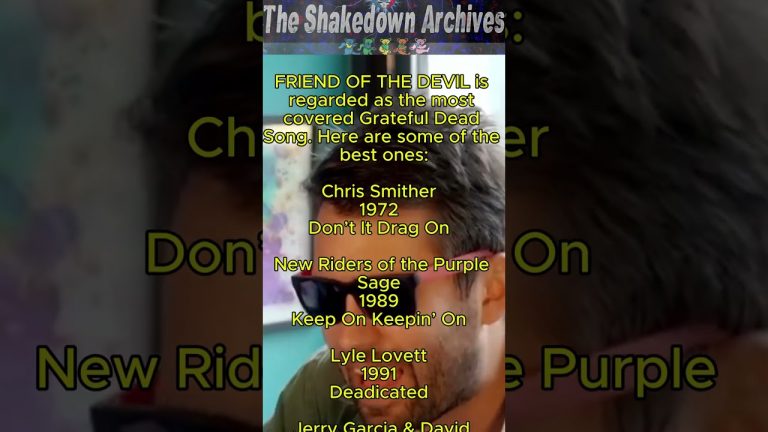
The Most Covered Grateful Dead Song “Friend of the Devil” stands as one of the most recorded and covered songs in the entire Grateful Dead catalog. From the moment the band made it their own, the track has been reimagined by countless artists across genres and generations. Jam bands, folk singers, country artists, and rock…

The Legendary Signing That Never Happened In 1974, the Grateful Dead attempted something that should have been a stroke of pure genius: they tried to sign Bob Marley to their newly formed record label. For a moment, imagine the possibilities that such a partnership could have created—the kings of psychedelic jam rock courting the prophet…
© 2026 The Shakedown Archives. Editorial research and commentary. Sources cited per article.