The Song That Taught the Dead How to Jam Anything
When a Motown Hit Met Psychedelia
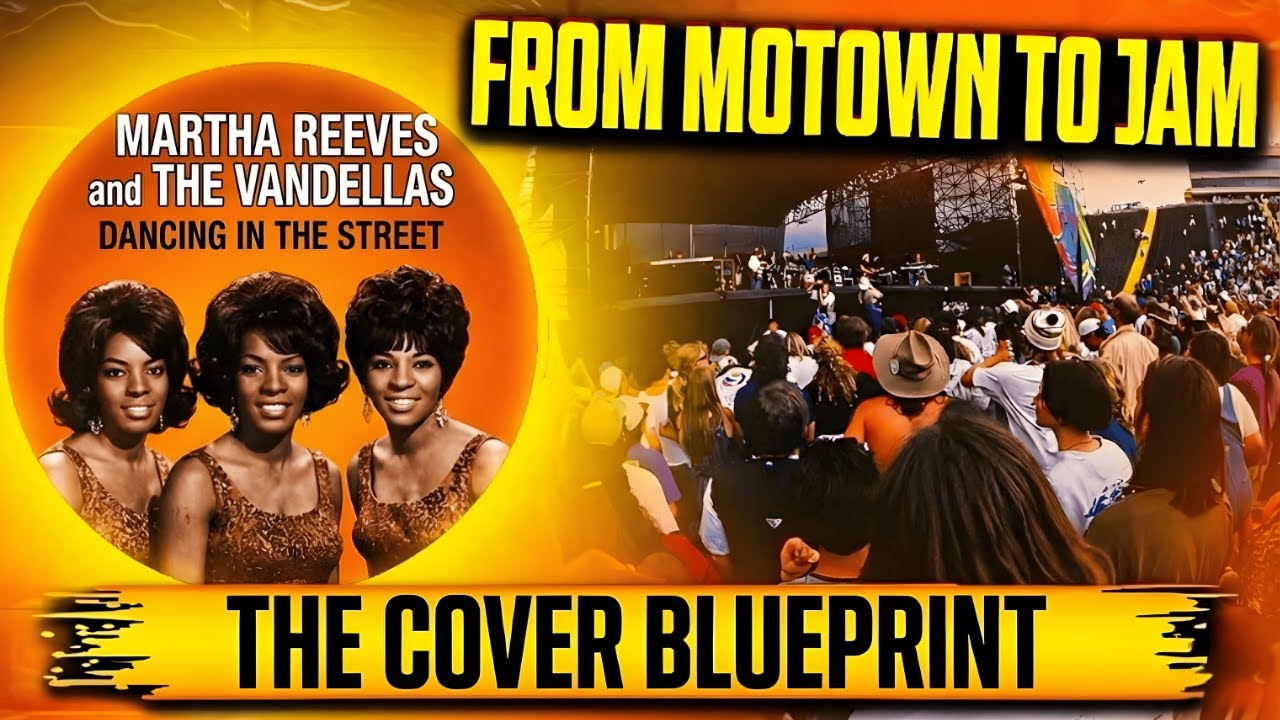
Phil Lesh once said something that’s easy to miss if you’re not paying attention: “Dancin’ in the Streets” was the first song the Grateful Dead stretched out from a short pop song into a drawn-out jam piece. Not the first song they jammed—they were already taking “Turn On Your Love Light” and “Good Lovin'” into the stratosphere—but the first polished, three-minute Motown pop hit they transformed. Think about what that means. This slick commercial single from Martha and the Vandellas became a template for how they’d eventually approach everything from folk songs to originals. It’s kind of wild.
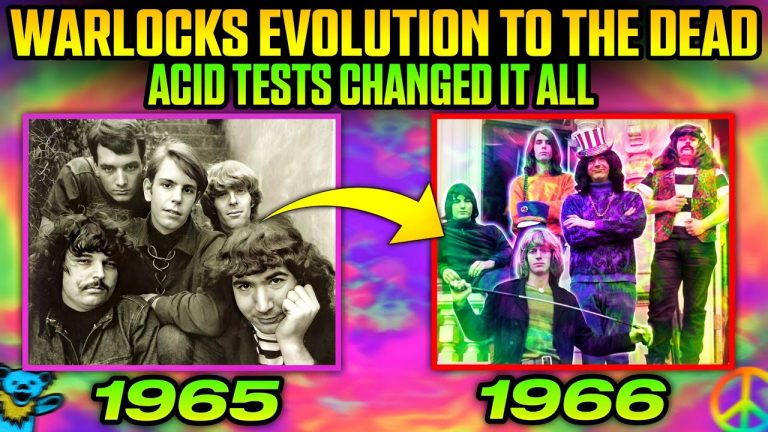
Before the Grateful Dead were the psychedelic jam band that defined an era, they were a dance band. Literally. They played R&B covers at pizza parlors and dive bars around San Francisco. Jerry Garcia, Bob Weir, and Phil Lesh cut their teeth on songs by Wilson Pickett, Otis Redding, and the Supremes. This wasn’t ironic. They genuinely loved this music. The blues and R&B foundations were always there.
The Fillmore Auditorium, 1966
When they added “Dancin’ in the Streets” to their setlist in 1966 at the Fillmore Auditorium, it wasn’t a radical departure. Bob Weir handled lead vocals, and the early versions clocked in around six minutes—just a solid R&B number with some rock energy. The song had been a massive hit two years earlier when Martha and the Vandellas took it to number two on the pop charts. Written by Marvin Gaye, Ivy Jo Hunter, and Mickey Stevenson, it had serious Motown pedigree. The Dead weren’t trying to reinvent it. They were just playing a song they liked.
But then something started happening. The Dead were also playing the Acid Tests—completely unhinged experimental concerts where the whole point was to see how far you could push boundaries. Somewhere in that mix of R&B roots and psychedelic exploration, the song started to stretch. By 1969 and 1970, what began as a six-minute dance number was turning into something completely different. The jam sections got longer. Jerry Garcia’s guitar wandered into spacey, modal explorations that had nothing to do with Motown. Phil Lesh’s bass started playing melodic counterpoints that pulled the music into jazz territory.
The Transformation Begins
They were already doing this with blues covers and R&B tunes that had looser structures to begin with. But “Dancin’ in the Streets” was different. This was a precisely arranged Motown single with a very specific sound. Turning that into a fifteen-minute psychedelic journey was a different proposition entirely.
The May 2, 1970 performance at Harpur College in Binghamton, New York, is the moment most Deadheads point to as the peak—if you know Dead history, you already know where this is going. The performance stretches past sixteen minutes. The early verses are still there. You can still recognize the song. But somewhere around the three-minute mark, it completely departs. Pure psychedelia. Garcia takes the jam to places that sound more like “Dark Star” than anything from Motown. There’s a funky coda at the end that brings it back, but those middle twelve minutes? That’s the Dead figuring out they could do this with any song, not just blues standards.
The Definitive Version and What Came After
Deadheads debate this forever. You can find threads on Reddit and HeadyVersion.com where people argue passionately about which version is definitive. But that Harpur College performance is the one most fans point to. It appeared in the second set, right in the middle of one of the best shows of 1970, and was officially released years later on Dick’s Picks Volume 8. You can hear them discovering what would become a core part of their approach—the realization that the framework of any song could be stretched, bent, and transformed while still maintaining its identity.
After about forty performances through 1971, they just stopped playing it. The last time was December of 1971, and then nothing for five years. Nobody really knows why. Maybe they felt they’d taken it as far as it could go. Maybe it didn’t fit the direction their new material was heading. The Dead didn’t explain their setlist decisions to anyone.
The Ripple Effect: How One Song Changed Everything
But what “Dancin’ in the Streets” taught them—that you could take a pop song with a rigid structure and stretch it into unrecognizable territory while preserving its essential identity—became foundational to their approach. This lesson applied to everything that came after. The setlist flexibility that defined the 1970s, the ability to take “Casey Jones” or “Jack Straw” and make it do things those songs were never meant to do, the confidence to extend a song indefinitely without worrying that you’d lose the thread. All of that came from understanding that a song’s structure doesn’t limit you—it grounds you.
The Motown songwriters and Martha and the Vandellas could never have predicted that their disco-adjacent three-minute single would become the blueprint for psychedelic improvisation. They couldn’t have known that a band of former R&B cover-band members would take their work and demonstrate that any song, no matter how formulaic, could be transformed through exploration.
What “Dancin’ in the Streets” showed the Grateful Dead was that pop music structure wasn’t a cage. It was a launchpad. The verses and chorus gave you something to return to when you wandered into the experimental unknown. The melody gave you a tether. Once you understood that, you could take anything—a country song, a spiritual, a blues standard—and stretch it as far as your imagination could reach. The audience would follow because they always had the familiar structure to hold onto, even when the music went places they’d never heard before.
By the time the Dead stopped regularly playing “Dancin’ in the Streets,” they’d already internalized the lesson. They’d applied it to their own songs and to standards across their repertoire. The approach that began with a Motown hit became the DNA of their entire catalog. That’s the power of a single song that taught a band not just how to jam, but how to transform anything worth transforming.
Subscribe to The Shakedown Archives for more Grateful Dead documentaries, and explore more stories at TheShakedownArchives.com.
The Shakedown Archives publishes new research on Grateful Dead history each week. If you enjoyed this essay, you can subscribe to the companion YouTube channel below.
Subscribe on YouTube