The Messy Truth About Keith Godchaux’s Exit: A Theft, A Secret Replacement, and Two Resignations
The Unraveling: Keith’s Decline Through 1978
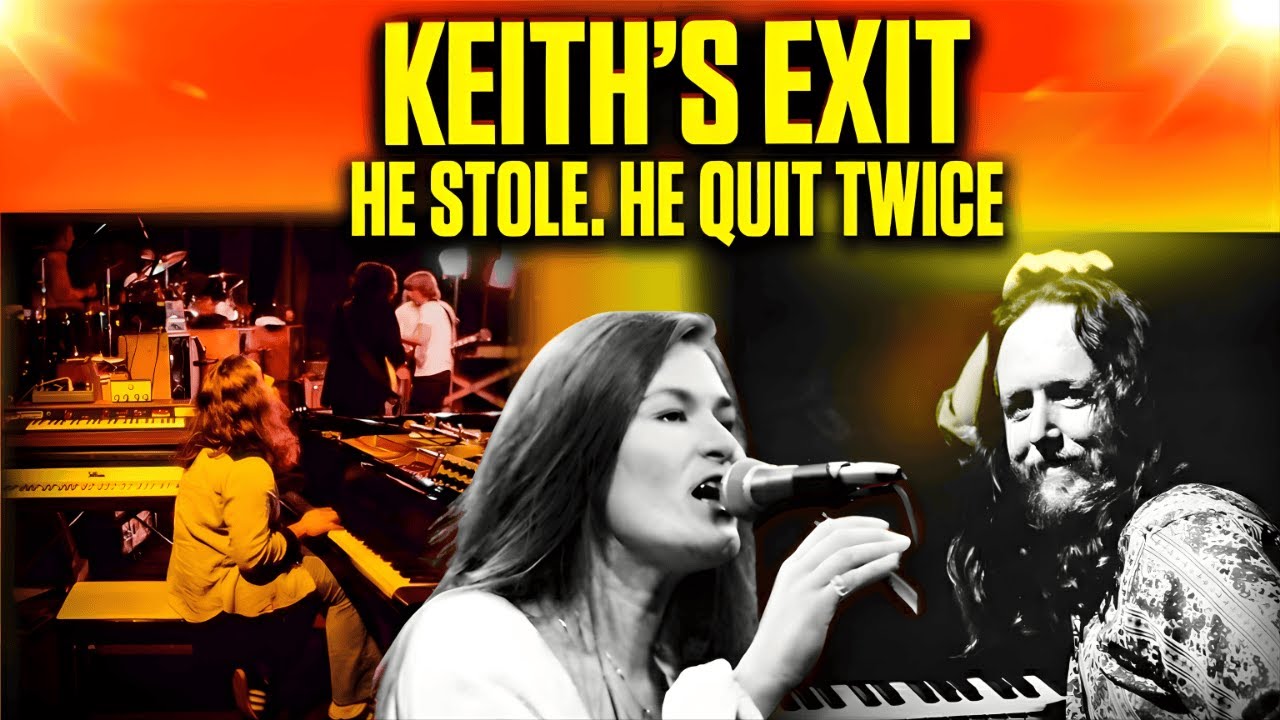
The official story of Keith Godchaux’s departure from the Grateful Dead is deceptively simple: a meeting happened, a decision was made, and he left. But the reality was far messier. What actually unfolded between late 1978 and early 1979 was a series of resignations, reversals, and desperate attempts to find a solution that didn’t exist. Understanding this chaos reveals the darker truth about the band’s internal dynamics during one of their most turbulent periods.
The decline began subtly. By late 1977, Keith’s playing was noticeably changing. Where once he’d brought inventive, improvisational jazz textures to the band’s sound, his contributions were becoming increasingly flat and formulaic. By 1978, the deterioration was impossible to ignore. Backstage, the atmosphere was toxic. Clicks were forming, people were being fired every week, and everyone blamed someone else. Keith and his wife Donna were drinking heavily and fighting constantly. Worse, band members noticed Keith often fell asleep during rehearsals—not nodding off for a moment, but actually sleeping while the band tried to work.
The Briefcase Incident: The Breaking Point
Then came the incident that would prove irreversible. Jerry Garcia caught Keith going through his personal briefcase looking for drugs. For a band dealing with their own substance abuse issues, this violated a fundamental boundary. You don’t rifle through someone’s personal belongings. And you certainly don’t do it to Jerry Garcia—the man who’d been covering for Keith’s decline for months. According to crew member John Khan, Keith had burned through their shared supply of drugs. Past tense. Done. When the keyboard player is searching through the bandleader’s briefcase, the band has moved beyond “let’s get him some help” and into “this cannot continue.”
The tragedy is that Keith’s early years with the band had been genuinely special. When he joined in 1971, he opened up new improvisational spaces. His jazz sensibility added a color and texture the Grateful Dead had never had before. Jerry called him an “idiot savant”—brilliant instincts, but no concept of how he fit into what the band was doing. When that instinct worked, it was magic. By 1978, that instinct had completely broken. What remained was a simplified, functional player with no technique or theory to fall back on.
The First Quit: Late 1978
In late fall 1978, multiple sources confirm that Keith and Donna announced they were quitting—and they beat the band to it. Both were well aware they were about to be pushed out anyway. Donna later said neither of them were quitters by nature, but they could see the writing on the wall. Better to quit than get fired. But there were still shows on the books. The January 1979 tour was already scheduled. So Keith and Donna were technically done, but they kept playing. Those shows were rough. Donna herself said the band thought the music stank and the concert stank. She couldn’t even finish the tour, leaving before the final two shows.
Meanwhile, Jerry Garcia was already making his move. He wasn’t waiting to see if Keith somehow got better. Jerry had spotted Brent Mmydland performing at Bobby Weir’s side project on October 26th, 1978—a small club show with maybe 200 people. After the performance, Jerry told Bobby: “This guy might work.” That’s the closest Jerry Garcia ever got to “I want to marry him.” Jerry had already decided. He’d already chosen his replacement. Everything that followed was just letting the Keith situation play out to its inevitable conclusion.
The Covert Preparation: Brent’s Education
In January 1979, while Keith was technically still in the band and still playing tour dates, the Grateful Dead began sending Brent Mydland tapes. Live shows. Studio recordings. Rehearsals. Everything he needed to learn not just the songs, but how the band actually worked. Because learning a Grateful Dead song isn’t like learning a pop tune. The structure is one thing, but the Dead don’t play songs the same way twice. Brent was learning the framework and changes, but more importantly, he was studying how Jerry signaled transitions, how Phil moved around the chord changes, and where the keyboards fit into that intricate web.
Brent brought a completely different approach than Keith. Where Keith came from jazz and loose improvisation, Brent came from rock and R&B. He’d played in more structured bands, knew how to lock in with a rhythm section, understood music theory, could read charts. He was the opposite of Keith in almost every way.
The Farewell That Wasn’t: February’s Ambiguity
On February 17th, 1979, the Grateful Dead played the Rock for Life benefit at Oakland Coliseum. It was Keith and Donna’s last show, though the audience had no idea. Only the band and crew knew. That night, remarkably, Keith pulled off one of his better performances in months. The setlist was stacked: “Greatest Story Ever Told” opened the show, then “Don’t Ease Me In,” and a particularly strong run of “Lazy Lightning into Supplication.” When Keith took his last extended solo around the two-hour twenty-minute mark, it was actually pretty solid. Like he somehow knew it was the end and pulled something together for one final night.
For a goodbye show, it didn’t feel like goodbye. Maybe that sparked something in Keith. After that performance, something shifted in his mind. He reconsidered. If one good show could happen, maybe there was still hope. Maybe the band could fix this. Maybe there was still gas in the tank. But one good night doesn’t change reality. The underlying problems remained. The briefcase incident still happened. The months of falling asleep during rehearsal still happened. And most critically, Jerry had already moved on. Brent was waiting, already had all the tapes, was already learning the songs. The decision had been made in October at that little Bobby Weir side-project show.
The Final Quit: March 1979
Rehearsals after Oakland confirmed what everyone already knew. Keith still barely responded to people. He still fell asleep. Whatever spark had shown up for that farewell show vanished again as soon as they returned to work. Another meeting was called. Keith and Donna reaffirmed their departure. This was the quit that stuck—quit number two, the final one. By March, Brent Mydland was officially in the band. The band brought him to rehearsals, and immediately, people could hear the difference. There was energy that hadn’t existed in months. Brent was engaged, asking questions, making suggestions, trying things. He was listening, responsive, everything Keith was no longer.
Brent’s first show was April 22nd, 1979 at Spartan Stadium in San Jose. The first set was tentative—an “Alabama Getaway” opener, “Promised Land,” nothing too adventurous. But by “Sugar Magnolia,” which stretched from eleven-and-a-half to eighteen minutes, Brent was finding his space. He wasn’t trying to recreate Keith. He was finding his own place in the band’s ecosystem, supporting Jerry’s leads and adding synthesizer textures that deepened the arrangements. By the second set, everyone was locked in. The sound was fuller, more layered, more driving and rhythmic.
The Tragedy Behind the Transition
Keith died in a car accident on July 23rd, 1980—just a year and a half after leaving the Dead, at age 32. He never got the chance to get clean, start over, or figure out what came next. The irony is that Brent, though he brought the energy the band desperately needed, carried his own demons. He died of an overdose in 1990. The keyboard player story with the Grateful Dead is darker than most people want to admit.
What gets missed in the official narrative is that Keith’s exit was never one decision. It was a series of decisions, reversals, and forced realizations spread across months. The quit in late 1978. The February meeting. The farewell show that didn’t feel like farewell. The unquit. The final quit. Each one made sense in the moment. Each one reflected how desperate everyone was to find a solution that didn’t exist. And underneath it all, the real decision was made in October at a small club in San Francisco, when Jerry Garcia watched Brent Mydland play and realized he’d found his answer.
Subscribe to The Shakedown Archives for more Grateful Dead documentaries, and explore more stories at TheShakedownArchives.com.
The Shakedown Archives publishes new research on Grateful Dead history each week. If you enjoyed this essay, you can subscribe to the companion YouTube channel below.
Subscribe on YouTube