The Jerry Garcia And Duane Allman Paradox
October 29th, 1971: The Day That Changed Everything
Everyone in the music world knows October 29th, 1971. That’s the day Duane Allman died in a motorcycle accident in Macon, Georgia. He was 24 years old, at the absolute peak of his powers, having just become one of the most influential guitarists in rock and roll. His death sent shockwaves through the music industry and created a wound in American rock and blues that has never fully healed. The Allman Brothers Band was only beginning their rise to legendary status. Duane was the driving force behind their sound, the guitarist whose slide work had redefined what rock and roll guitar could express. What most people don’t know, however, is that 43 years later, the Allman Brothers Band would deliberately schedule their final concert to spill past midnight into that exact anniversary date.
The choice wasn’t accidental. On October 28th, 2014, the Allman Brothers Band played their final show at the Beacon Theatre in New York. The performance ran long—intentionally so. As midnight approached on October 29th, they were still playing. They crossed the threshold into the anniversary of Duane’s death while the music was still happening. In that moment, there was a profound statement being made about time, loss, memory, and the strange way that certain deaths become woven into the fabric of a band’s entire existence. It was an acknowledgment that Duane’s presence was still felt in every note they played, even 43 years after he was gone.
The Parallel Lives of Two Legends
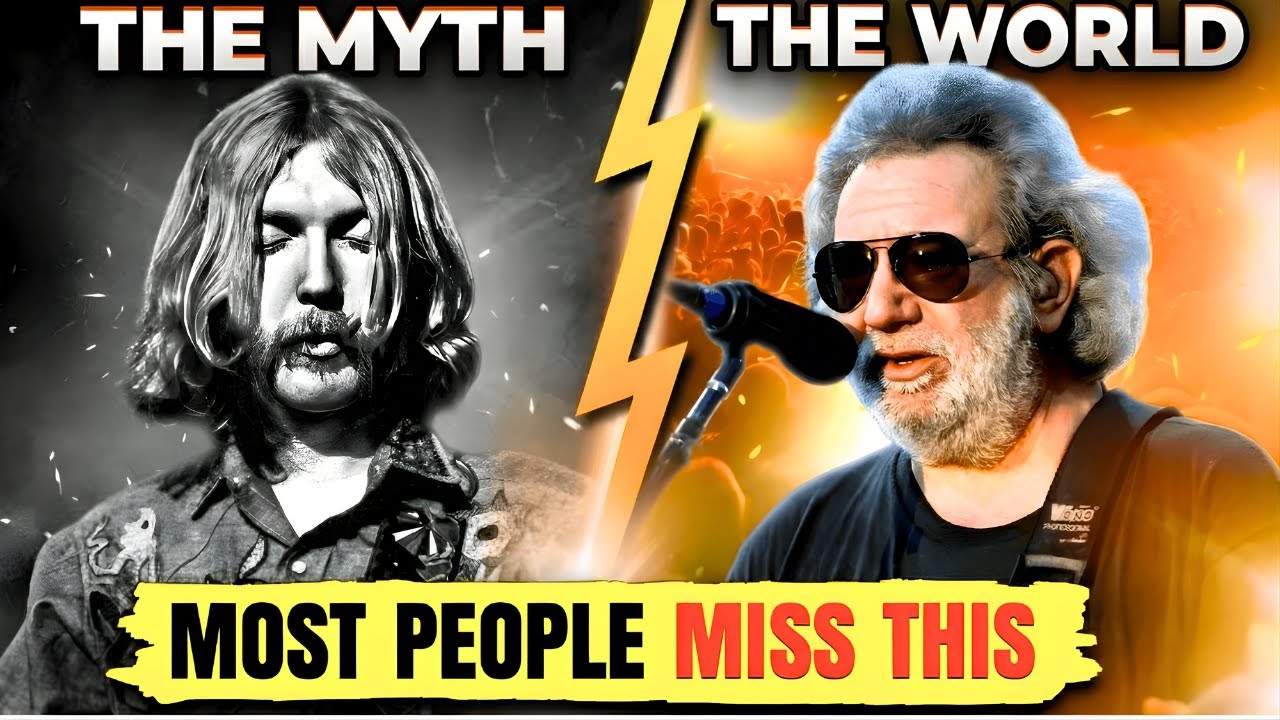
But the story of Duane Allman and Jerry Garcia is even more complex than that. Because these two men shared remarkable parallels despite coming from completely different musical worlds. Both were born in the early 1940s. Both became the spiritual centers of revolutionary bands that changed what rock and roll could be. Both were guitarists of extraordinary ability and improvisation. Both had the gift of listening to their bandmates and responding in real time, creating music that felt like a conversation between equals. And tragically, both struggled with heroin addiction for much of their lives.
Duane Allman spent his early career as a session musician, the kind of player who made other artists sound better. He wasn’t famous—he was just brilliant and available. He played on records by Wilson Pickett, Aretha Franklin, and others, contributing his distinctive slide guitar to some of the greatest soul and R&B recordings of the era. But by the early 1970s, Duane had formed the Allman Brothers Band, a group that fused blues, rock, and country in ways that hadn’t been done before. Their twin-guitar approach, with Duane and Dickey Betts trading leads and sometimes playing in unison, created something entirely new in American music. They were young, hungry, and revolutionary.
The Rise and the Tragedy
The Allman Brothers Band’s live performances were revelatory. They showed that American rock music could be rooted in blues tradition while still being completely original and improvisational. Duane’s slide guitar work became iconic—he could make a guitar weep and wail in ways that seemed to transcend the instrument itself. He played with a kind of emotional directness that made audiences feel like they were experiencing something sacred. Their album “Live at the Fillmore East,” recorded in 1971, is considered one of the greatest live rock albums ever made. It captures Duane at his absolute peak, playing with fire and precision and soul.
But Duane was also a heroin user. He struggled with addiction as he struggled with his craft. The same sensitivity that made him a brilliant musician made him vulnerable to substances. On that October day in 1971, he was riding his motorcycle when he collided with a truck. He died almost immediately. He was 24. The band didn’t know how to continue without him. They tried, but the heart had been ripped out. The electric charge that Duane brought to the music seemed impossible to replace.
Jerry Garcia’s Different Path
Jerry Garcia’s story is different, yet eerily similar in structure. Jerry was also a heroin user for much of his life. He also struggled with addiction while creating some of the greatest improvisational music in rock and roll history. He had the same gift for listening that Duane had, the same ability to anticipate where other musicians were going and either follow them or gently redirect the band’s energy. But Jerry lived. He continued with the Grateful Dead through decades of touring, recording, and evolution. He became a legend in a way that Duane Allman never quite got to be, simply because he lived long enough for the myth-making to happen, for the accumulation of experience to settle into wisdom.
In some ways, the Grateful Dead’s entire existence is predicated on Jerry’s survival. Without Jerry, the Dead would have ended in the 1970s, much like the Allman Brothers Band nearly did after Duane’s death. The band eventually continued with Gregg Allman’s leadership, but they were fundamentally changed. The loss of Duane was the loss of a voice, a sensibility, a particular genius that couldn’t be replaced. The Allman Brothers continued, but they were a different band. Jerry’s death in 1995 would eventually lead to the same situation—the Dead continued, but something essential had been lost.
The Paradox of Memory and Music
By choosing to play their final show across the anniversary of Duane’s death, the Allman Brothers Band was making a statement about how certain losses become part of a band’s identity forever. Forty-three years after his death, Duane Allman was still present in every note they played. His absence was more powerful than presence. The anniversary became a kind of sacred marker—a way of acknowledging that this band couldn’t exist in its original form because one of its essential members was gone. It was both a tribute and an acceptance of loss.
Jerry Garcia died in 1995, at age 53. By then, the Grateful Dead had already undergone numerous changes, numerous losses. Jerry had lived long enough to see his band evolve through multiple eras, to witness the birth of a tape-trading culture that was completely unprecedented, to watch his music inspire generations of musicians. But he never quite made the full recovery from his own struggles that some hoped for. The Grateful Dead continued without him, just as the Allman Brothers had continued without Duane, but the essential spirit was fundamentally altered.
The Legacy of Loss and Survival
The real paradox is this: we remember Duane Allman partly because he died young, at the height of his powers. There’s something about that tragedy that crystallizes a legacy. He remains forever the blazing comet, the genius cut down before his time. Jerry Garcia lived long enough that his legacy became complicated, mixed with struggle and decline and the messy reality of aging. Both men shaped American music profoundly. Both struggled with addiction. Both died at relatively young ages, though Jerry lived two decades longer. The Allman Brothers’ final concert, straddling that October anniversary, was their way of acknowledging that Duane was never really gone—he just remained frozen at 24, forever in his moment of greatest achievement, forever present in the music they continued to play. Jerry’s death, by contrast, came after the myth had already been fully established. He became a legend not through an untimely death, but through decades of living and creating and pushing himself to evolve. That’s the paradox: sometimes survival makes a legend more complex, while early death can crystallize one into something eternal.
Subscribe to The Shakedown Archives for more Grateful Dead documentaries, and explore more stories at TheShakedownArchives.com.
The Shakedown Archives publishes new research on Grateful Dead history each week. If you enjoyed this essay, you can subscribe to the companion YouTube channel below.
Subscribe on YouTube