The Impossible Job: Replacing Jerry Garcia
The Impossible Task: Filling a Void
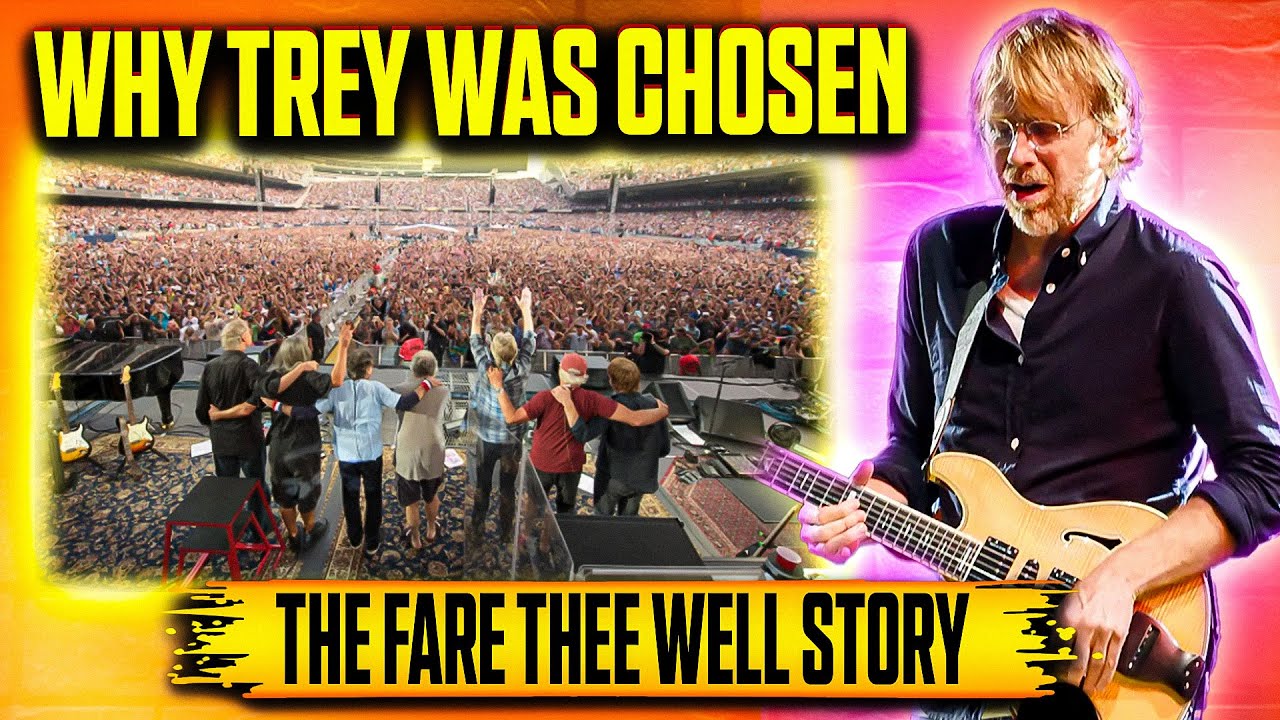
When the Grateful Dead announced their 50th anniversary shows in 2015, the reaction from Deadheads wasn’t excitement. It was fear. Because everyone understood what this meant. For the first time since Jerry Garcia’s death 20 years earlier, in August 1995, the surviving members would perform together as the Grateful Dead. And someone would have to play Jerry’s parts. Someone would have to step into a role that seemed impossible to fill. The internet exploded with anxiety. Forums filled with debate and dread. How do you replace the irreplaceable? Jerry Garcia wasn’t just a guitarist. He was the spiritual center of the band, the improviser who could turn a three-chord song into a 20-minute conversation between musicians who seemed to read each other’s minds. He was the voice that guided the band through 50 years of continuous evolution.
But there was something most people didn’t know. The guitarist they eventually chose had been preparing for this moment for 30 years. And his story reveals something crucial about what made the Grateful Dead’s music so special in the first place. His name was Trey Anastasio, from the band Phish. And his role in the Dead’s farewell wasn’t about replacement at all. It was about reverence. It was about understanding why attempting to copy Jerry Garcia would be the worst possible approach, and why honoring his memory meant doing something different.
Trey’s Journey: Three Decades of Preparation
Trey Anastasio wasn’t a random choice. He was a tape-trading kid from New Jersey in the early 1980s, the kind of obsessive fan who collected Grateful Dead shows on cassette—third- or fourth-generation copies with terrible audio quality, but containing something that made the degraded sound irrelevant. Trey was listening to something specific in those recordings. He was studying the way Jerry Garcia played, how he moved through musical space, how he signaled transitions to the rest of the band. He was learning not just the songs, but the philosophy behind how the Dead approached music. He was learning about listening, about responding in real time, about the relationship between individual voice and collective expression.
Trey founded Phish in the late 1980s, and Phish became famous partly because they were explicitly building on what the Grateful Dead had created. They took the Dead’s approach to improvisation, their commitment to long-form musical exploration, their dedication to variety and spontaneity in live performance, and adapted it for a new generation. But Trey never stopped studying Jerry Garcia. Never stopped listening to Dead recordings. Never stopped learning from the master. Phish’s popularity only grew his appreciation for what the Dead had accomplished. The more Phish performed, the more Trey understood the complexity of what Jerry had been doing all those years.
The Specificity of Jerry’s Gift
What made Jerry irreplaceable wasn’t his technique, though he was technically proficient. It wasn’t his speed or his flashiness. It was his sensibility, his ability to listen to the rest of the band and respond in real time, his instinct for when to step forward with a lead and when to recede into the background. Jerry seemed to communicate with the other musicians without words. Phil Lesh could sense what Jerry was about to do. Bobby Weir knew where Jerry was heading. They’d been playing together for 50 years. They’d developed a kind of musical telepathy, a shorthand communication that had become second nature.
Trey understood this completely. He wasn’t going to try to be Jerry Garcia. He was going to be himself, a guitarist shaped by studying Garcia, but bringing his own voice to the music. He was going to approach the task with humility, acknowledging that Jerry could never be replaced, but that the music could continue if you honored what made it special in the first place. This wasn’t going to be a tribute act. This was going to be the surviving members of the Grateful Dead, with a new guitarist, trying to keep the music alive.
The 50th Anniversary: A New Beginning
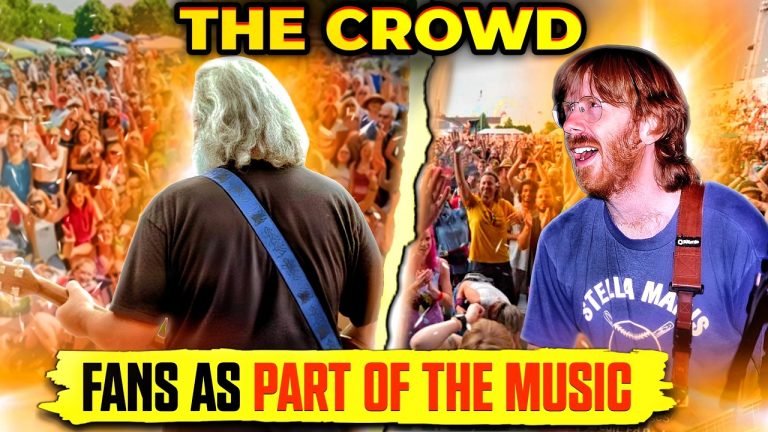
When Trey stepped onstage with the surviving Grateful Dead members for those 50th anniversary shows, something remarkable happened. The music was unmistakably the Grateful Dead, but it wasn’t trying to be the Dead of 1972 or 1977. It was the Dead as they existed in 2015, with all their history, all their losses, all their continued commitment to the music. The energy was different—Trey brought a youthful intensity, but he played with respect for the material. He didn’t try to recreate Jerry’s solos note for note. He played Jerry’s parts by understanding the spirit of what Jerry was doing, and then bringing his own interpretation to the music.
The shows proved something important that many people had doubted. The Grateful Dead wasn’t just Jerry Garcia. The music had outlived its creator. The other band members still understood how to make it work. Bobby Weir could still sing. Phil Lesh could still anchor the music with his bass. Trey’s presence allowed that continuation without the painful pretense of trying to recreate someone who was gone. The music was alive, and it sounded like the Grateful Dead because the Grateful Dead was more than one person.
The Lesson in Letting Go
What Trey’s role in the Dead’s farewell taught us is something about how great bands actually work. The Grateful Dead survived Jerry Garcia’s death not because they tried to become more like him, but because they accepted his absence and learned to make music anyway. Trey wasn’t Jerry Garcia. He was a musician who’d spent 30 years learning from Jerry Garcia, and who understood that honoring his memory meant doing something different, not trying to clone the past. The band wasn’t trying to deny Jerry’s absence. They were acknowledging it and moving forward. They were saying: Jerry’s gone, but the music he helped create is still alive, and we’re going to play it together, with someone new, and it’s going to be different, but it’s going to be real.
The fact that Trey was willing to take on this role, with all its impossible expectations and emotional weight, speaks to something about artistic community and generational transmission. Trey was a student who’d become a master in his own right, but he never forgot who he’d learned from. And when the moment came to stand in that impossible position, to play Jerry’s parts without trying to be Jerry, he did it with grace and skill. The 50th anniversary shows proved that the Grateful Dead’s music was bigger than any one person, even someone as essential as Jerry Garcia. It could continue, it could evolve, it could live on. Not as a tribute act, not as a ghost of the past, but as a genuine artistic expression rooted in the Dead’s fundamental philosophy: listen to each other, respond to the moment, and create music that has never been played before.
Subscribe to The Shakedown Archives for more Grateful Dead documentaries, and explore more stories at TheShakedownArchives.com.
The Shakedown Archives publishes new research on Grateful Dead history each week. If you enjoyed this essay, you can subscribe to the companion YouTube channel below.
Subscribe on YouTube