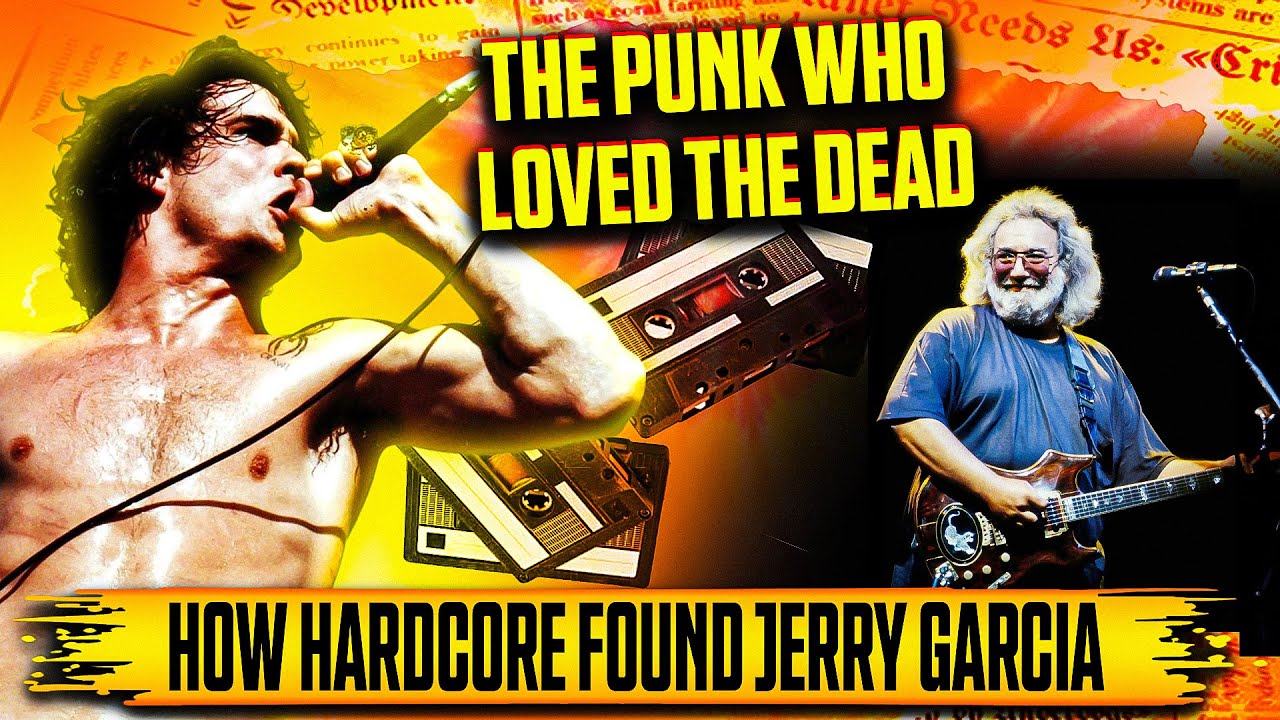
Why Hardcore Punk Loved the Dead: Henry Rollins & The 1969 Grateful Dead
The Unexpected Intersection of Punk and Jam
The image of hardcore punk and jam-band culture occupies opposite corners of the rock and roll universe in most critical narratives and journalistic accounts. One represents explosive, tightly controlled sonic aggression and compressed energy, distilled to its most visceral form; the other, expansive improvisational freedom and extended exploration, trusting in the moment and in process. Yet one of punk’s most visible figures—Henry Rollins, the iconic frontman of Black Flag—wore out his Grateful Dead tapes multiple times over, listening to 45 minutes of “Dark Star” until the cassettes literally failed, the magnetic tape degraded from repeated playing. He wasn’t an outlier or an anomaly to be explained away. The hardcore punk scene’s relationship with the Grateful Dead reveals something fundamental about what both movements were really searching for: authenticity and freedom, just expressed through different musical languages and artistic philosophies, different sonic strategies serving the same spiritual mission.
When Hardcore Bands Claimed the Dead as Their Own
Greg Ginn, the founder and driving force of Black Flag, considered the Grateful Dead his all-time favorite band without reservation or apology. This wasn’t a guilty pleasure or a secret indulgence that contradicted his public image or his commitment to punk rebellion. He stated it publicly and without embarrassment, treating it as a legitimate artistic preference. In a 1985 Rolling Stone interview, Ginn revealed that his dream was to have Black Flag open for the Grateful Dead, a collaboration that would have seemed absurd to most observers of both scenes but made perfect sense within Ginn’s artistic vision and understanding of what rock and roll could accomplish. Dead t-shirts were reportedly common at Black Flag shows, worn alongside the aesthetics of punk rebellion and DIY ethics. The punk community wasn’t dismissing the Dead as dinosaurs or relics of a fading era; they were studying them as masters of performance autonomy and creative independence, as evidence that artistic integrity and commercial refusal could coexist.
The Philosophy of Refusal
What connected these two seemingly disparate musical movements was a shared commitment to doing things their own way, regardless of commercial or critical expectations from the mainstream music industry and its gatekeepers. The Grateful Dead refused to release singles in the traditional format, refused to play the radio game, refused to cater to mainstream expectations about what rock and roll should sound like, refused to adopt conventional marketing strategies. Black Flag refused record contracts that required editorial control over their music, refused to soften their message for broader appeal, refused to compromise their artistic vision for commercial success, refused to be packaged and sold like consumer products. Both movements represented different paths to the same destination: creative autonomy and independence from corporate structures. Both also understood that maintaining that independence required genuine sacrifice and the willingness to operate outside conventional channels, to alienate potential audiences in defense of principle.
Intensity as Common Ground
Hardcore punk was all about intensity, about distilling rock and roll down to its most essential, explosive form, about channeling emotion directly into sonic assault with minimal mediation. Yet the Grateful Dead achieved an equivalent intensity through opposite means—through extension rather than compression, through the accumulation of detail rather than the subtraction of it, through immersion rather than assault. A 45-minute “Dark Star” had the same capacity to overwhelm and transform the listener as a three-minute Black Flag assault on the senses. Both demanded complete attention and offered the promise of transcendence, whether achieved through aggression or immersion, whether through assault or absorption. Both created peak experiences that existed outside normal consciousness and challenged the listener to surrender to the experience.
The Legacy of Mutual Respect
The fact that hardcore punk’s intellectual leaders openly admired the Grateful Dead suggests that genre boundaries are ultimately less important than artistic integrity and the willingness to pursue a vision uncompromisingly, regardless of commercial consequences. Henry Rollins’ worn cassettes and Greg Ginn’s publicly stated admiration represented a kind of cross-genre solidarity based on respect for uncompromising artistry and refusal to be contained by expectations. This relationship helped establish a tradition where subsequent generations of rock musicians—across genres and subcultures—could openly acknowledge the Dead’s influence without fear of being categorized, limited, or seen as inauthentic. The punk movement’s embrace of the Dead legitimized the idea that you could be genuinely rebellious and still revere the past, that you could honor tradition while destroying convention, that heritage and innovation weren’t opposites but partners in artistic evolution.
Subscribe to The Shakedown Archives for more Grateful Dead documentaries, and explore more stories at TheShakedownArchives.com.
The Shakedown Archives publishes new research on Grateful Dead history each week. If you enjoyed this essay, you can subscribe to the companion YouTube channel below.
Subscribe on YouTube