Hip Economics & Ammo Cases: Untold Story of The Music Never Stopped
The Ideal vs. The Reality: Why the Dead Broke
The Grateful Dead epitomized the anti-establishment ethos of the 1960s—free spirits who rejected the trappings of commercial success and positioned themselves as a genuine alternative to the corporate rock machine. From their very inception, they claimed they would never compromise their artistic integrity for money. But by the summer of 1975, a harsh reality threatened to unravel their carefully constructed world. The band was completely broke, their financial reserves depleted, and their grand experiment in independence hanging by a thread. The irony would have been comical if the stakes weren’t so high: a band celebrated for rejecting capitalism found themselves drowning in debt, unable to meet payroll or support the extensive infrastructure they had built around their operation.
Breaking Free From Major Labels
In May 1973, the Grateful Dead made a bold decision that seemed to embody everything they stood for. They walked away from Warner Brothers Records and established their own independent labels: Grateful Dead Records for their music and Round Records for other artists. This was not simply a business decision; it was a philosophical statement about self-determination and creative control. Jerry Garcia called it liberation. Ron Rakow, the savvy businessman orchestrating the operation, termed it an experiment in hip economics. The band financed their venture with a seven-figure loan from First National Bank of Boston, betting that their direct relationship with fans would create a sustainable business model that didn’t require compromising their artistic vision.
For a time, the strategy worked beautifully. Wake of the Flood sold 400,000 copies, a respectable number for an independent release that proved there was genuine commercial appetite for Dead recordings outside the major-label system. More impressively, they built a mailing list of 63,000 devoted deadheads who received sample records with instructions to play them for 15 friends—a grassroots marketing network that preceded modern viral marketing by decades. The system was elegant in its simplicity: every listener was a potential ambassador, turning personal taste into exponential growth. Rakow boasted to Record World magazine in March 1974 that they were adding a thousand names to that list every month, turning word-of-mouth from folklore into a systematic growth engine. This was guerrilla marketing before anyone called it that, the ultimate word-of-mouth network.
When Ideals Collide With Economics
But Rakow revealed something else in that same March 1974 interview that most observers overlooked, a detail most people skipped right over without appreciating its significance: approximately one-third of the Grateful Dead’s audience was unemployed. Think about that for a moment. An entire business model depended on selling records to people without jobs, on the assumption that deadheads would make purchases even during economic hardship. In the context of the mid-1970s recession, this assumption proved catastrophically wrong. By 1975, the bank loan had come due, the experimental structure was crumbling, revenue streams were drying up, and the band faced a crisis that no amount of idealism could resolve. The economics that had seemed so innovative in 1973 had become an albatross dragging the organization under.
Ammo Cases and Cousin David
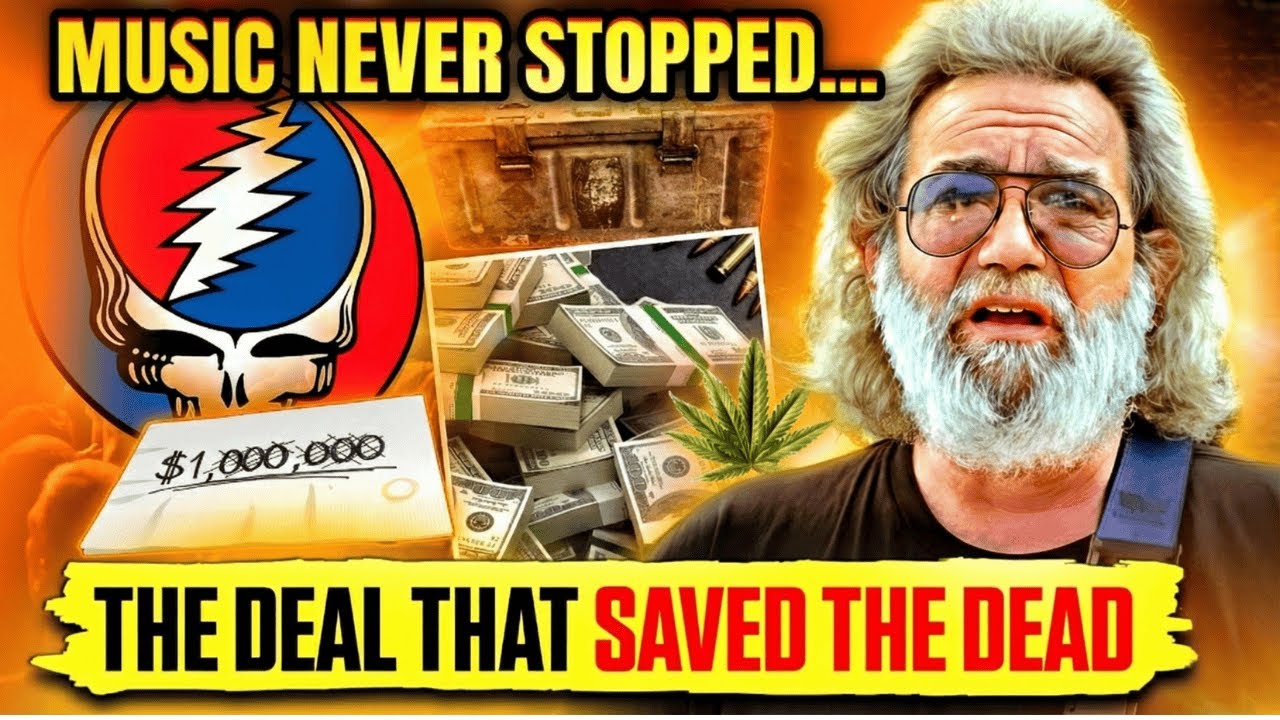
The lifeline came from an unlikely and deeply unconventional source: ammo cases stuffed with $42,000 in cash delivered by a pot smuggler the band called Cousin David. This was hip economics at its most surreal—the counterculture’s favorite band sustained by underground cash networks and unconventional financing, kept afloat through the kind of informal currency exchange that existed outside legitimate banking infrastructure. The very people the Dead had positioned themselves against, the very systems they had tried to transcend, became their salvation. Simultaneously, negotiations were unfolding at a restaurant in Sausalito where a seven-figure record deal was literally sketched on cocktail napkins. These napkins represented not the triumph of hip economics but its inherent limitations—they were a return to more traditional record industry structures.
The Paradox of Hip Economics
The Dead’s financial crisis of 1975 exposed a fundamental tension that has haunted the counterculture from its inception. While they preached liberation from commercial structures, those structures were the only things keeping them afloat. You cannot simultaneously reject capitalism and depend entirely on it for survival. The ammo cases and cocktail napkins represented not the triumph of hip economics, but its inherent limitations. The experiment in economic independence had revealed its own impossibility: true independence requires either infinite resources or infinite audience support, neither of which exists in the real world. This wasn’t a failure of vision so much as a collision with reality.
The Lesson Embedded in Failure
Yet the band survived this crucible and emerged with new partnerships and strategies that would sustain them for decades to come, proving that sometimes the most revolutionary acts require capitulation to practical necessity. The Dead had learned the hard way that maintaining a community requires compromise with economic reality. This wasn’t a failure of their principles; it was a refinement of them. The band didn’t abandon their ideals; they simply accepted that those ideals had to coexist with the practical realities of supporting dozens of employees, funding touring operations, and maintaining the infrastructure that made their unique experiments possible. In this sense, 1975 marked not the death of the Dead’s revolutionary potential, but its maturation into something more pragmatic and, ironically, more durable. The story nobody tells reveals the most important lesson: that survival requires adaptation.
Subscribe to The Shakedown Archives for more Grateful Dead documentaries, and explore more stories at TheShakedownArchives.com.
The Shakedown Archives publishes new research on Grateful Dead history each week. If you enjoyed this essay, you can subscribe to the companion YouTube channel below.
Subscribe on YouTube