They Tried to Fire Bob Weir? The Strange 1968 Grateful Dead Tale
A Band at a Crossroads
By the summer of 1968, the Grateful Dead faced a fundamental question about their musical identity. What had begun as a blues rock outfit with Pigpen as the dynamic frontman—delivering R&B covers and marathon versions of “Turn on Your Love Light”—was transforming into something entirely different. Jerry Garcia and Phil Lesh had discovered John Coltrane, modern jazz, and free-form improvisation. They envisioned songs like “Dark Star” and “The 11” stretching for 20 or 30 minutes without vocals, exploring pure instrumental territory.
This artistic divergence created a practical problem. At just 20 years old, Bob Weir was still developing his technical abilities to match the complexity Garcia and Lesh demanded. Pigpen, for his part, famously dismissed the experimental direction as “endless psychedelic hogwash.” He was a blues musician in a band that was rapidly moving away from the blues. The tension became undeniable.
The Firing Nobody Enforced
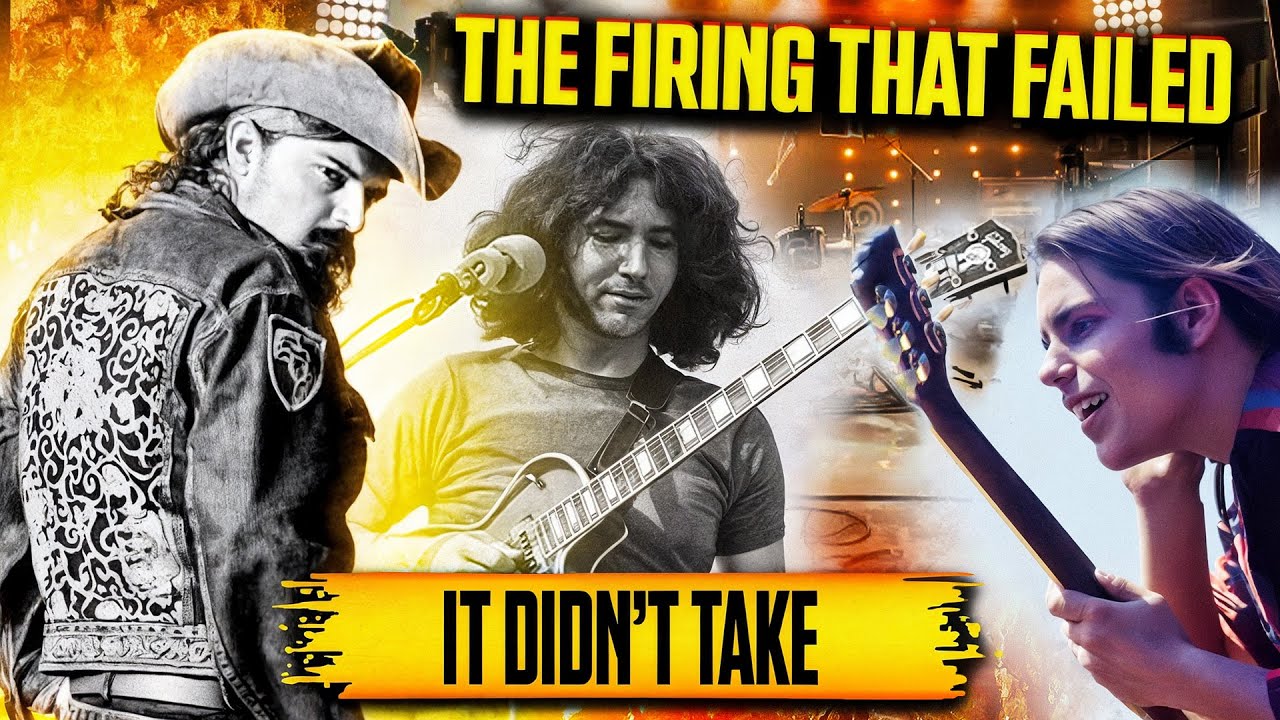
In August 1968, during rehearsals for their next album at a San Mateo studio, Garcia and Lesh made a decision: they would fire both Bob Weir and Pigpen McCernin. The band needed a different direction, they believed, one not held back by these two musicians.
For Bob Weir, the timing was devastating. On October 16th, 1968—his 21st birthday—he left the meeting where he was told he was out of the band he’d helped create six years earlier when he was just 16. As he hitched a ride from the studio, the rain fell hard, and Weir stumbled into a muddy ditch, landing face-first into the mud. At 21, fired on his birthday, he lay in that ditch contemplating his future.
But here’s where the story takes a peculiar turn. Nobody actually enforced the firing. Dennis McNally, the Grateful Dead’s official historian, noted that nobody had the heart to follow through. As Phil Lesh later admitted, avoidance of confrontation bordered on “a religious point” with the band. Weir kept showing up to gigs, and nobody stopped him. The band just let it happen.
Mickey Hart’s Secret Experiment
While Weir and Pigpen existed in a strange limbo—fired but still playing—Mickey Hart proposed something radical. What if the musicians who wanted to explore that avant-garde direction formed a separate group? They could play purely instrumental jams without worrying about vocals or song structure. In early October 1968, Garcia, Lesh, Hart, and others formed “Mickey and the Heartbeats,” booking three nights at The Matrix, a cramped 150-capacity club in San Francisco.
The Matrix shows were billed as “Jerry Garcia and Friends” to avoid contractual complications with the Avalon Ballroom dates happening that same week. On October 8th, Garcia took the stage and joked with the tight crowd: “Everybody sitting close, watch out for Mickey cuz he spits frequently.” Then they launched into twenty-minute instrumental explorations of Grateful Dead songs—”Clementine,” “The 11,” “Dark Star,” even “Love Light” without Pigpen’s vocals.
The tapes reveal something fascinating: they were playing Grateful Dead music, just stripped of two crucial members. It was like a band rehearsal with two essential pieces missing.
Learning What the Dead Really Needed
The Matrix experiment revealed a truth that would reshape the band. The incredible jams proved that Garcia and Lesh could explore their jazz-fusion ambitions, yet something felt incomplete. Even Phil admitted after playing only a couple of Heartbeats shows: “The music didn’t feel right to me.”
Meanwhile, Bob Weir wasn’t wallowing. He moved into Bill Kreutzmann’s garage and practiced obsessively, working on rhythm guitar technique, jazz voicings, and the complex parts Garcia wanted. Pigpen enlisted help from friends to master the foot pedals on his Hammond organ and expand his harmonic vocabulary. Both musicians were determined to prove their worth.
By mid-October, the experiment ended. On October 20th at the Greek Theater in Berkeley, Pigpen returned to the stage triumphantly, leading songs including a massive “Turn on Your Love Light.” He was back.
The Solution Was Addition, Not Subtraction
The real breakthrough came in late November 1968 when Tom Constanten officially joined as a second keyboardist. An old friend of Phil’s from music school, Constanten could handle the complex organ work on “Dark Star” and “The 11″—exactly what Pigpen never wanted to play. Now the Dead had seven members, not six.
Pigpen could focus entirely on what he did best: singing, playing blues organ, and commanding the stage. Constanten handled the avant-garde territory. The band was whole again, and they were better than ever.
All those October Matrix jams hadn’t been wasted energy. The band had refined “Dark Star” through dozens of practice hours, mastered seamless song transitions, and pushed their improvisational skills to new heights. In early 1969, they recorded the live shows that became “Live Dead,” released in November 1969 and still considered one of the greatest live albums ever made. The legendary 23-minute “Dark Star” from February 27th featured Bob Weir’s confident rhythm guitar woven throughout, more skilled than ever before.
What the 1968 Crisis Revealed
The near-firing of Bob Weir and Pigpen McCernin remains one of rock’s strangest untold stories. Yet it illuminates something fundamental about the Grateful Dead. They weren’t a band that simply replaced members or moved on. Instead, they let situations get messy, argued through their music rather than confrontation, and eventually figured out how to harness everyone’s strengths. They didn’t fire family, even when they wanted to. The magic was never in having the most technically skilled musicians—it was in this specific group of contradictory, conflicted people creating something none of them could make alone.
Subscribe to The Shakedown Archives for more Grateful Dead documentaries, and explore more stories at TheShakedownArchives.com.
The Shakedown Archives publishes new research on Grateful Dead history each week. If you enjoyed this essay, you can subscribe to the companion YouTube channel below.
Subscribe on YouTube