How Bob Marley’s Rejection Led To Grateful Dead’s Iconic ‘Scarlet Begonias
The Legendary Signing That Never Happened
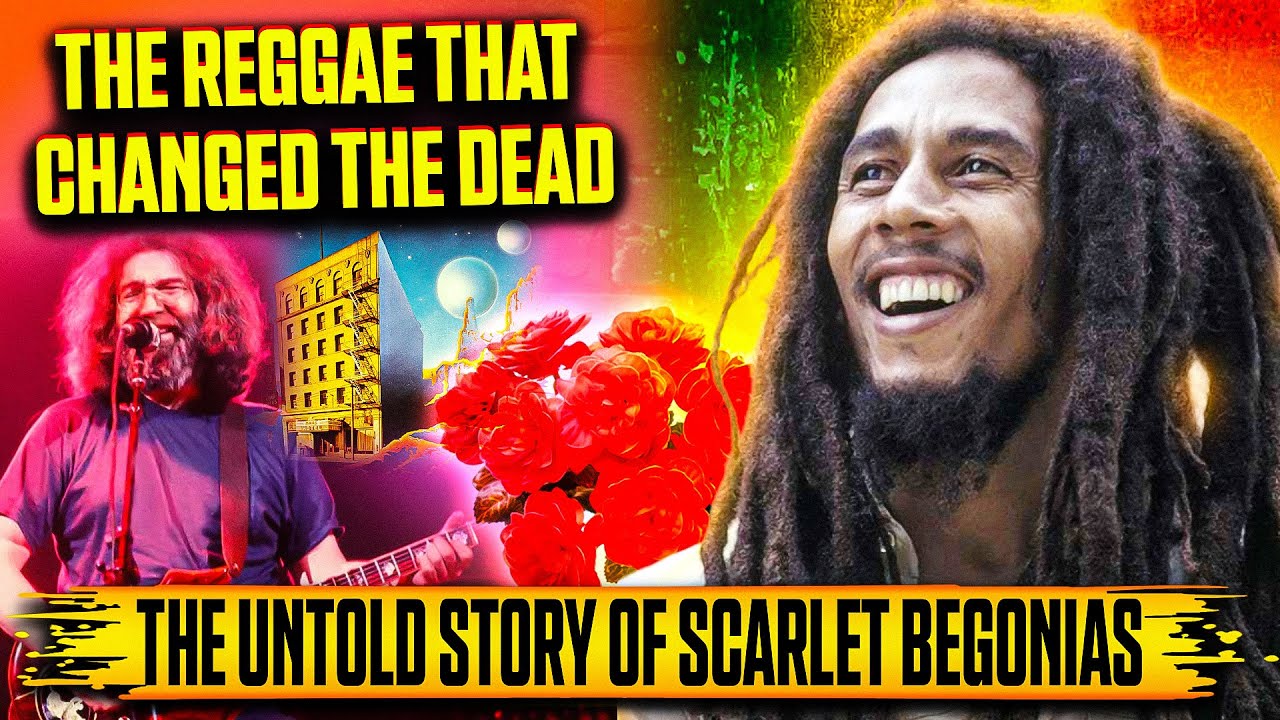
In 1974, the Grateful Dead attempted something that should have been a stroke of pure genius: they tried to sign Bob Marley to their newly formed record label. For a moment, imagine the possibilities that such a partnership could have created—the kings of psychedelic jam rock courting the prophet of reggae consciousness. The visionary band from California’s counterculture reaching across musical boundaries to embrace the revolutionary voice of Jamaica. It should have been one of the most legendary partnerships in music history, a creative collision that would have reshaped popular music’s trajectory for decades to come. But Bob Marley said no, and his reason reveals something profound about artistic identity, spiritual integrity, and the importance of staying true to one’s vision.
Marley’s Reason for Rejection
When the Grateful Dead approached Bob Marley about signing to their record label, they were making an offer that most musicians in the world would have seriously considered. The Dead had substantial commercial success, cultural credibility, and a deep understanding of what it meant to build a lasting artistic empire. But Marley’s response was immediate and philosophically grounded: “I’m gratefully alive. I can’t be on a label called Grateful Dead.”
The statement is elegant in its simplicity—a spiritual and philosophical stance that acknowledged the Dead’s artistry and cultural significance while politely declining based on a deeper principle about artistic autonomy and spiritual alignment. Marley wasn’t rejecting the Dead personally; he was honoring a commitment to his own vision and spiritual path. He understood intuitively that being associated with another band’s name, even one as prestigious and artistically accomplished as the Grateful Dead, would compromise that independence. His identity as an artist and spiritual leader was inseparable from his autonomy and self-determination.
The Unexpected Creative Gift
Here’s what most people don’t know about this story: that rejection, while disappointingly ending one possibility, didn’t just cost the Dead a superstar signing—it actually gave us one of their most beautiful and enduring compositions. Inspired by this encounter, or perhaps as a meditation on the creative meeting between these two giants of popular music, the Grateful Dead crafted “Scarlet Begonias.” The song emerged from the space where these two musical worlds had nearly collided, creating something uniquely their own that carried echoes of reggae’s rhythmic sophistication and spiritual consciousness even as it remained distinctly rooted in the Dead’s improvisational jam tradition.
“Scarlet Begonias” isn’t literally “about” the Marley encounter in the conventional songwriting sense. Rather, the near-partnership between these two visionary bands created creative energy that the Dead absorbed and transformed into music. The song became a way for the band to honor Marley’s musicianship and philosophy while exploring their own musical possibilities in new directions.
The Song That Rose from Near-Partnership
“Scarlet Begonias” became an immediate staple of the Grateful Dead’s live performances and studio catalog. The composition showcases the band’s remarkable ability to absorb influences from across the musical spectrum—reggae, funk, rock, blues—while maintaining their absolutely distinctive voice and improvisational approach. The song’s driving rhythm, the intricate interplay between instruments, and the memorable melodic hooks demonstrate how the near-collaboration with Marley influenced the Dead’s creative direction, even in its non-consummation.
The song exemplifies something the Grateful Dead always understood: sometimes the most interesting creative moments happen in the spaces between direct collaboration, in the influence that artists exert on each other simply by existing as visionaries in the same cultural moment. The Dead didn’t need to be on the same record with Marley to be profoundly influenced by his presence and approach to music-making.
Respect Between Musical Titans
The story of the almost-signed Bob Marley speaks to something important about artistic respect and creative autonomy in popular music. Both the Grateful Dead and Bob Marley were revolutionaries in their own right, each pushing their respective genres forward and creating music that transcended commercial categories and national boundaries. The Dead had taken American rock and roll into improvisational territory that nobody had previously explored. Marley had taken reggae and transformed it into a vehicle for spiritual and political consciousness that changed the global music landscape.
When Marley declined the Dead’s offer, he wasn’t rejecting them or failing to recognize their artistic significance. He was honoring the separate paths that both artists had committed to walking. The mutual respect between these musical titans resulted not in a collaboration but in inspiration and creative cross-pollination, which sometimes yields more authentic results than forced partnerships undertaken primarily for commercial or promotional reasons.
A Moment That Defined an Era
The intersection of the Grateful Dead and Bob Marley in 1974 represents a pivotal moment in popular music history—a moment when the boundaries between genres and cultural traditions seemed suddenly permeable. Both artists were exploring the possibilities of their respective genres at the highest levels of artistry and innovation. That they didn’t join forces commercially is perhaps less important than the creative energy their encounter generated. “Scarlet Begonias” remains as a testament to how sometimes the greatest collaborations are the ones that happen in the space between artists’ visions, producing something neither could have created entirely alone. It’s a reminder that influence and inspiration don’t always require formal partnership—sometimes the most important creative moments happen when visionaries simply recognize and respect each other’s work.
Subscribe to The Shakedown Archives for more Grateful Dead documentaries, and explore more stories at TheShakedownArchives.com.
The Shakedown Archives publishes new research on Grateful Dead history each week. If you enjoyed this essay, you can subscribe to the companion YouTube channel below.
Subscribe on YouTube