Grateful Dead’s ‘Friend of the Devil’: The Most Covered Song In Dead History
The Most Covered Grateful Dead Song
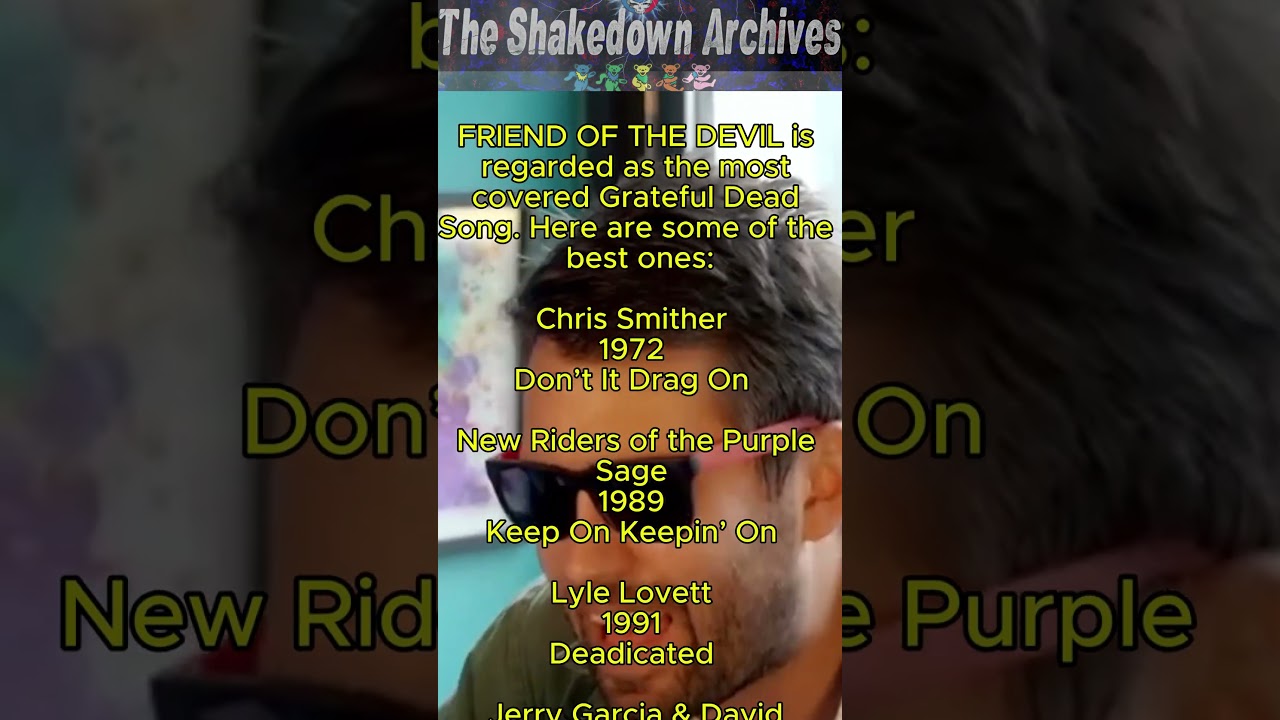
“Friend of the Devil” stands as one of the most recorded and covered songs in the entire Grateful Dead catalog. From the moment the band made it their own, the track has been reimagined by countless artists across genres and generations. Jam bands, folk singers, country artists, and rock musicians have all found reasons to return to this composition. The song’s portability—its ability to work in country arrangements, folk interpretations, rock versions, and everything in between—speaks to something timeless in Robert Hunter’s composition and the way Jerry Garcia’s arrangement unlocked its potential.
Why This Song Travels Across Genres
The musical structure of “Friend of the Devil” lends itself naturally to reinterpretation. The basic chords and melodies are accessible enough for emerging musicians to learn, yet the song has enough substance to reward skilled arrangement and creative interpretation. A cover band can strip it down to a single acoustic guitar and vocals, allowing Hunter’s lyrics to carry the emotional weight entirely. Alternatively, a full ensemble can build the arrangement into something elaborate, with intricate instrumental interplay and extended improvisational passages that honor the Grateful Dead’s legacy while making the song entirely their own.
The narrative at the song’s heart—a traveler moving through the landscape, hustling for survival, caught in a morally ambiguous dance with fate—is universal enough to resonate regardless of the musical idiom. Whether played as a traditional folk ballad or a hard-driving rock number, the story remains compelling. The protagonist’s journey, the encounter with the devil, the need to move on before daylight arrives—these elements transcend any particular musical style and speak to something fundamental in the human experience.
Covering Across Multiple Interpretations
What makes “Friend of the Devil” particularly coverable is how Hunter constructed it: the lyrical content doesn’t require a specific musical style to land effectively. The story itself carries the weight. Different artists have found different aspects to emphasize—some draw out the country-blues underbelly, highlighting the song’s roots in American folk tradition and blues storytelling. Others highlight the rock energy, building the arrangement around driving rhythms and soaring lead passages. Still others slow it down into something almost meditative, allowing the listener to sit with the lyrical imagery and contemplate the traveler’s inner world.
Each interpretation reveals new dimensions of Hunter’s original work. A sparse acoustic version emphasizes the song’s vulnerability and the protagonist’s isolation. A full rock arrangement highlights the song’s narrative propulsion and sense of urgent movement. A bluegrass treatment reveals the song’s connection to traditional American music forms. None of these interpretations invalidates the others; instead, they collectively demonstrate the song’s remarkable flexibility and enduring appeal.
A Bridge Between Artists and Traditions
For musicians trying to connect with Grateful Dead tradition, “Friend of the Devil” serves as a kind of gateway composition. It’s difficult enough to prove musicianship and respect for the original but accessible enough to not require years of practice before attempting a worthwhile interpretation. Jam bands, Americana groups, folk singer-songwriters, and rock outfits have all found their way to this song. In doing so, they’ve extended its reach far beyond the original Grateful Dead fanbase and created a web of musical connections that links contemporary artists back to Hunter’s original vision.
The song has become a touchstone in American music education as well. Guitar teachers introduce it to students because it’s approachable enough for beginners but offers room for growth and sophistication. Songwriting classes use it as an example of effective narrative structure and lyrical economy. Cover albums feature it as both a tribute and a kind of musical rite of passage—the moment an emerging artist claims their own relationship to a classic composition.
The Legacy of a Standard
The frequency with which “Friend of the Devil” appears in cover compilations and tribute albums points to its status as a de facto standard in American music, comparable to traditional folk ballads that pass through generations with new verses and new voices. “Friend of the Devil” has become community property in a sense—a song that belongs to whoever wants to sing it, yet always traces back to its origins in Robert Hunter’s pen and Jerry Garcia’s musical instinct. This combination of openness and origin creates a perfect balance: the song is free enough to be reinterpreted endlessly, yet grounded enough to maintain its identity across all those variations.
Subscribe to The Shakedown Archives for more Grateful Dead documentaries, and explore more stories at TheShakedownArchives.com.
The Shakedown Archives publishes new research on Grateful Dead history each week. If you enjoyed this essay, you can subscribe to the companion YouTube channel below.
Subscribe on YouTube