Grateful Dead Vs Allman Brothers – What Really Happened At Fillmore East In 1970?
A Night of Legends: Grateful Dead and Allman Brothers at Fillmore East
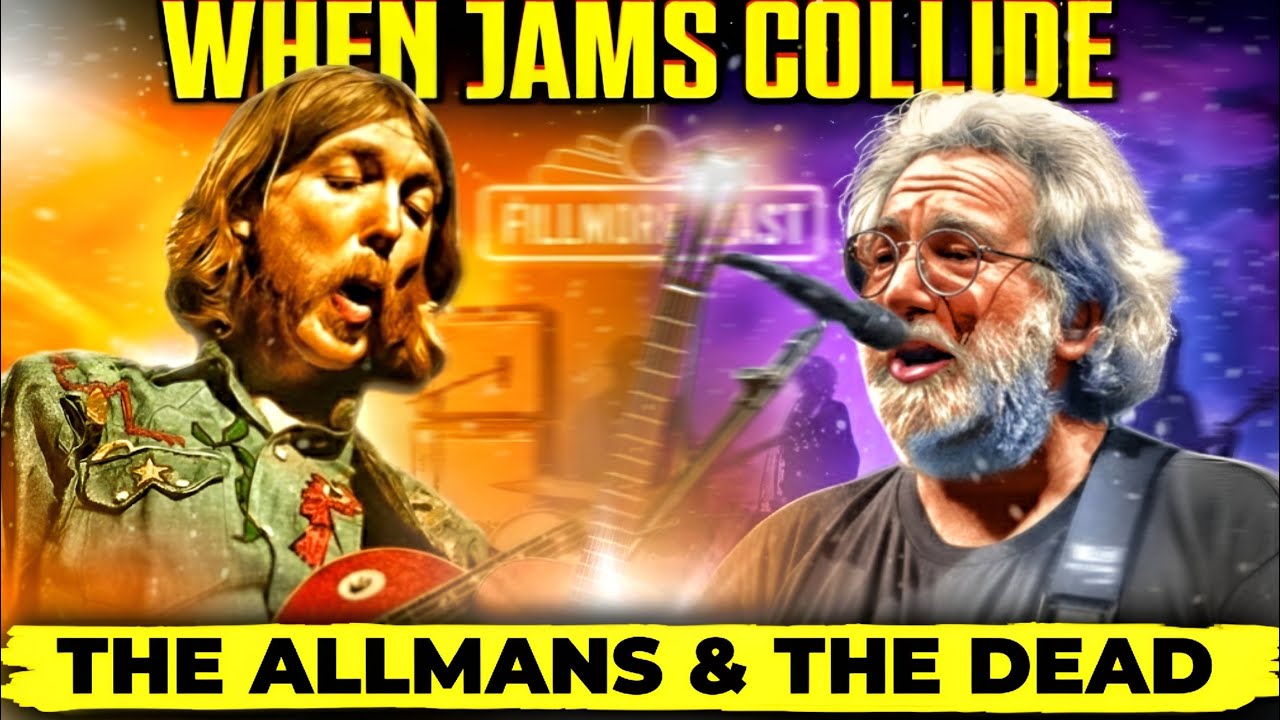
On February 11th, 1970, the legendary Fillmore East venue in New York City hosted what would become one of rock history’s most paradoxical and contradictory moments. The Grateful Dead, by this time already established icons of American music, experimental rock, and the San Francisco psychedelic sound, were headlining the show. Opening for them was a relatively unknown southern band called the Allman Brothers Band, still making their way through regional success and building toward the national recognition that would eventually make them one of America’s greatest rock acts. What happened both backstage and on stage that freezing winter night in New York would reveal a fundamental chasm between two competing visions of what improvisational rock music could and should be—a divide that would shape jam band music and rock culture for decades to come.
Yet the story of that legendary night is far from straightforward or simple. Duane Allman, the Allman Brothers’ visionary guitarist and spiritual leader, held Jerry Garcia in what amounted to almost reverential, worshipful regard. Duane once declared of Garcia that he “could walk on water,” that he was capable of doing “anything any man could ever do,” that Garcia was fundamentally “a prince” among musicians. To Duane Allman, Jerry Garcia wasn’t just another good musician or even a great musician—he represented something almost transcendent. But Duane’s own drummer, Butch Trucks, remembered the Dead in an entirely different and opposite way: as a band that bored him stiff, that seemed to simply “mill around on stage” without real focus or direction, that would regularly “fall apart in the middle of songs.” Two members of the same band, eyewitnesses to the same performances, held completely contradictory views of what they were experiencing.
LSD Backstage: The Untold Context of the Night
What most historians and chroniclers of that legendary night have omitted or glossed over is the crucial role of the Grateful Dead’s engineer and chemist, Owsley Stanley, known throughout rock culture as “The Bear.” Owsley wasn’t merely managing the sound system and ensuring a quality technical performance—he was actively and deliberately dosing everyone backstage with pure, pharmaceutical-grade LSD. As Alan Arish, who worked the Fillmore East stage crew, remembered with remarkable clarity decades later: Owsley and associates “put acid directly in the water cooler.” The entire technical crew, musicians, and backstage personnel were involuntarily dosed with powerful hallucinogens, regardless of whether they had consented or even wanted to participate in this chemical experimentation.
This detail is absolutely crucial context for understanding what transpired that night and how it should be historically interpreted. The Allman Brothers, the Grateful Dead, roadies, technical staff, and everyone else present in that backstage environment were all operating under the influence of powerful hallucinogens during what was supposed to be a controlled, professional concert event. The performances that night, the musical decisions made, the interpersonal dynamics that developed—all of these were happening in a profoundly altered state of consciousness that was imposed rather than chosen. What emerged from this chaotic and legally problematic situation was both legendary and deeply revealing about the era in which it occurred.
Two Visions of Improvisation Collide
The Allman Brothers represented a fundamentally different artistic approach to jamming and improvisational performance than the Grateful Dead’s evolving methodology. Where the Dead increasingly embraced free-form, almost avant-garde experimentation that could drift into abstract and purely sonic territory, the Allman Brothers grounded their improvisations firmly in blues structures, southern rock traditions, soul music influences, and more conventional, recognizable song forms. When the two bands jammed together—which they did repeatedly in the early 1970s after this initial Fillmore East meeting—the creative friction between these opposing approaches became increasingly apparent to anyone paying attention.
Duane Allman’s profound reverence for Garcia clashed inevitably with his band’s own artistic instincts and his drummer’s highly critical assessment of what the Dead were doing. The Dead’s increasingly experimental approach, which involved extended exploration and a genuine willingness to abandon conventional song structures in favor of purely improvisational development, didn’t align comfortably with how the Allman Brothers wanted to function as performers and musicians. Yet the mutual respect between the two bands remained genuine and heartfelt, even as the creative philosophies diverged and the two groups increasingly pursued separate artistic directions.
The Invisible Influence on Jam Band History
That night at the Fillmore East became what musicians and music historians call a watershed moment in rock history, though few people noticed or fully appreciated its significance at the time. The creative divide between these two fundamentally different approaches to improvisation would quietly but persistently shape the entire future of jam band music throughout the 1970s and beyond. The Grateful Dead would continue doubling down on their path of extended, often abstract, almost progressive-rock-influenced improvisational performance. The Allman Brothers would pursue a more blues-rooted, structurally grounded, musically accessible approach that retained rock and soul fundamentals. Both bands would flourish and achieve enormous success—but they would flourish in distinctly different directions, creating different musical lineages and spawning different types of bands that followed in their respective wakes.
What began as a legendary collaboration between two of America’s greatest live bands and most innovative musical ensembles revealed itself, upon closer examination, as something more like a collision between ultimately incompatible artistic visions. Yet from that collision, both bands emerged significantly stronger and more clearly defined, having used each other as a creative foil that helped them understand more deeply who they fundamentally were as artists. The history books usually record this night as a simple moment of pure greatness. The truth is far more complex, instructive, and revealing about how genuinely great artists learn who they are partly through contrast with artists who see the world differently.
Subscribe to The Shakedown Archives for more Grateful Dead documentaries, and explore more stories at TheShakedownArchives.com.
The Shakedown Archives publishes new research on Grateful Dead history each week. If you enjoyed this essay, you can subscribe to the companion YouTube channel below.
Subscribe on YouTube