1974: The Year the Grateful Dead Broke Down to Build Back Up
The Monster That Almost Destroyed the Band
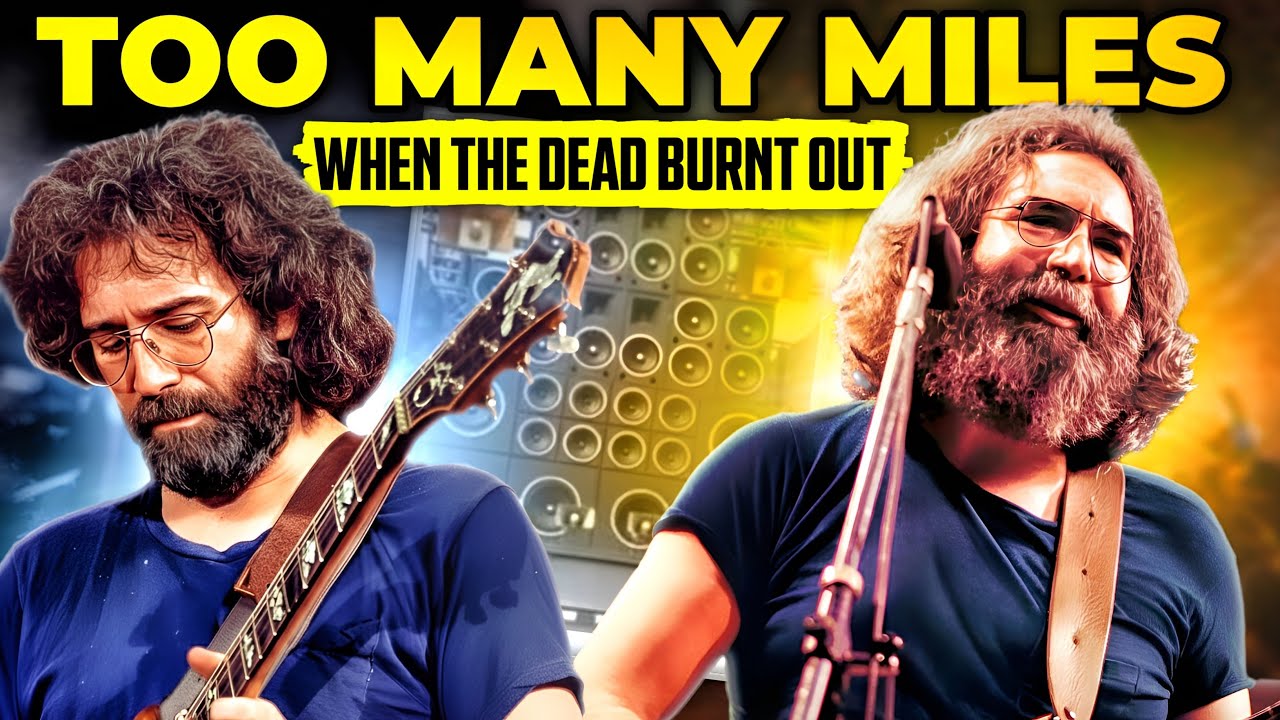
By 1974, the Grateful Dead had built something that seemed impossible: a sound system that weighed as much as a dozen full-grown elephants and stretched the length of a basketball court. The Wall of Sound, designed by Bear Stanley, consisted of over 600 speakers and cost almost $300,000 to build—over $1.5 million in today’s money. The system required four semi-trailers and two road crews just to transport it. They had achieved perfect sound quality, but at what cost? The band was hauling this monument to sonic ambition from venue to venue while hemorrhaging money with every show.
Jerry Garcia was burning out in real time. The stresses of large-scale touring, the loss of Pigpen, too many gigs, and too many people backstage had created an unsustainable situation. By the end of 1974, Garcia was done being that kind of hero. Phil Lesh would later reflect that the chaos had become genuinely unsustainable. Management was increasingly frustrated: they couldn’t operate at this scale anymore. There was a collective realization that something had to change.
The Farewell That Changed Everything
The Grateful Dead announced their farewell: five concerts at Winterland in San Francisco, October 16th through 20th, 1974. These weren’t just any shows—they were being filmed for what would become The Grateful Dead Movie. The setlists read like greatest hits collections with “Playing in the Band,” “Eyes of the World,” and closing each night with “Johnny B. Goode.” Bob Weir thanked the crowd and hinted at the hiatus, but nobody really knew what was coming next. The band nearly bankrupted themselves making that film as well as mounting those final shows.
But here’s where the story gets interesting. Just weeks after the farewell shows, Garcia was back on stage. On November 5th, 1974, at the Bottom Line in New York City, Garcia was jamming with Merl Saunders, playing covers like “I Second That Emotion” and “Money Honey.” Sitting at a table near the stage was John Lennon. This single moment tells us everything about Garcia’s mindset. He wasn’t done with music. He was tired of the machinery—the Wall of Sound, the massive crew, the financial pressure, the expectations. He wanted to get back to just playing music with friends.
Taking Space to Breathe
For most of 1975, the Grateful Dead stayed quiet. Garcia explored different musical territories with the Jerry Garcia Band and worked on acoustic bluegrass with Old & In the Way. Bob Weir built a home studio called Ace’s Studio where he worked on solo material. But something important was brewing behind the scenes. Then came the SNACK benefit on March 23rd, 1975, at Kezar Stadium in San Francisco. Students Need Athletics, Culture, and Kicks was a fundraiser for San Francisco schools, and the Grateful Dead played for only 45 minutes.
What’s fascinating about that performance is that their entire set was basically one song: “Blues for Allah,” flowing into “Stronger Than Dirt (or Milkin’ the Turkey),” into drums, back to the reprise, with an encore of “Johnny B. Goode.” Fans who expected a marathon Dead show got experimental jazz fusion instead. That performance was a preview of what the band had been working on during their break—minimal recording with no overdubs, exploring unusual instrumentation like gongs and hand percussion. The hiatus had given them space to experiment without the pressure of touring.
The Return with New Music
On August 13th, 1975, at the Great American Music Hall in San Francisco, the Grateful Dead debuted “Help on the Way,” “Slipknot!,” and “Franklin’s Tower”—a sequence that would become one of their most beloved song suites. This invitation-only show for about 1,000 people was where they premiered the material they’d been developing. The show also featured “King Solomon’s Marbles,” “Crazy Fingers,” and “Blues for Allah.” It was recorded and later released as One from the Vault, capturing the intimacy of their return.
Garcia’s guitar tone was cleaner and more focused than the Wall of Sound era. But something deeper had changed: the jams from 1974, like “Playing in the Band” and “Eyes of the World,” had evolved into structured suites. “Help on the Way” flowed seamlessly into “Slipknot!,” then into “Franklin’s Tower.” The rhythm section had refined percussion compositions during the break. This wasn’t just the same band returning—this was musical evolution happening in real time.
A Different Kind of Freedom
By June 1976, when the Grateful Dead were ready to tour again, something remarkable had shifted. They realized they didn’t need that massive equipment with them anymore. By the time they returned from their hiatus, the world of audio had caught up to them. They could rent a PA system and achieve the same quality without the financial burden. The Wall of Sound had been a magnificent obsession, but it had nearly destroyed them. Sometimes you have to nearly destroy something to understand what it really is.
The 1974 break wasn’t about quitting—it was about recovery. Garcia needed to step back from being that kind of hero. The band needed to reset their finances, and their music needed room to evolve. Looking back, that year off might have been the smartest decision the Grateful Dead ever made. They returned with simpler logistics but more sophisticated music. The Blues for Allah sessions had pushed them into jazz fusion territory. “Help on the Way” and “Franklin’s Tower” became fan favorites that they’d play for the next 30 years.
The Lesson That Saved a Legacy
Perhaps most importantly, they learned they could step away and come back. That break established a precedent that would serve them well through lineup changes, creative challenges, and Garcia’s later struggles. The Grateful Dead weren’t just a band—they were a living organism that could adapt and survive. Jerry Garcia never really quit the Grateful Dead. He just needed to remember why he loved playing music in the first place. That Bottom Line show with John Lennon watching from the audience wasn’t an ending. It was a reminder that music isn’t about the machinery. It’s about the connection between players and between players and audience.
The 1974–76 period taught the Grateful Dead that sustainability matters more than spectacle. They could tour for 30 more years because they learned when to step back. The Wall of Sound was incredible, but it was also unsustainable. Garcia’s call for a break probably saved the band’s career, and proved that sometimes the greatest strength isn’t pushing forward—it’s knowing when to pause and rebuild.
Subscribe to The Shakedown Archives for more Grateful Dead documentaries, and explore more stories at TheShakedownArchives.com.
The Shakedown Archives publishes new research on Grateful Dead history each week. If you enjoyed this essay, you can subscribe to the companion YouTube channel below.
Subscribe on YouTube