Dan Healy Changed the Dead’s Sound—Then Turned Tapers Into a System
A Boy in Weed, California
The story of Dan Healy begins in a small Northern California town of just 220 people called Weed, located on the Eel River in what’s now known as the Emerald Triangle. In this isolation, young Healy developed an early fascination with electronics and broadcast technology. A sixth-grader in the town strung a wire up a redwood tree and started transmitting radio signals. Healy, inspired by this DIY spirit, built a transmitter from an old radio and ran wire up the tallest redwood tree he could find, starting his own broadcasting experiment. This wasn’t just a hobby—it was the birth of an engineer’s mind that would eventually transform the Grateful Dead’s entire sound system approach.
KERG and the Northern Woods
Healy’s early radio work evolved into a serious project. By the time he was older, he and his wife Patty would own KERG, a radio station serving the northern California communities around Garberville-Redway. The station initially had limited power, heard “in virtual shouting distance” of its transmitter location on a mountaintop. As the station prepared to increase to 100,000 watts, ships at sea would soon listen to KERG’s broadcasts, and crew members would call ashore on ship phones. For Healy, this represented the fulfillment of a lifelong dream rooted in that redwood tree transmitter of his boyhood.
Meeting Jerry Garcia and the Dead’s Sound Revolution
Healy’s reputation for taking apart off-the-shelf gear and turning it into something better caught the attention of the Dead at precisely the moment they needed a visionary soundman. Jerry Garcia completely believed in Healy’s abilities and backed every idea he proposed. Beginning in the late 1960s and continuing through the 1970s, Healy spent 10-15 years without taking a single day off, constantly innovating and designing new systems for the Dead’s increasingly ambitious concerts.
The Taper’s Section and Organized Recording
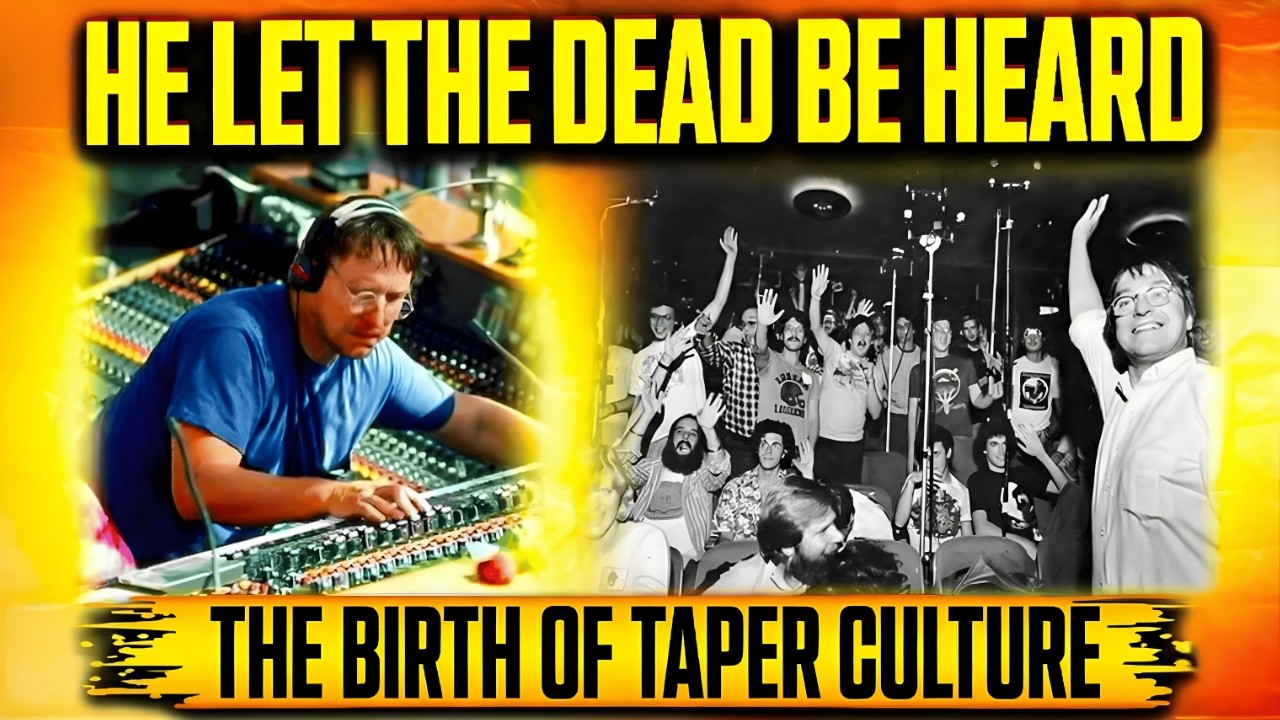
At the Berkeley shows during New Year’s 1975, the Dead implemented a concept they’d been considering for a while: the taper’s section. Located behind the soundboard, this designated area acknowledged the reality of tape recording at Dead shows while creating a system where it could be managed. Healy essentially turned what had been ad-hoc and chaotic—fans sneaking recording equipment into venues—into an organized practice with its own etiquette and physical space. This was revolutionary: instead of fighting taping culture, the Dead legitimized it through structured access.
Berkeley ’84 and the Meyer System
Healy’s engineering work reached legendary status with shows like Berkeley ’84 and other major venues. He collaborated with John Meyer, whose innovations in speaker design couldn’t blow up like Healy’s experimental systems. By the time of the later shows at venues like Frost Amphitheater and Madison Square Garden with the Meyer system, Healy and Meyer had created the most sophisticated concert sound technology of its era. The 1974 Wall of Sound project, though never fully completed before economic constraints intervened, represented the high-water mark of their R&D collaboration.
Legacy of Innovation and Access
Healy’s contributions to the Grateful Dead extended far beyond technical specifications. By creating the taper’s section, he transformed the fan recording culture from something illicit into an integral part of the Dead experience. Simultaneously, his relentless pursuit of sound quality meant that when those tapes were played back, they captured the Dead at their best. His refusal to accept off-the-shelf solutions and his willingness to modify and build from scratch set a standard for the Dead’s technical operations that would influence concert sound for generations.
Watch the full documentary on YouTube →
Subscribe to The Shakedown Archives for more Grateful Dead documentaries, and explore more stories at TheShakedownArchives.com.