Grateful Dead’s ‘Friend of the Devil’: The Unexpected Journey Behind the Iconic Song
A Song Written for Someone Else
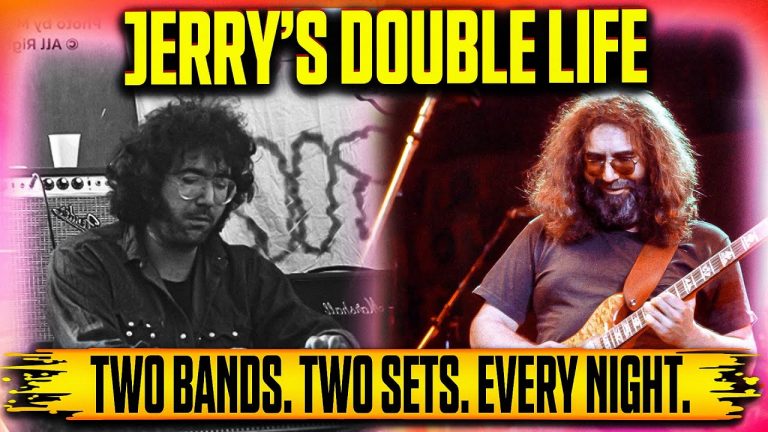
One of the Grateful Dead’s most iconic songs almost never became theirs. In late 1969, lyricist Robert Hunter sat in a San Francisco rehearsal space with the New Riders of the Purple Sage, working through a new tune he’d drafted. Hunter, who served as the Dead’s primary lyricist, was moonlighting as bass player for the New Riders, a country-rock group that included John “Marmaduke” Dawson and guitarist David Nelson. The song in question—”Friend of the Devil”—was written specifically for the New Riders, not the Grateful Dead. It would take a fortuitous discovery and Jerry Garcia’s instinctive musical sensibility to change that trajectory forever.
Hunter’s Double Life in the San Francisco Sound
During the late 1960s, the San Francisco music scene was characterized by overlapping bands, shared rehearsal spaces, and a communal creative energy that defined an entire era of American music. Both the Grateful Dead and New Riders existed within this ecosystem, with members frequently collaborating and cross-pollinating ideas across projects. The Dead weren’t a hermetic operation; they were part of a larger cultural movement where musicians played in multiple bands, explored different genres, and maintained fluid artistic relationships.
During one of those New Riders sessions, Hunter brought in four verses of his new composition and played them for Dawson and Nelson, who helped smooth out some of the chord changes and refine the arrangement. Hunter himself later recalled the creative process: “I was playing bass with the New Riders, and I had ‘Friend of the Devil’ more or less already written.” The three musicians worked through the material together, each contributing to shaping the song’s early form. The collaboration between Hunter, Dawson, and Nelson resulted in a polished composition that seemed ready for regular performance with the New Riders.
A Kitchen Table Discovery That Changed Everything
What neither Hunter nor the New Riders anticipated was that their song would find a different home. The moment that would alter the song’s destiny came through a seemingly mundane circumstance—an early morning discovery in a domestic space. According to the story passed down through Grateful Dead lore and historical accounts, Jerry Garcia found Hunter’s handwritten lyrics on a kitchen table one morning. The pages were just sitting there, waiting to be found, the verses visible and inviting interpretation.
Garcia possessed an almost instinctive gift for recognizing potential in raw material. He had spent years developing his musical intuition, learning to identify strong melodies and compelling lyrical hooks that could resonate with audiences. The moment he read Hunter’s words and understood the song’s narrative arc, he recognized something powerful in the composition. Garcia didn’t simply see a folk song or country tune; he saw a vehicle for the kind of improvisational exploration that defined the Grateful Dead’s approach to music.
Garcia brought “Friend of the Devil” to the band, and they embraced it immediately, transforming what was meant for the New Riders into one of their most beloved standards. The Dead’s arrangement and interpretation would ultimately overshadow the New Riders’ version in the popular imagination. Garcia’s involvement wasn’t a theft or appropriation; it represented a genuine recognition of the song’s power and an instinctive understanding that his band could take Hunter’s composition somewhere deeper and more musically sophisticated.
From Obscurity to Iconic Status
The irony is profound: a song Robert Hunter had deliberately written for another band became permanently associated with the Grateful Dead. “Friend of the Devil” carries a narrative arc that resonates with listeners on multiple levels. The song tells the story of a restless traveler moving through time and distance, the ambiguous morality of the protagonist who encounters the devil and “borrows” money, and the hypnotic rhythm that seems to mirror an endless journey. The song’s structure and Hunter’s lyrical economy created something that was both distinctly American folk and rock, yet wholly original.
Hunter’s lyrics capture a specific American archetype—the drifter, the hustler, the person on the move. The opening lines establish this immediately: “I’ve laid around this town for so long, lettin’ my life slip away.” The protagonist is restless, aware that something is being lost to inaction. The encounter with the devil, far from being genuinely malevolent, becomes transactional—a way to finance the journey. By the end of the song, the traveler just wants to get home before daylight and catch some sleep. It’s a narrative of movement, survival, and the human need for rest and shelter.
The Strength of Intuition in Creative Collaboration
Garcia’s decision to claim the song for the Dead says something important about his approach to music and his role within the band. Rather than viewing other projects as competitors, he saw them as creative laboratories where ideas could be born and refined. Hunter’s work with the New Riders gave him a different musical perspective—the country and folk influences evident in those arrangements influenced the song’s final form when Garcia brought it to the Grateful Dead. The collaboration between Hunter and Garcia, mediated by the cross-pollination of bands and the openness to discovering work in unexpected places, demonstrates how great songs emerge from ecosystems of creativity rather than isolated genius.
This kind of discovery and re-contextualization was central to how the Grateful Dead operated throughout their career. The band was always open to material from multiple sources, always willing to take a song and reshape it through their own improvisational framework. But “Friend of the Devil” is special because it reveals how the most important discovery isn’t always the most obvious one. A song can exist in one context, serve one purpose, and then be discovered anew and transformed into something even more significant.
A Grateful Dead Essential
Today, “Friend of the Devil” ranks among the most recognizable Grateful Dead compositions. Fans can instantly recall the opening guitar riff and Hunter’s memorable opening couplet. The song has become a fixture of Dead shows, a staple of jam bands everywhere, and a testament to Hunter’s gift for storytelling. But its path to prominence reminds us that even the most iconic works often arrive through unexpected routes—discovered on kitchen tables, refined in other bands’ rehearsal spaces, and ultimately claimed by the artists bold enough to recognize their potential. The song stands as a perfect example of how great music emerges not from careful planning but from the openness to recognize excellence when it appears in the most ordinary moments.
Watch the full documentary on YouTube →
Subscribe to The Shakedown Archives for more Grateful Dead documentaries, and explore more stories at TheShakedownArchives.com.