How Bill Graham Changed The Dead Forever
November 6th, 1965: The Unlikely Beginning
On November 6th, 1965, a producer named Bill Graham organized a concert at the Longshoreman’s Hall in San Francisco. It was a benefit fundraiser for the San Francisco Mime Troop, a small experimental theater group that needed legal defense funds. The headliners were Jefferson Airplane, a band that was just beginning to get noticed in the Bay Area scene. But there was another band on the bill—a group that was still calling themselves the Warlocks, a name they would abandon within months. Nobody in the crowd knew who they were. Nobody could have predicted that the man producing this obscure benefit show and the unknown band opening it would become so inextricably linked that one of them would essentially create the other.
Bill Graham was already an experienced concert producer by 1965, but he was about to embark on a partnership that would define his career. The Grateful Dead—still the Warlocks—needed someone who understood how to present rock and roll concerts in a completely new way. And Graham needed a band that could sustain his vision of what live music could become. What neither of them quite realized on that November night was that they were about to transform American concert culture.
The Anatomy of a Promoter’s Genius
Bill Graham wasn’t like other promoters. He didn’t just rent a venue and hire bands. He curated experiences. He understood that a concert was a total environment—not just the music, but the lighting, the atmosphere, the sense that something momentous was happening. He’d grown up in post-war Germany, escaped Nazi persecution, and made his way to America as a refugee. That outsider perspective gave him a unique vision of what American culture could be.
When Graham began working with the Grateful Dead, the band was still finding its identity. They were playing long, experimental sets that had no clear beginning or end. They were improvising extensively, taking songs apart and rebuilding them in real time. Most promoters would have seen this as a liability—a band that couldn’t be counted on to play a recognizable setlist, that might go on for hours. Graham saw it as revolutionary. He realized that the Grateful Dead’s unpredictability was actually the point. They were creating a new form of music that didn’t exist anywhere else.
The Fillmore West and a New Concert Format
Graham’s most important contribution to the Grateful Dead, and to rock and roll in general, was the Fillmore West. This San Francisco venue became the laboratory where everything changed. Graham booked the Grateful Dead there constantly—sometimes multiple nights a week. The band essentially lived at the Fillmore in the late 1960s, playing experimental sets that went on for hours. They had space to discover what they could do as musicians. And Graham had the vision to understand that this was the future of concert music.
What Graham created was a new business model for live music. Before the Fillmore, concerts were mostly one-off events where a band would play a set and leave. Graham realized that if you had a venue and a band that could sustain long, evolving performances, you could create something more like a sustained artistic practice. The Grateful Dead could play week after week, night after night, and each show would be different. This was revolutionary not just for the Dead, but for concert culture itself.
The San Francisco Sound and Its Promoter
The San Francisco scene that emerged in the mid-1960s was utterly dependent on Bill Graham’s vision and execution. Without him, the Grateful Dead might have remained a curiosity—a band that was too weird, too experimental, too unwilling to compromise for commercial success. But Graham believed in the Dead, and more importantly, he believed in the audience that would eventually come to worship them. He saw something in their music that transcended the commercial music industry’s categories.
Graham also understood something crucial about the Dead’s fanbase that would shape their entire career. He saw that these fans were willing to follow the band anywhere, listen to any length of music, trade bootleg recordings obsessively. He created an environment where that obsession could flourish. The Fillmore West became a temple, and the Grateful Dead became its priests.
The Legacy of Showmanship and Vision
By the 1970s, Bill Graham was one of the most powerful figures in American concert promotion. He’d expanded beyond the Fillmore West to other venues, created the Fillmore East in New York, and promoted some of the most important concerts in rock history. But his partnership with the Grateful Dead remained unique. The Dead became synonymous with the Fillmore, and the Fillmore became the model that other venues tried to replicate.
What Graham understood, which many other promoters missed, was that the Grateful Dead weren’t trying to be entertainment in the traditional sense. They were trying to create shared experience, collective transcendence, a space where music and community could merge. Graham’s gift was recognizing that this was exactly what audiences were hungry for, and creating the physical and business infrastructure to make it possible.
The Man Behind the Curtain
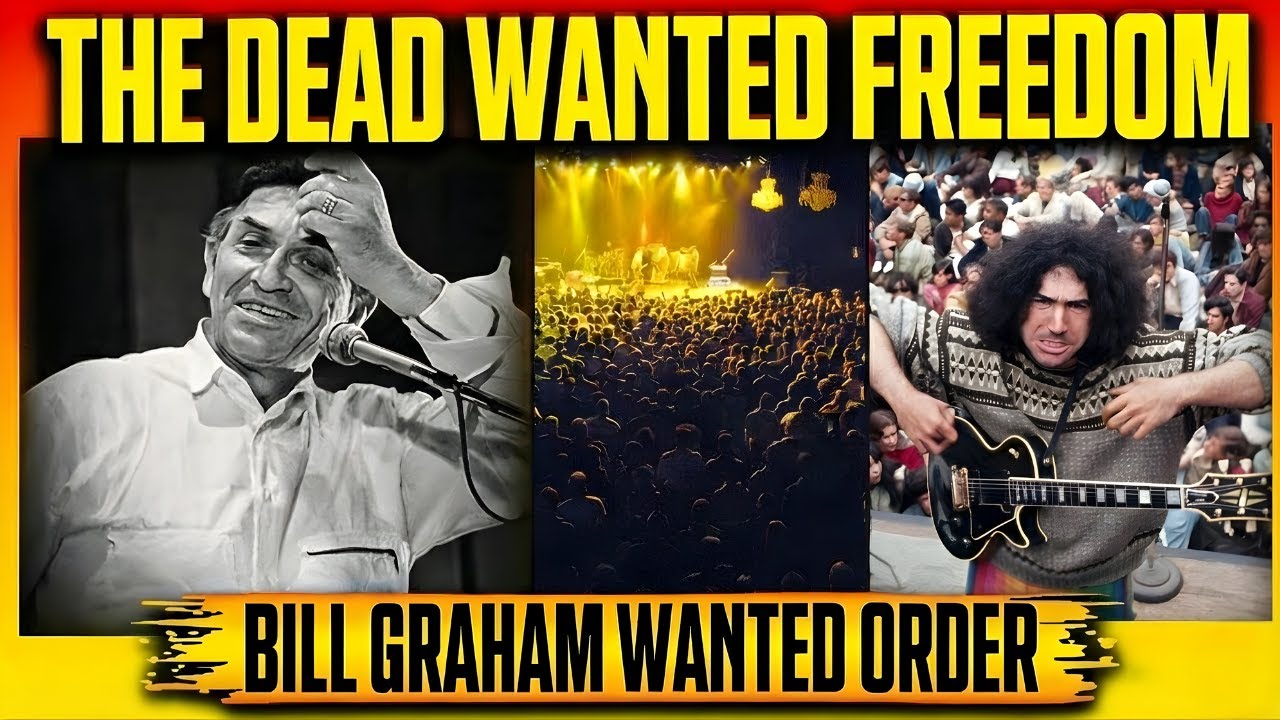
Graham’s influence on the Dead extended far beyond just booking them into his venue. He became a trusted advisor, almost a manager in some respects, though the band maintained creative autonomy. He understood their idiosyncrasies and worked within them rather than against them. When other promoters might have demanded that the Dead play shorter sets or more commercially viable material, Graham let them be themselves. That freedom was essential to the Dead’s development as artists.
Bill Graham died in 1991, in a helicopter accident. By then, he’d already become a legend in his own right, someone who’d shaped how American rock and roll was presented and experienced. But his greatest legacy might be the template he created for the Grateful Dead—the understanding that live music could be art, that audiences could be trusted with long, experimental performances, that a band and a venue could become so intertwined that they defined each other. The Grateful Dead needed Bill Graham. But perhaps Graham needed the Grateful Dead just as much, because they gave him the chance to prove that his vision of what live music could be was right.
Watch the full documentary on YouTube →
Subscribe to The Shakedown Archives for more Grateful Dead documentaries, and explore more stories at TheShakedownArchives.com.