Jerry Garcia’s 1986 Coma & The Grateful Dead Reborn
The Crisis That Almost Ended a Legend
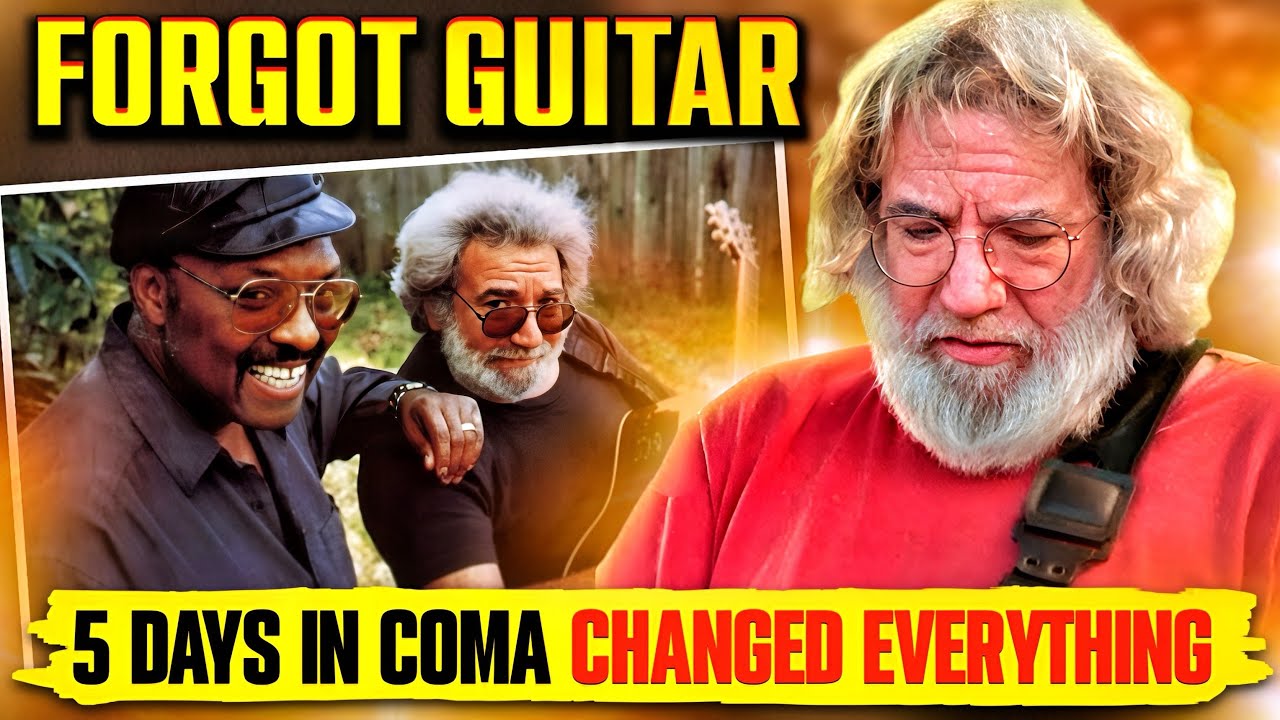
Everyone in the Grateful Dead community knows that Jerry Garcia nearly died in 1986. His diabetic coma became part of the essential Grateful Dead lore, a near-tragic moment that the band and their extended community survived and eventually transcended. But here’s what most people don’t know about the Jerry Garcia coma story—what happened after he woke up, and how that aftermath shaped the second half of his life and career in ways both devastating and ultimately profound. When Garcia opened his eyes after five days in a coma, confused and weakened by his ordeal, he faced an unexpected and completely devastating reality: he couldn’t remember how to play guitar at all.
Starting Over From Zero
Jerry Garcia had been playing guitar for over twenty years by the time of his 1986 coma. His hands knew the fingerboard the way a writer knows the keyboard or a dancer knows their body’s movement—muscle memory had become so deeply ingrained that it functioned almost unconsciously. His musicianship was so profound and automatic that he could simultaneously explore complex improvisational spaces, sing clearly, and interact with his bandmates and audiences. The connection between his musical intention and his hands’ execution had become seamless and almost intuitive.
Then, abruptly and completely, that knowledge evaporated as though it had never existed. When he tried to play after waking from the coma, the connections between his mind and his fingers had been severed by the medical trauma. The fundamental physical and neurological programming that made him Jerry Garcia the guitarist had been erased. He had to begin again at the beginning, relearning basic chords like a child taking their first lesson on a borrowed acoustic guitar. This wasn’t a gradual recovery of ability; it was a complete starting over, from the ground floor.
The First Song He Wanted to Learn
What makes this story even more poignant is what song Jerry Garcia wanted to learn first as he began the difficult process of rebuilding his musical abilities. It wasn’t “Truckin’,” the rollicking rock anthem that had been part of countless Dead shows. It wasn’t “Sugar Magnolia,” the high-energy rocker that had become synonymous with the band’s youthful energy. Instead, the first song Garcia reached for was “My Funny Valentine,” a jazz standard.
That choice reveals something profound about Garcia’s artistic identity beneath the rock-and-roll persona that had defined his public image since the band’s formation. While the Grateful Dead’s audience knew him as a psychedelic rocker and improvisational jam-band pioneer, Garcia’s musical heart had always harbored a deep affection for jazz—the improvisational music that had influenced his entire approach to the Dead’s compositions and live performances. At the moment of his greatest vulnerability, when rebuilding his connection to music, he turned to the tradition that had always been closest to his artistic soul.
Relearning the Instrument
The physical and psychological process of relearning guitar after such devastating trauma would have defeated many musicians completely. Some would have simply given up, believing that their playing days were finished. Others might have pursued alternative artistic outlets rather than facing the painful work of rebuilding fundamental skills. But Garcia approached the recovery with the same patient curiosity and persistent determination he brought to everything musical. He started with the fundamentals, the basic chords and scales that form the foundation of guitar playing, rebuilding the connection between intention and execution that a musician’s hands must maintain.
Each day represented a small victory as he worked through his recovery—a chord remembered, a scale successfully navigated, a finger-picking pattern that suddenly felt familiar again. The work was painstaking and sometimes frustrating, but Garcia brought to it the same focused dedication he’d always brought to musical exploration. He understood that mastery requires patience, repetition, and willingness to sit with difficulty until breakthrough arrives.
The Grateful Dead Reborn
When Garcia returned to performing with the Grateful Dead, something fundamental had shifted in both the man and the musician. He wasn’t the same player who’d gone into the hospital months earlier. Physically, he was more fragile—the coma and recovery had taken a toll on his health that would persist for the remainder of his life. Artistically and spiritually, he was different in ways that were less visible but perhaps more significant. His forced sabbatical and the grueling work of recovery had given him time for reflection and introspection that most touring musicians never experience. He’d had to confront his own mortality, his own limitations, and his own profound desire to continue making music despite everything.
The Second Half of a Legacy
The 1986 coma and recovery became a pivotal moment not just in Jerry Garcia’s life but in the Grateful Dead’s entire history as a band. The band that emerged from that crisis played differently than they had before. There was an intensity and presence in their shows that longtime fans felt marked the beginning of a new era. Garcia’s near-death experience and the grueling work of recovery seemed to deepen his commitment to the music in ways that transcended typical artistic growth. He’d been given a second chance at life and at his art, and he spent the remaining eight years of his life honoring that gift through the music he created and performed. The Grateful Dead’s second half, from 1986 to Garcia’s death in 1995, represents music created by an artist who understood vividly and personally what it meant to receive a gift.
Watch the full documentary on YouTube →
Subscribe to The Shakedown Archives for more Grateful Dead documentaries, and explore more stories at TheShakedownArchives.com.