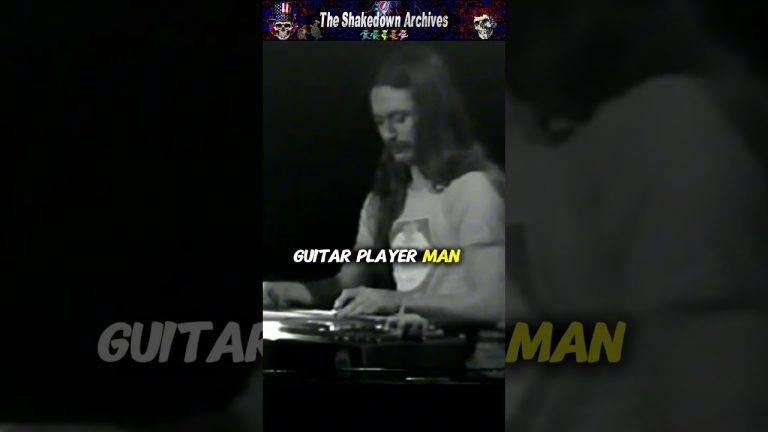
Mickey Hart on the impact of Indian music
A Drummer’s Spiritual Quest
Mickey Hart came to Indian classical music not through academic study but through a kind of spiritual hunger. In the late 1960s, as he was establishing himself as the Grateful Dead’s drummer, Hart began to explore percussion traditions from around the world. He wasn’t looking for exotic sounds to add to rock and roll—he was searching for a deeper understanding of rhythm itself, for ways of thinking about time and pulse that extended beyond Western musical conventions.
His first encounter with Indian tabla master Ustad Allarakha was transformative. Hart approached this meeting with reverence, bringing with him the commitment to learning that he brought to everything he undertook. Allarakha became a mentor and friend, introducing Hart to the mathematical precision and spiritual dimensions of Indian classical rhythm. The tabla, with its complex system of hand techniques and the ability to produce multiple tones from a single drum, opened Hart’s mind to possibilities he hadn’t previously imagined.
Rhythm as Consciousness
What Mickey Hart learned from Indian music went far beyond technical skills. He encountered a philosophical approach to rhythm—one that treated percussion not merely as a timekeeping device but as a gateway to altered consciousness and spiritual understanding. In Indian classical music, the tabla player engages in a kind of dialogue with other musicians, creating complex polyrhythmic conversations that can last for hours, each statement building on previous patterns and creating new variations.
This approach to rhythm found its way directly into the Grateful Dead’s music. Hart began incorporating tabla elements, Indian rhythmic patterns, and the spiritual approach to percussion into Dead performances. Songs featured extended drum solos that drew on Indian classical principles, creating hypnotic grooves that seemed to put audiences into trance states. The famous “Drums and Space” segment that became a fixture of Dead shows in the 1970s and 1980s was directly influenced by Hart’s study of Indian percussion traditions.
Breaking Down Musical Boundaries
In the late 1960s and early 1970s, Mickey Hart’s engagement with Indian music was part of a larger cultural phenomenon—Western musicians discovering that their own musical traditions could be enriched and transformed through engagement with other cultures. But Hart’s approach was particularly respectful and committed. He didn’t just listen to Indian music; he studied it seriously, sought out master musicians, and allowed it to fundamentally reshape his understanding of what rhythm could be.
This cross-cultural exchange happened at the height of the counterculture, when boundaries between Eastern and Western philosophy, spirituality, and art were being broken down with enthusiasm and intentionality. Hart represented a musician who took those connections seriously, who treated Indian music not as an exotic curiosity but as a profound alternative approach to understanding rhythm and consciousness.
The Global Musician
As his career progressed, Mickey Hart continued to expand his musical horizons. He collaborated with world musicians from diverse traditions. His Planet Drum project, initiated in 1990, brought together percussion masters from around the world—including Zakir Hussain from India, Giovanni Hidalgo from Puerto Rico, and Sikiru Adepoju from Nigeria. The project was explicitly designed to explore rhythm as a universal language, to demonstrate how drummers from different cultures could communicate and create together.
Hart’s philosophy was that rhythm transcends cultural boundaries. Different cultures may express rhythm differently, may use different instruments and different theoretical frameworks, but the fundamental impulse to mark time and create patterns is universal. And when musicians from different traditions come together in a spirit of mutual respect and genuine artistic engagement, something transcendent can happen.
The Influence on the Dead
The impact of Mickey Hart’s engagement with Indian music on the Grateful Dead cannot be overstated. Songs featuring complex rhythmic patterns, extended drum solos that seemed to access something transcendent, the use of percussion as a spiritual tool—all of these elements came from Hart’s serious study of world music traditions. He brought a cosmopolitan sensibility to rock and roll, one that suggested that great art could emerge from fusion and cross-cultural exchange.
And importantly, Hart’s approach modeled how to engage with other cultures respectfully. He didn’t appropriate Indian music; he learned from it, credited his teachers, and allowed it to transform his own musical approach. He treated musicians from other traditions as peers and collaborators, not as exotic performers to be featured and then forgotten.
A Spiritual Discipline
Mickey Hart has consistently described his approach to drumming as spiritual discipline. He practices daily, maintains a commitment to his art that rivals that of any Indian classical musician. In his 80s, he continues to perform, continues to explore rhythm, continues to teach. His commitment to the transformative power of music and rhythm stands as a model for how musicians can engage with traditions beyond their own.
The impact of Indian music on Mickey Hart, and through Hart on the Grateful Dead and the broader rock music world, represents one of the most significant cross-cultural musical exchanges of the late 20th century. It opened doors—literal and figurative—between Western and Eastern musical traditions, suggesting that great art could emerge when musicians approached each other with respect, curiosity, and genuine artistic commitment.
Watch the full documentary on YouTube →
Subscribe to The Shakedown Archives for more Grateful Dead documentaries, and explore more stories at TheShakedownArchives.com.