Pigpen Wasn’t Crazy. He Was the Point.
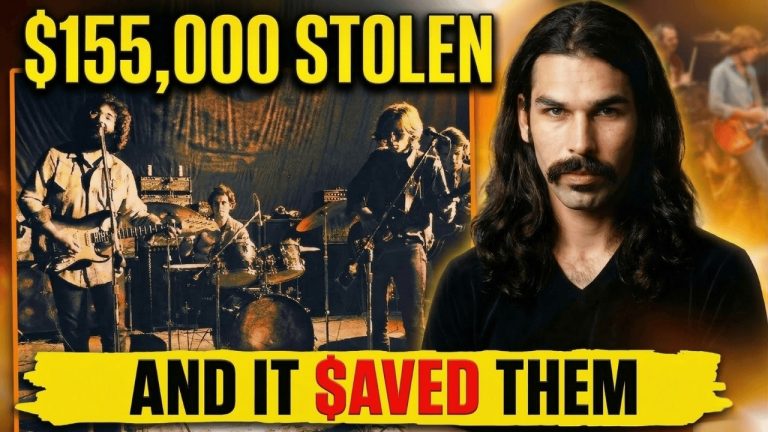
January 1969 — Pigpen fired a .22 pistol into the ceiling of Herb Greene’s San Francisco photo studio while Led Zeppelin was still inside. They fled without paying. It’s a great story. But what it actually reveals is something nobody talks about.
Ron “Pigpen” McKernan was being pushed off keyboards and handed congas while Tom Constanten took over. He was secretly taking Hammond organ lessons from John Cipollina’s mother just to stay relevant. Rock Scully watched him sit through the Aoxomoxoa sessions getting more confused and crushed with each take. The man Led Zeppelin ran from was losing his own band.
And yet Pigpen embodied the thing that made the Grateful Dead indestructible — the chaos, the unpredictability, the refusal to operate like a normal band. This experimental spirit was evident even in Jerry Garcia’s 1967 collaboration with Ornette Coleman, showcasing the band’s willingness to push musical boundaries from their earliest years. Led Zeppelin delivered precision spectacle: the same setlist night after night for twelve years. The Dead played over two thousand three hundred shows and never repeated a setlist once. Peter Grant confiscated taping equipment. Jerry Garcia said his responsibility to the notes was over after he played them. Two philosophies of rock occupied the same room in January 1969 — and the one that looked like a mess turned out to be the one that survived.
When John Bonham died in September 1980, Led Zeppelin immediately ceased to exist. When Pigpen died in March 1973, when Brent Mydland died in 1990, when Garcia died in 1995 — the ecosystem kept regenerating. Dead & Company at the Sphere in 2024, twenty-nine years after Garcia, still selling out. Bill Kreutzmann wrote about the gun incident and called it comical and ironic given Zeppelin’s later behavior. Pete Townshend reportedly told Garcia that Zeppelin played the same show for four years. Garcia was horrified.
The Philosophy Behind the Chaos
What Pigpen represented was never really about keyboards or harp or his voice — though all of it was remarkable. He was the living argument that the Dead’s approach to music wasn’t accidental. The chaos wasn’t a lack of discipline. It was the point. Every night was genuinely different because it had to be. The music had to mean something each time or it didn’t mean anything at all.
That’s what made the gun incident in Herb Greene’s studio more than just a wild story. Two bands, two completely different ideas about what rock and roll was supposed to be, in the same room. One of them is gone. The other is still touring.
Sources: Bill Kreutzmann’s “Deal,” Dennis McNally’s “A Long Strange Trip,” Rock Scully’s “Living with the Dead,” Blair Jackson & David Gans’s “This Is All a Dream We Dreamed,” Herb Greene interviews (Rolling Stone, Morrison Hotel Gallery)