The Crowd Culture That Drives The Grateful Dead and Phish
The Stage-to-Audience Paradigm
Most rock and roll operates on a simple power dynamic: the band performs, the audience watches. Information and energy flow in one direction. The band is the subject, the audience is the object. This was the standard operating model of rock and roll for decades, inherited from earlier concert traditions where audiences sat in chairs or stood passively while professionals delivered entertainment.
Jerry Garcia’s Radical Insight
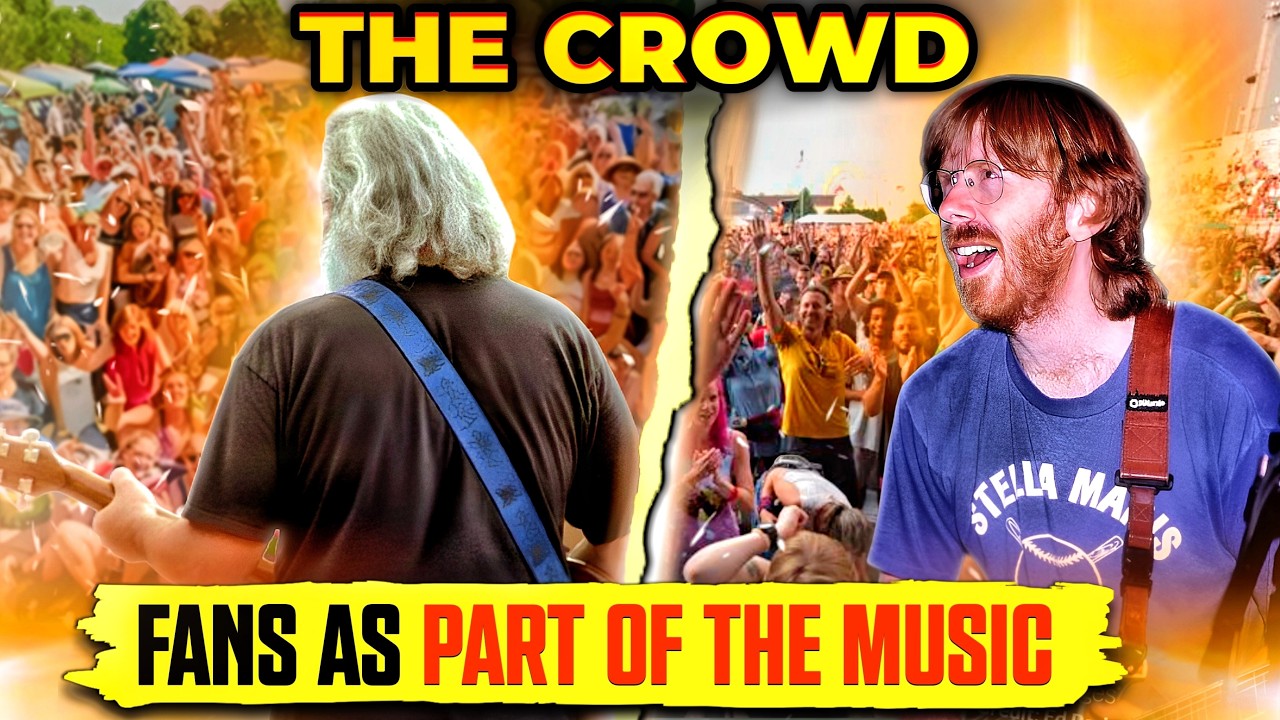
Jerry Garcia articulated a fundamentally different vision of what concerts could be. He argued that the audience co-creates the music. This wasn’t a metaphor or a casual description of how audiences move during shows. Garcia meant it literally: the energy, attention, and participation of the crowd shapes what the band plays and how they play it. When thousands of people are locked into a moment together, psychically attuned to the same experience, that collective consciousness becomes part of the musical instrument.
Two Different Tools, One Shared Philosophy
The Grateful Dead and Phish represent two different approaches to implementing this participatory philosophy. They use “completely different tools,” as the documentary notes, yet both bands built their entire practice around the idea that the crowd’s energy shapes the music. The Dead developed particular approaches to improvisation, setlist construction, and concert pacing that responded to audience energy. Phish developed their own distinct methods while maintaining the same fundamental commitment to audience co-creation.
The Participatory System
Both bands created what might be called “participatory instruments.” Rather than a traditional stage performance where the audience’s role is limited to applause and enthusiasm, the Dead and Phish made the audience’s presence, attention, and energy into an active component of the musical creation. This required abandoning the notion that the band is independent of the crowd and accepting that every show is genuinely unique because every crowd is different.
Not Rivals, But Complementary Approaches
The Phish fanbase and the Deadhead community are sometimes characterized as rival tribes competing for cultural legitimacy or musical credibility. But Garcia’s original insight suggests a different relationship: these are complementary approaches to the same revolutionary idea. Both bands rejected the entertainment industry’s traditional model of star performers delivering standardized product to passive consumers. Both said yes to the radical notion that audience participation isn’t a feature—it’s the entire point.
The Future of Music
In an era of recorded music, streaming, and isolated listening experiences, the participatory concert philosophy represents an alternative vision of what live music can be. It asserts that there’s something that can only happen when thousands of people gather with the intention to co-create something together. The Dead and Phish proved that this approach could sustain massive touring operations, devoted fan communities, and decades-long careers. Their model suggests that the future of music might involve less passive consumption and more active participation.
Watch the full documentary on YouTube →
Subscribe to The Shakedown Archives for more Grateful Dead documentaries, and explore more stories at TheShakedownArchives.com.