The Merl Saunders and Jerry Garcia Story: Two Legends, One Unforgettable Sound
September 1973: Where It All Connected
Everyone knows Jerry Garcia’s distinctive sound—that liquid, searching guitar tone that defined the Grateful Dead for three decades and influenced generations of musicians. But few people understand where that sound actually originated. The answer is surprisingly specific: September 5th, 1973, on a boat called the Bay Bell in San Francisco Bay, at a Hell’s Angels wedding reception.
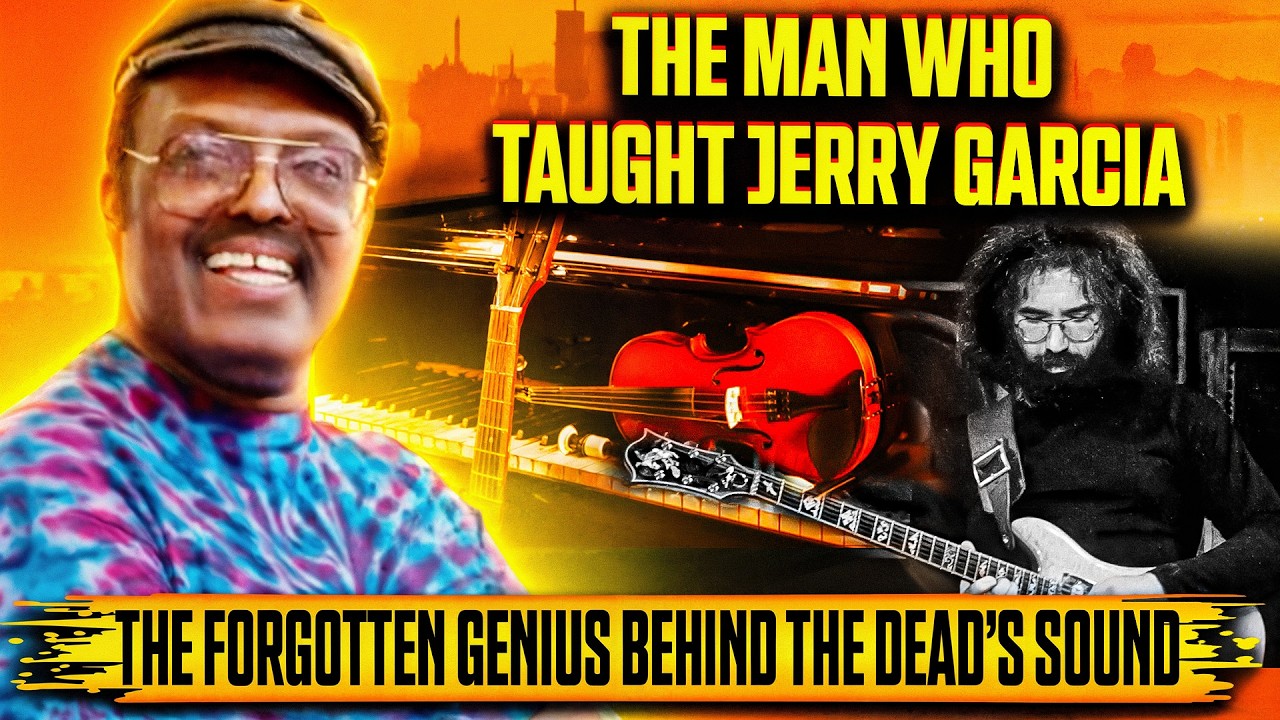
Jerry Garcia met Merl Saunders on that boat, and something clicked immediately. Saunders was a session pianist and organist with deep roots in soul, funk, and R&B. He wasn’t a rock musician by background. He wasn’t schooled in the psychedelic traditions that had shaped Garcia. He was a working musician from the soul and funk tradition, someone who understood how to make an instrument sing with emotional directness and groove-based sophistication.
Two Traditions Colliding
What happened between Garcia and Saunders wasn’t a simple collaboration between two musicians of similar sensibilities. Instead, it was a genuine collision between two different musical traditions. Garcia brought the improvisational ethos of rock and roll, the harmonic adventurousness he’d developed with the Grateful Dead, and his particular approach to electric guitar. Saunders brought soul music’s emphasis on feeling, funk’s rhythmic precision, and the conversational approach of R&B musicians.
When Garcia and Saunders played together, something unexpected emerged. Garcia’s guitar began to take on colors and textures it hadn’t previously possessed. Working alongside Saunders’ keyboard and organ work, Garcia discovered new possibilities for his own playing. The constraints of R&B and soul structures—the requirement to serve a groove, to follow a rhythm, to make the music danceable—pushed Garcia in directions that pure psychedelic rock didn’t require.
The Jerry Garcia Band Reborn
The partnership between Garcia and Saunders became the foundation for the Jerry Garcia Band, a project that would sustain Garcia’s interest outside the Grateful Dead for decades. With Saunders on keyboards and organ, Garcia could explore a repertoire that drew heavily from soul and funk, from blues standards and modern R&B compositions. The Jerry Garcia Band wasn’t a Grateful Dead side project; it was something genuinely different, with different musical DNA.
Saunders understood something crucial about Garcia that maybe even Garcia himself hadn’t fully grasped: his guitar could be even more expressive when placed in a soul and funk context. The directness of feeling in these musical forms seemed to unlock something in Garcia’s playing. His tone became rounder, warmer, more emotionally immediate. He could play shorter, more focused solos that carried profound weight rather than extended explorations.
The Sound Revolution
Listening to Garcia’s playing before and after meeting Saunders reveals the transformation. His work with Saunders was earthier, groovier, more connected to the body and to dancing. The intellectual exploration that characterized his Grateful Dead work remained, but now it was balanced with an emphasis on pure feeling and rhythmic groove. This balance became central to how Garcia understood his instrument’s possibilities.
The Jerry Garcia Band recordings feature Garcia playing in a relaxed, conversational way with Saunders. There’s less of the aggressive virtuosity and more of the thoughtful, responsive musicianship. Saunders would establish a groove or harmonic statement, and Garcia would answer it, building on it, finding new angles that extended what Saunders had suggested. It was genuine dialogue between two musicians who understood each other’s language.
Legacy in Every Note
The impact of Garcia and Saunders’ partnership extended far beyond their direct recordings together. It influenced how Garcia approached his playing in the Grateful Dead. His work in the late 1970s and 1980s reflected the lessons he’d learned from Saunders—an increased emphasis on feeling over technique, an understanding that simplicity could be more powerful than complexity, a recognition that the best music often lived at the intersection of different traditions.
For Saunders, the collaboration represented validation of his distinctive approach. He wasn’t being asked to adapt his style to fit a rock and roll mold. Instead, Garcia was asking what he could learn from Saunders’ background, how the soul and funk traditions could enhance rock and roll. This mutual respect became the foundation for a partnership that lasted for decades.
The Boat, the Band, and the Beginning
That Hell’s Angels wedding on the Bay Bell in September 1973 became one of those chance meetings that echo through musical history. Two musicians from different traditions, encountering each other at an unlikely venue, and discovering that their differences created something neither could have made alone. The resulting sound—Garcia’s searching guitar and Saunders’ soulful keyboards—would introduce countless listeners to a side of Garcia that the Grateful Dead couldn’t fully express, and would prove that great musicianship transcends genre boundaries.
Watch the full documentary on YouTube →
Subscribe to The Shakedown Archives for more Grateful Dead documentaries, and explore more stories at TheShakedownArchives.com.