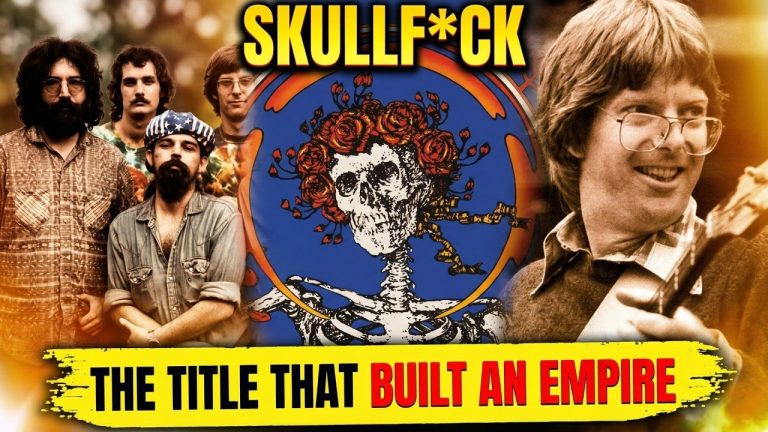
When the CIA Lost Control: LSD, MK-ULTRA & The Grateful Dead
The Government’s Secret LSD Experiments
The story of LSD in America is entangled with Cold War paranoia and government overreach. Beginning in 1953, the Central Intelligence Agency initiated a secret program called MK-ULTRA, ostensibly designed to explore whether LSD could serve as a truth serum or a tool for mind control. The CIA studied the drug with systematic determination, recruiting researchers, funding experiments, and distributing LSD to unsuspecting subjects—doctors, prisoners, and ordinary citizens who had no idea they were being dosed.
This wasn’t the recreational counterculture using LSD for spiritual exploration. This was the state apparatus using a powerful psychedelic drug as a weapon, attempting to weaponize altered consciousness itself. The historical irony is profound: in trying to control LSD and use it for intelligence purposes, the CIA inadvertently helped create the conditions for a massive countercultural movement that would escape their control entirely.
The Accidental Catalyst
By the early 1960s, high-quality LSD was circulating through California and across the country. Much of it came through legitimate pharmaceutical channels, distributed by researchers. Some came from informal networks. But the key point is that LSD was becoming available, becoming something people could experiment with, becoming a catalyst for the kind of consciousness exploration that appealed to a generation questioning authority and conventional values.
Ken Kesey and his Merry Pranksters represented one crucial intersection of this emerging counterculture and the psychedelic movement. Kesey had participated in MK-ULTRA-related LSD experiments at Stanford in the late 1950s, where researchers were studying the drug’s effects on consciousness and perception. But rather than accepting the CIA’s framing of LSD as a tool for control, Kesey and others saw it as a gateway to freedom, to exploration, to expanded consciousness.
The Acid Tests
Kesey and the Merry Pranksters created the Acid Tests starting in 1965 and 1966—multimedia events that were part party, part spiritual experience, part artistic experiment. These weren’t government sanctioned. They existed in legal and moral opposition to everything MK-ULTRA represented. At an Acid Test, people gathered to take LSD in a communal setting, to experience music and visuals and collective consciousness expansion together.
The Grateful Dead were intimately involved with the Acid Tests. Jerry Garcia and the band provided music for these events, helping to create the soundtracks for a new kind of consciousness and community. The Dead’s music—with its emphasis on improvisation, on collective intention, on the band and audience merging into a single organism—became the perfect accompaniment to Kesey’s vision of what LSD could be when freed from government control and commandeered by a community committed to freedom and exploration.
The Inversion of Control
The CIA’s MK-ULTRA was about imposing consciousness from above, about controlling minds, about using powerful drugs to make people more compliant or more vulnerable to manipulation. The Acid Tests and the Grateful Dead represented the opposite impulse—consciousness expansion as liberation, drugs as tools for exploring the boundaries of human experience and connection.
Where MK-ULTRA was secretive, the Acid Tests were public (if countercultural). Where MK-ULTRA was coercive, the Acid Tests were invitational. Where MK-ULTRA treated subjects as test cases, the Acid Tests treated participants as explorers and co-creators of the experience. In this sense, the Grateful Dead and the psychedelic counterculture represented a fundamental inversion of the CIA’s attempt to control consciousness through chemical means.
The Spillover of Knowledge
Much of the scientific knowledge about LSD generated through MK-ULTRA eventually became public. Books were written, investigations were launched, and the program was exposed for what it was—an ethically abhorrent attempt to use psychedelic drugs as instruments of state power. But by the time this knowledge became widespread, LSD had already escaped government control. It was out in the culture, being explored by millions of people, being integrated into music, art, spirituality, and social movements.
The government’s attempt to monopolize and control LSD ended in failure. By the time the public fully understood what MK-ULTRA had been, the cultural meaning of LSD had been completely transformed by the very counterculture that the CIA had feared.
The Grateful Dead as Anti-Control
The Grateful Dead’s music from the mid-1960s onward can be understood as inherently opposed to everything MK-ULTRA represented. The emphasis on collective improvisation, on letting go of rigid structures, on trusting the band and audience to co-create meaning—these are practices of freedom and openness, the opposite of control and manipulation.
When people took LSD at a Grateful Dead show, they were choosing to expand their consciousness in a communal context, with the band’s music as a guide. This was radically different from the MK-ULTRA scenario where people’s minds were being altered without consent, for purposes of control. The Dead’s music helped transform LSD from a government weapon into a tool of spiritual and artistic exploration.
An Unintended Liberation
In attempting to control consciousness through LSD, the CIA inadvertently helped create the conditions for the greatest explosion of countercultural consciousness in modern history. The drug escaped their control. The knowledge spread. And musicians like Jerry Garcia and the Grateful Dead helped transform LSD from something associated with government surveillance and mind control into something associated with freedom, community, and expanded consciousness.
This is the great irony at the heart of the CIA’s LSD program: in trying to weaponize consciousness itself, they created a weapon they could not control, which ultimately became a tool for liberation rather than subjugation.
Watch the full documentary on YouTube →
Subscribe to The Shakedown Archives for more Grateful Dead documentaries, and explore more stories at TheShakedownArchives.com.