When the CIA Lost Control: MK-ULTRA & The Grateful Dead
The Cold War Context: America in 1965
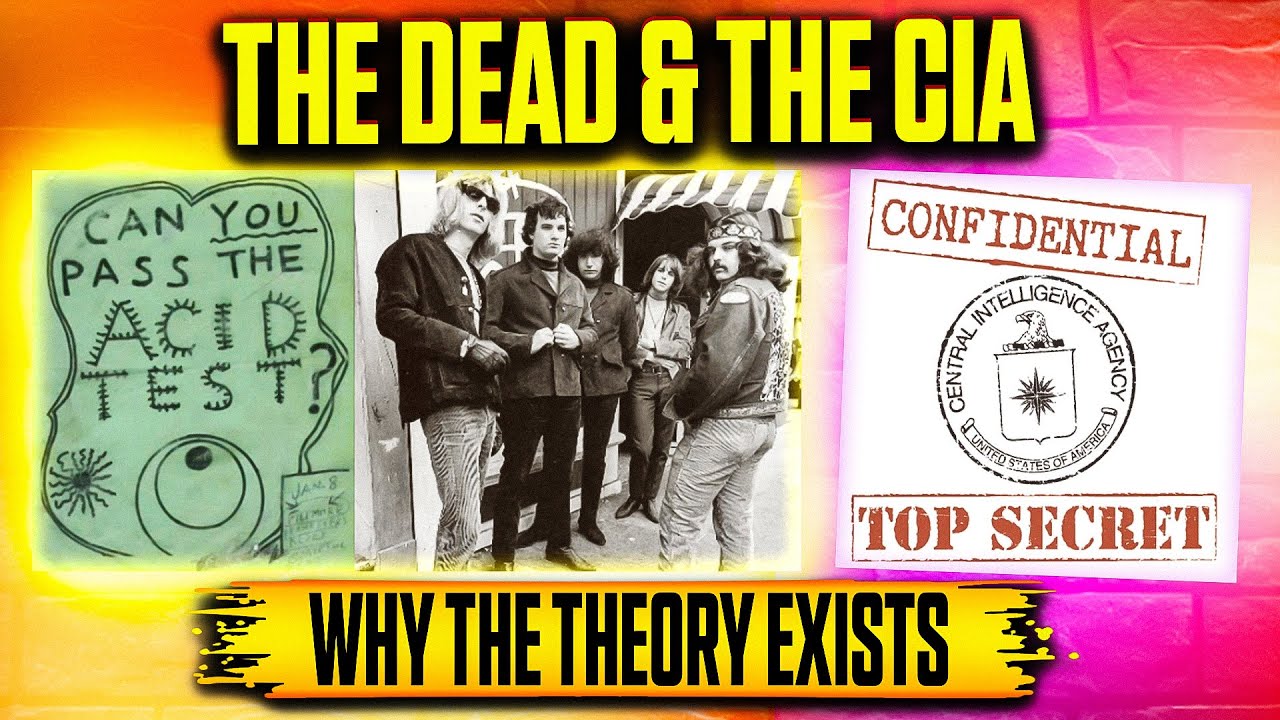
The conspiracy theories about the Grateful Dead and the CIA didn’t emerge in a vacuum. To understand why people believe the government had its hands in the band’s story, you have to first understand the world the Grateful Dead came of age in. It’s 1965. The Cold War is at full temperature. The government is escalating military operations in Vietnam. The FBI is actively monitoring civil rights activists, keeping detailed files on people it considered threats to national security. And intelligence agencies are conducting experiments on American citizens without their knowledge or consent—experiments involving psychoactive drugs, mind control, and surveillance that would eventually be revealed as some of the most shocking abuses of power in American history.
It’s easy now to forget how paranoid the era actually was. It’s easy to dismiss 1960s conspiracy thinking as simple naiveté. But the government really was spying on people. The government really was running secret programs like MK-ULTRA—a CIA program that investigated the use of psychoactive drugs, particularly LSD, for mind control and espionage purposes. The files that would eventually prove MK-ULTRA existed wouldn’t be released for decades. But in 1965, the program was operating in secret, funded by the government, using human subjects who had no idea they were part of an experiment. When the public eventually learned about these programs in the 1970s, it confirmed that the paranoia of the 1960s counterculture wasn’t paranoia at all—it was an accurate perception of an actual surveillance state.
LSD and the San Francisco Scene
The Grateful Dead emerged from the San Francisco psychedelic scene in the mid-1960s. And the San Francisco psychedelic scene was built on LSD. Not metaphorically. Literally. LSD was being produced in the Bay Area, distributed through the scene, and became central to the musical and cultural movement that was emerging. The band members themselves were LSD users. Jerry Garcia experimented with psychedelics. The music reflected these experiences directly. Entire songs were written to capture the subjective experience of being on acid. Concerts became light shows designed to enhance the psychedelic experience. The Dead weren’t just musicians performing on stage. They were guides for a collective experience.
What made this situation unique and vulnerable to conspiracy thinking was the fact that LSD’s origins were intrinsically connected to government programs. LSD was synthesized in Switzerland in the 1930s, but it became famous—or infamous—through American government research. The CIA funded LSD research throughout the 1950s and 1960s. They distributed it to unwilling subjects in hospitals, prisons, and universities. They were trying to weaponize it for espionage and interrogation purposes. Then, simultaneously, the same drug was becoming the cultural cornerstone of an emerging youth movement that was explicitly anti-government, anti-war, and anti-establishment. You can understand how this created fertile ground for conspiracy thinking.
The Real Surveillance State
The FBI did track the Grateful Dead. This is documented. Not because they were CIA assets, but because they were part of the counterculture that law enforcement viewed with suspicion and fear. The FBI’s COINTELPRO program targeted civil rights activists, anti-war protesters, and cultural figures perceived as threats to the establishment. The Grateful Dead, as cultural icons associated with drug use and anti-establishment values, would naturally have attracted FBI attention. They probably had files, probably were on watchlists, probably had their activities monitored.
But there’s a crucial difference between being monitored and being controlled. Being on an FBI watchlist doesn’t mean you’re a government asset. The FBI watched thousands of people during this era. The government suspected many groups of being subversive or dangerous. That didn’t mean those groups were working for the government. The paranoia was understandable, but it doesn’t necessarily translate to the conclusion that the Grateful Dead were CIA operatives.
The Complexity of LSD’s History
The real story is actually more complicated than either simple conspiracy or simple dismissal. LSD’s introduction into American culture was genuinely tied to government programs. Scientists working for the government discovered LSD’s psychoactive properties and funded research into its effects. The CIA conducted illegal experiments with the drug. But then LSD escaped those controlled laboratory environments and became a cultural phenomenon that the government absolutely did not intend or control. It became the opposite of what intelligence agencies wanted—a tool for consciousness expansion and cultural rebellion, something that fundamentally challenged government authority and the social order the government was trying to maintain.
The Grateful Dead didn’t need to be CIA assets for government surveillance to be relevant to their story. The government was already interested in LSD. They were already monitoring cultural movements. The intersection of government research, drug culture, and rock and roll was real. But it wasn’t a conspiracy of control. It was more like an accidental collision between two worlds that weren’t supposed to meet—and the counterculture world won that collision.
The Myth-Making and the Reality
The conspiracy theories about the Dead and the CIA probably persist because the real story is so strange that it almost demands an explanation. The government was genuinely researching the same drug that was creating the cultural movement. That’s weird enough that it seems like there must be something more intentional behind it. But sometimes coincidence is just coincidence, and strange circumstances don’t require sinister explanations. Sometimes the government really is doing bad things, and sometimes those bad things and the counterculture just happen to revolve around the same substance without there being a direct connection of control.
What’s actually more interesting than any conspiracy is the fact that the Grateful Dead became what they became despite government surveillance and cultural paranoia. They created music that was genuinely radical—musically, socially, and culturally. They built a community around live performance and musical experimentation that lasted for decades. They did this while being watched, while existing in an era of genuine government abuse and overreach. But they did it independently, on their own terms, in defiance of what the establishment wanted.
The Surveillance Society They Actually Inhabited
The real takeaway from this period isn’t that the Grateful Dead were CIA assets. The real takeaway is that the Grateful Dead created something so powerful that it transcended the surveillance state that surrounded them. The FBI might have files on the band. The government might have been interested in understanding the drug culture they were part of. But the music itself, the community it created, and the artistic vision it represented was genuinely their own. They weren’t puppets of the government. If anything, they were a successful example of culture emerging and thriving despite government surveillance and control efforts, not because of them. The paranoia of the 1960s had some basis in reality, but the Grateful Dead proved that authentic cultural rebellion could flourish anyway.
Watch the full documentary on YouTube →
Subscribe to The Shakedown Archives for more Grateful Dead documentaries, and explore more stories at TheShakedownArchives.com.