Why The Grateful Dead Will Never Die
The Loss of Icons
The Grateful Dead has endured loss before. The passing of Jerry Garcia on August 9, 1995, marked the end of an era—the original band, the touring juggernaut, the physical embodiment of the Dead’s sound and spirit. When Jerry died, the official Grateful Dead ceased touring. There would be no more shows, no more chances to experience the band as it had been for thirty years.
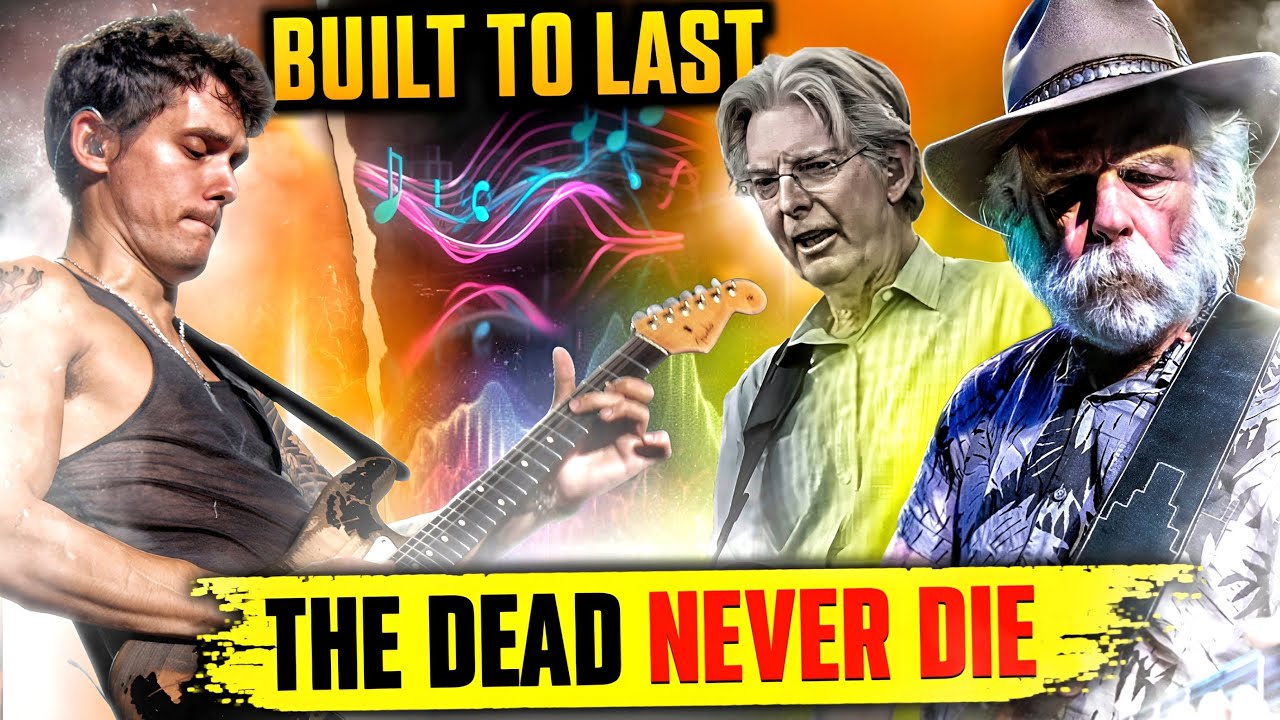
But then came Dead and Company, formed in 2015 with John Mayer stepping into the guitar and vocal role. It seemed like a worthy continuation, a way for fans old and new to experience the music. Then Phil Lesh passed away in October 2024, leaving only Bob Weir, Mickey Hart, and Bill Kreutzmann from the original lineup. But in a devastating turn, Bob Weir died just fifteen months later, barely into 2025.
Two of the final five original members gone in fifteen months. The numbers seemed crushing. Weir had knocked on the door at Dana Morgan Music on New Year’s Eve 1963—sixty years of history, sixty years of the Dead. The loss felt final in a way that even Jerry’s death hadn’t, because this time, it seemed like the end of something truly irreplaceable.
The Questions That Arise
With Phil and Bobby both gone, the inevitable question surfaced: Is it time to let the Grateful Dead die with dignity? Is it somehow disrespectful to the legacy to keep the music going without more of the original founders? Dead and Company had already faced criticism—some said it was too expensive, too commercial, too far removed from the spirit of what made the Grateful Dead special in the first place.
The band that prided itself on community, on accessibility, on the free-spirited exchange between band and audience, was becoming something more exclusive, more corporate. Ticket prices had climbed beyond reach for many longtime Deadheads. The music, though beautiful, carried a different energy when the connections to those early years grew more attenuated.
The Music Transcends the Players
Yet here’s what history has proven repeatedly about the Grateful Dead: the music doesn’t require the original members to survive and thrive. This isn’t to minimize the extraordinary talent and visionary thinking that Jerry Garcia, Phil Lesh, Bob Weir, Mickey Hart, and Bill Kreutzmann brought to the project. Each was irreplaceable as a person, as a voice, as a spiritual force.
But the songs themselves—”China Cat Sunflower,” “Dark Star,” “The Other One,” “Ripple,” “Scarlet Begonias”—these are written in a form that invites reinterpretation. The Grateful Dead was never a cover band playing other people’s material. It was an original band constantly exploring the boundaries of its own music. That exploratory impulse, that commitment to the journey rather than the destination, became encoded in the DNA of the songs themselves.
The Evolution of Legacy
There’s a parallel in the history of jazz, blues, and folk music—genres that survived and evolved even after the death of their founders. The point was never to preserve the past in amber, to create a museum piece that couldn’t change or grow. The point was to keep the conversation going, to keep the music alive as a living, breathing thing.
Dead and Company, for all its controversiality, represents one version of that continuation. John Mayer’s approach to the Dead’s material is respectful but also distinctly his own. He’s not attempting to be Jerry Garcia. He’s attempting to honor what Garcia created while bringing his own musical sensibility to the project.
The Deadhead Community
One of the Grateful Dead’s greatest legacies is the community it created. Deadheads aren’t just passive consumers of music—they’re active participants in a culture that values improvisation, exploration, and shared experience. That community has survived Jerry’s death, will survive Phil’s and Bobby’s deaths, because it’s rooted in values and experiences that extend beyond any individual band member.
The parking lot culture, the taping community, the scholarly approach to setlists and variations—these are parts of what makes being a Deadhead unique. And none of these require the original members to continue existing and evolving.
The Future of Forever
Whether Dead and Company continues, whether new iterations of the Grateful Dead emerge, whether fans organize their own performances and celebrations of the music—the Grateful Dead will survive. This isn’t naïve optimism or stubborn denial of mortality. It’s an acknowledgment of what the band created: not a product, but a process. Not a fixed work of art, but a living tradition.
The deaths of Phil and Bobby hurt. They represent the closing of a chapter that began in the early 1960s. But as long as musicians want to play these songs, as long as audiences want to hear them, as long as the Dead’s music continues to inspire new generations to seek out the music and the values it represents, the Grateful Dead will never truly die. The band has proven repeatedly that it’s bigger and more resilient than any single member—even the irreplaceable ones.
Watch the full documentary on YouTube →
Subscribe to The Shakedown Archives for more Grateful Dead documentaries, and explore more stories at TheShakedownArchives.com.