Why the Grateful Dead’s Early Studio Albums Failed — and Live Music Won
The Critical Consensus: Failure and Embarrassment
Critics called the Grateful Dead’s early studio albums unfocused disasters. Fans complained that they sounded nothing like the band’s legendary concert performances. Even the band members themselves disowned the records, calling them embarrassing. The common wisdom about the Dead’s first few albums—recorded between 1967 and 1970—was that they represented a catastrophic failure of a brilliant live band to capture its essence in the studio. What nobody talked about, though, was that those so-called failures actually saved the Grateful Dead’s career. The fact that their studio records were disappointing is exactly what allowed them to become the greatest touring band in rock and roll history.
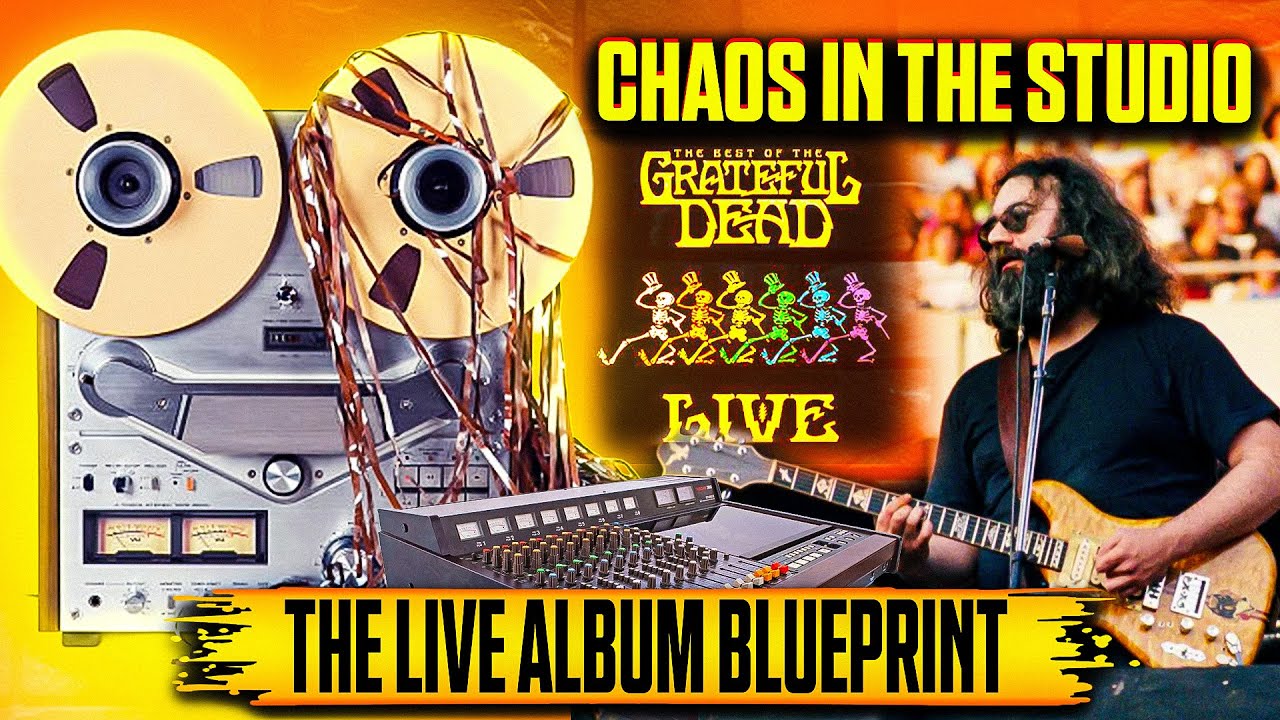
The Grateful Dead made their first album in 1967. By modern standards, it’s surprisingly straightforward—a rock and roll album with blues covers and original compositions, recorded in what sounds like standard 1960s studio sound. It was competent but uninspired. The second album, from 1969, was more ambitious in some ways, more experimental. But it still didn’t capture what the band was actually doing on stage. The live shows were becoming legendary. People talked about them with religious fervor. But the studio records didn’t convey any of that power.
The Studio Trap: An Impossible Expectation
Here’s what most people missed: the Grateful Dead’s entire approach to music was incompatible with how studio recording worked in that era. The Dead played with radical spontaneity. They’d take a song that lasted three minutes on the radio and stretch it into a twenty-minute exploration. They’d follow each other’s instincts, building on each other’s ideas in real time. A keyboard player would suggest a musical direction by changing their harmony, and the whole band would respond, pivoting the song in a completely new direction.
That kind of performance simply cannot be replicated in a studio setting. When you’re recording, you need to capture a complete thought, a finished piece. You record multiple takes and pick the best one. You might do overdubs, layering instruments after the fact. It’s a completely different process from improvisation. And the Grateful Dead, at that point in their career, were fundamentally improvisational. The idea of playing a song exactly the same way twice, in the controlled environment of a recording studio, probably struck them as absurd.
The Limitations of Early Recording Technology
The early studio albums also suffered from technological limitations. The recording equipment of the late 1960s simply couldn’t capture the subtlety and complexity of what the Grateful Dead were doing. Multi-track recording existed, but it was primitive compared to what would come later. The band’s sound was too varied, too textured, too dependent on the interplay between instruments. When you tried to isolate that onto tape, it sounded thin and confused.
By the time they recorded later albums like “Workingman’s Dead” and “American Beauty” in 1970, the band had figured something out: they could make good studio records if they accepted that studio records had to be different from live performances. These albums were more structured, more songwriting-focused, less improvisation-heavy. And they worked. They became classics precisely because the band stopped trying to recreate their live sound and instead created something new that could only exist on a recording.
The Unexpected Blessing of Failure
But the earlier failures had an unintended consequence that proved incredibly important. Because the studio records weren’t capturing what made the Grateful Dead special, more and more fans turned to live recordings. Tape traders became obsessed with obtaining the best-quality bootlegs of actual concerts. Fans would trade cassettes, VHS tapes, and eventually CDs of shows. The live performance became the real currency of the Grateful Dead’s existence. The studio albums were secondary. The concert was everything.
This flipped the entire model of rock and roll stardom on its head. Most bands relied on hit singles from studio albums to draw audiences to concerts. Radio play drove record sales, which drove concert attendance. But the Grateful Dead reversed this equation. Their concerts drove demand for bootlegs, which drove a massive underground market for recordings, which kept the band’s legend alive in ways that studio albums never could have.
The Live Recording Revolution
The obsessive culture of Grateful Dead tape trading became its own phenomenon. Collectors maintained detailed spreadsheets of which shows existed, what the sound quality was, what the setlist had been. The community built around accessing these recordings became more important than the official record releases. Fans could attend a concert and then spend weeks hunting down a tape of that exact show to relive it. This wasn’t just fandom. This was a completely new relationship between artist and audience.
The failed studio albums inadvertently created the infrastructure for what would become the Grateful Dead’s business model. Because the live performances were so much better than the recordings, fans had enormous incentive to attend concerts in person. You couldn’t get the full experience from a record. You had to be there. And once you’d been there, you wanted the tape of that particular show.
The Wisdom of Accepting Your Format
What the Grateful Dead eventually learned, through their studio album “failures,” was that they were a live band. Not a studio band that also played concerts. A live band, fundamentally. Their genius was in real-time performance, in the interaction between musicians and audience, in the unrepeatable moment. Once they accepted that—once they stopped trying to force their live sound into a studio setting and instead made studio records that had their own identity—they created some of the best recordings in their catalog.
But the real gift of those early failures was something deeper. They established a precedent: with the Grateful Dead, you had to go to the show. You couldn’t get it from a record. This created a touring culture that sustained the band for decades. Fans developed a practice of attending multiple shows, collecting tapes, learning the band’s entire repertoire. The Grateful Dead weren’t famous because they had hit singles. They were famous because the live experience was so transcendent that people devoted their lives to following the band. The early studio albums’ incompetence was a feature, not a bug. It preserved the magic of the live performance and made that the heart of the band’s entire career.
Watch the full documentary on YouTube →
Subscribe to The Shakedown Archives for more Grateful Dead documentaries, and explore more stories at TheShakedownArchives.com.