How Deadheads Created the First Decentralized Social Network Before Facebook
The Grateful Dead didn’t just make music—they engineered a decentralized social network that functioned with remarkable sophistication for nearly three decades before Mark Zuckerberg wrote a single line of Facebook code. Long before algorithms and data harvesting, Deadheads created something far more elegant: a self-organizing ecosystem built on trust, voluntary participation, and a radical gift economy that anticipated many principles Silicon Valley would later claim as revolutionary innovations.
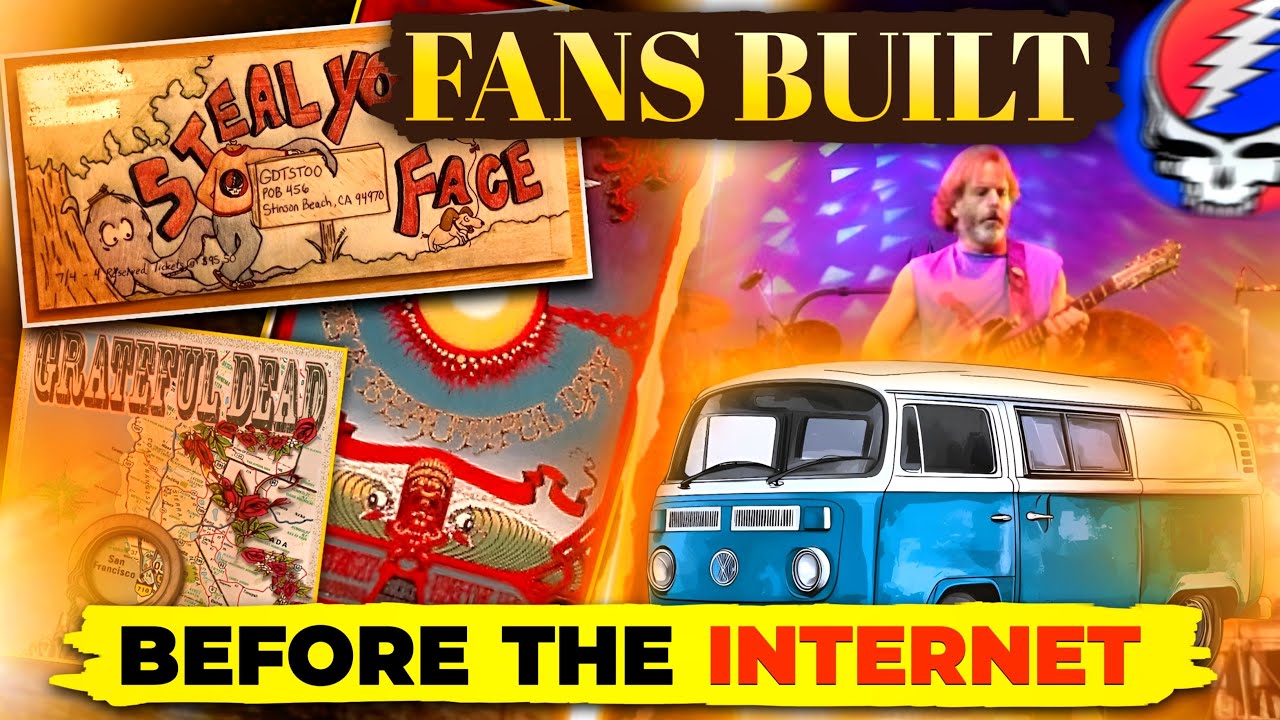
The most visible manifestation of the Deadhead network was the tape trading community. Starting in the late 1960s, fans recorded concerts and exchanged tapes through an informal postal system that operated without any central authority, corporate infrastructure, or profit motive. This wasn’t just about music—it was the world’s first peer-to-peer file-sharing network.
The tape trading network operated on principles that
The tape trading network operated on principles that would later define blockchain and cryptocurrency culture: decentralization, cryptographic trust (in this case, reputation), and a gift economy. Traders maintained detailed catalogs of shows they’d recorded and circulated these lists through mail and later through early computer networks. The system was entirely voluntary. There were no contracts, no payment processing, no enforcement mechanisms. A trader’s reputation was their entire asset, and the Dead’s tolerance of taping culture—officially permitted since 1966—created the psychological safety needed for strangers to engage in exchange.
This wasn’t primitive either. By the 1980s, tape traders had developed sophisticated filing systems using standardized notation (including the now-famous SBD/AUD designation for Soundboard and Audience recordings), trading guides published in newsletters, and complex networks that could move a rare 1973 show from a collector in Connecticut to a listener in California within weeks. The infrastructure resembled modern torrent networks, minus the bandwidth and algorithms.
In 1971, the Dead’s office began publishing the Deadheads newsletter, one of the first direct-to-fan communications in popular music. This wasn’t a one-way broadcast—it created a feedback loop where fans received news, tour information, and merchandise offers while simultaneously providing the band with concrete data about who their audience was and what they cared about.
The mailing list became a prototype for modern
The mailing list became a prototype for modern customer relationship management. The Dead accumulated names, addresses, and eventually detailed information about fan preferences. They used this data to manage mail-order ticket sales that directly reached fans, circumventing Ticketmaster entirely—a revolutionary move in the 1970s and 1980s. Fans could receive concert announcements and purchase tickets before they hit the public market, creating an exclusive tier that strengthened community bonds while ensuring revenue stability for the band.
This was direct-to-fan marketing a full generation before email marketing, before Patreon, before Kickstarter. The Dead understood something fundamental: engaged fans are infinitely more valuable than casual listeners, and the infrastructure that connects them strengthens both the relationship and the business.
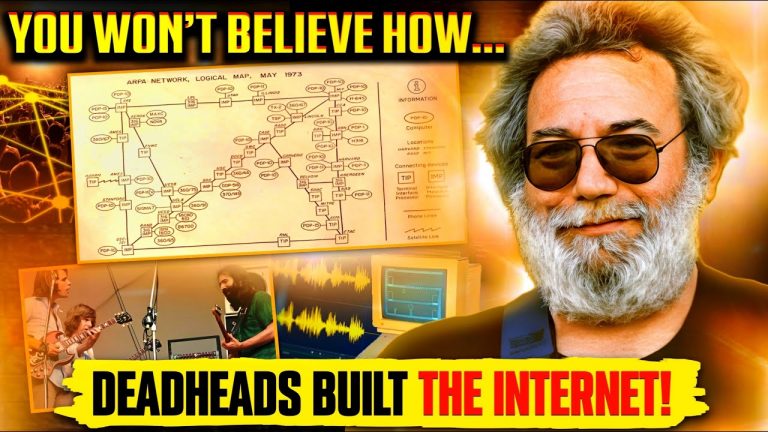
When the WELL (Whole Earth ‘Lectronic Link) launched in 1985 as one of the earliest online communities, it attracted a disproportionate number of Deadheads. The WELL operated on a dial-up modem network, predating the World Wide Web by several years, and Deadheads naturally gravitated toward it. They created some of the platform’s most active communities, discussing shows, sharing tape catalogs, coordinating trades, and building relationships across geographic boundaries.
The WELL was crucial in transitioning Deadhead culture
The WELL was crucial in transitioning Deadhead culture from physical mail and telephone networks into digital space. It demonstrated that the principles that governed tape trading—asynchronous communication, volunteer moderation, reputation-based trust, and emergent governance—could function in digital environments. The WELL’s culture of collaborative knowledge-building and self-governance directly influenced how early internet communities would organize themselves.
While virtual networks were developing, Deadheads simultaneously created an intricate physical economy around concert venues. Shakedown Street—named after the 1978 album track—became the colloquial term for the parking lot marketplace that materialized before Dead shows.
Shakedown Street was a remarkable ecosystem: independent vendors selling food, clothing, art, and crafts; traders circulating rare recordings; musicians busking; massage therapists; information networks sharing set lists and concert details. It operated without central management, corporate sponsorship, or formal business licenses in many cases. It was pure market self-organization, a gift economy interwoven with small commercial transactions, sustained by the knowledge that another Shakedown Street would exist in another city within weeks.
This prefigured the modern creator economy and the
This prefigured the modern creator economy and the gig economy by decades. Vendors weren’t employees—they were independent entrepreneurs who saw Deadhead culture as opportunity. The Grateful Dead never directly managed Shakedown Street, yet the band understood it as integral to their ecosystem. The Dead’s permissive stance toward entrepreneurship within their community created conditions for organic economic activity that benefited fans, artists, and the band itself.
Perhaps the most remarkable aspect of Deadhead culture was how complex coordination happened without hierarchical management. Tours were announced and fans would organize transportation networks, create housing databases, and build information systems entirely through informal coordination. Regional fan communities developed autonomous governance structures. The Grateful Dead organization provided only the seed—the concerts themselves—and fans built the infrastructure around it.
This resembled modern open-source development and distributed teams decades before those concepts were formalized in technology. Deadheads demonstrated that large, geographically dispersed communities could self-organize around shared interests without top-down management, corporate coordination, or surveillance capitalism.
John Perry Barlow
John Perry Barlow, the Dead’s longtime lyricist and digital rights pioneer, wrote “A Declaration of the Independence of Cyberspace” in 1996 at the World Economic Forum in Davos. The declaration’s principles—that digital spaces should operate without government or corporate gatekeepers, that information wants to be free, that communities should be self-governing—came directly from his observations of Deadhead culture. Barlow watched fans trade tapes, organize across borders, and build trust-based economies for decades. He articulated the philosophy that underpinned these informal systems and projected them onto cyberspace itself.
Barlow’s declaration influenced the ideological foundations of the open-source movement, early internet governance philosophy, and the crypto movement that emerged in the 2010s. The Dead’s cultural DNA runs through the technological philosophy of the entire internet era.
The Dead’s radical stance on taping—not just permitting it, but embracing it—prefigured Creative Commons and open-source licensing by nearly three decades. Rather than treating recordings as proprietary intellectual property to be locked down and monetized, the Dead understood that freely circulating recordings strengthened their cultural presence and deepened fan engagement.
This wasn’t naïve idealism
This wasn’t naïve idealism. It was sophisticated understanding of attention economics. The Dead recognized that the scarcity wasn’t music—it was the experience of live performance, community, and connection. Recordings were valuable as vectors for spreading that ethos, not as final products to be sold. This model would later be formalized in open-source software (where code circulates freely but implementation and support generate revenue) and creative commons licensing.
Decades later, Silicon Valley would attempt to package and monetize many principles that Deadheads had already developed. Network effects, reputation systems, user-generated content, community governance, attention-based economics, and direct-to-fan relationships became core principles of platforms from Reddit to YouTube to Patreon.
The difference: Deadhead networks were genuinely decentralized, operated on gift economy principles, and didn’t extract wealth from user attention. Silicon Valley’s networks are centralized, surveillance-based, and designed to convert user engagement into advertiser revenue.
The irony is sharp
The irony is sharp. The Grateful Dead created genuinely free networks that strengthened community bonds while building sustainable culture. The companies that learned from that example built walled gardens that extract value from the very communities they host.
The Deadhead network wasn’t just an early social network. It was a different model entirely—one built on principles of cooperation, reputation, and shared creation rather than surveillance, extraction, and control. Understanding how Deadheads created that ecosystem offers crucial lessons about what networks could be if designed around human flourishing instead of shareholder value.
Related Articles
- How Deadheads Built the Internet: The Grateful Dead’s Tech Legacy
- Grateful Dead at MIT 1970: How the Band Became Silicon Valley’s Spiritual Architects
- The Trust Machine: How the Grateful Dead Invented Reputation-Based Community Control
The Shakedown Archives publishes new research on Grateful Dead history each week. If you enjoyed this essay, you can subscribe to the companion YouTube channel below.
Subscribe on YouTube