Hip Economics & Ammo Cases: The Untold Financial Story of the Grateful Dead
The Grateful Dead‘s cultural legacy rests primarily on the music they created and the community they fostered, but their impact on the music industry itself—though less celebrated—may ultimately prove equally significant. At a time when record labels maintained iron control over artists’ masters and touring infrastructure was dominated by massive corporations with their own agendas, the Grateful Dead built something radically different: a self-contained economic system that gave them unprecedented control over their work and their destiny. This story, one of entrepreneurial innovation camouflaged in countercultural rhetoric, reveals the Dead as shrewd businesspeople who understood that true artistic freedom required economic independence.
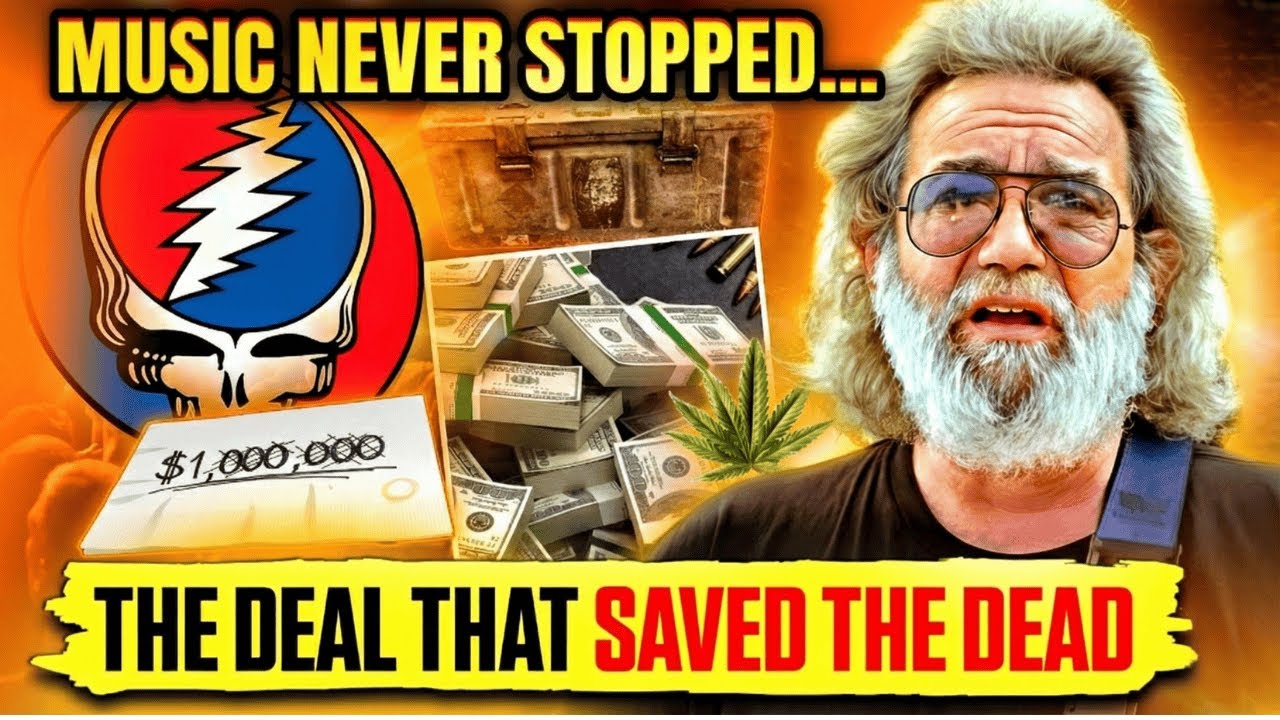
The Dead’s approach to business was as unconventional as their music. In the early days, before they became a touring juggernaut generating millions in annual revenue, the band operated with a kind of cosmic capitalism that would have made any traditional accountant’s head spin. Stories from the Dead’s early organization in the late 1960s speak of cash—particularly the substantial amounts earned through touring and merchandise sales—being kept in literal ammo cases and safes, sometimes with minimal formal accounting. This wasn’t criminality so much as a reflection of the Dead’s mistrust of traditional financial institutions and their desire to operate outside conventional business structures. In a way, it was the perfect metaphor for the band’s entire approach: they stored their resources in the containers that symbolized American militarism and warfare, transforming them into vessels for supporting their artistic vision and community. While this system would eventually require professionalization as the Dead’s business grew more complex, the underlying philosophy remained constant: the band wanted direct control over their money and the decisions it funded.
The decision that would come to define the
The decision that would come to define the Dead’s business model was their determination to control the production and distribution of their own recorded music. This wasn’t inevitable; most bands of their era signed away their masters to major record labels and accepted whatever terms those corporations offered. But the Dead—advised by their canny attorney Hal Kant—recognized early that owning their masters was essential to long-term independence and profitability. They established Grateful Dead Records (also known as Grateful Dead Productions) to release their official studio albums and live recordings. This move, radical at the time, meant the Dead retained ownership of the actual recordings, not just the right to perform the music. When subsequent generations of Deadheads discovered the vast catalog of live recordings the band had accumulated, the ability to release and profit from this material directly benefited the band rather than enriching record label executives.
Beyond studio recordings, the Dead also created Round Records, another vehicle for releasing music under their own control. This diversified approach to ownership reflected a sophisticated understanding that different projects and recordings might require different distribution strategies. By maintaining multiple labels and vehicles for releasing music, the Dead ensured flexibility and autonomy in how their catalog was presented to the world.
The touring infrastructure that the Dead developed represented another radical departure from industry norms. The famous Wall of Sound, the band’s custom-designed sound reinforcement system that Bob Matthews and John Meyer engineered, was unlike anything else in rock concert production. The Wall required not just the equipment itself but an entire fleet of semi-trucks to transport it, a dedicated crew to assemble and maintain it, and the logistical expertise to move it from venue to venue. Rather than hiring outside production companies and splitting revenue, the Dead essentially became their own promoters and production company. This meant more work and more responsibility, but it also meant that the economic benefits of their technical innovation flowed directly to the band rather than to middlemen.
By establishing permanent offices in San Rafael
By establishing permanent offices in San Rafael, California, the Dead created the administrative infrastructure needed to run their organization with minimal outside contractors. The band needed accountants, lawyers, managers, and administrative staff, but these people worked directly for the Dead organization, not for a record label or management company that took a percentage of the band’s revenue. Hal Kant served as the band’s attorney for decades, providing legal expertise that protected their interests and ensured they understood the implications of the business decisions they made.
The Dead’s mail-order ticket system—one of the first in rock history—exemplified their willingness to eliminate middlemen. Rather than relying on Ticketmaster and other ticket brokers, the Dead developed their own system for distributing tickets directly to fans. This approach solved a practical problem (getting tickets to fans efficiently) while generating economic benefits for the band themselves. It also created an early direct relationship between the band and its fan community, laying the groundwork for the kind of direct-to-fan business models that would eventually become standard in the digital era.
The financial growth of the Grateful Dead organization was staggering. By the mid-1980s, the Dead were grossing over ten million dollars per year from touring alone. This represented extraordinary earning power, and yet it was power that the band had largely retained control over. The profit margins of a self-owned touring operation are infinitely better than those of a band that relies on outside promoters and production companies. The Dead essentially proved that a rock band could become as economically significant as a small corporation, without sacrificing artistic control or selling out to major entertainment conglomerates.
This financial independence enabled another crucial aspect of
This financial independence enabled another crucial aspect of the Dead’s legacy: the Rex Foundation. Established by the Dead and their extended organization, the Rex Foundation became a vehicle for philanthropic giving, supporting causes related to the environment, social justice, and culture. The Dead’s ability to generate substantial charitable contributions through their business reflected their belief that economic success carried social responsibility. The foundation’s work—supporting everything from environmental conservation to cultural preservation—demonstrated that the Dead understood their money as a tool not just for sustaining their own careers but for supporting the wider communities and causes they cared about.
The operational sophistication the Dead developed was often hidden beneath a veneer of California casual, but it was real and effective. They pioneered ideas about artist ownership, independent production, direct-to-fan sales, and financial autonomy that wouldn’t become mainstream industry practice for decades. When the internet emerged and enabled musicians to bypass traditional gatekeepers, the Dead had already spent fifteen years proving that it was possible and profitable to do so.
Hal Kant deserves particular recognition in this narrative. As a lawyer who specialized in entertainment law, Kant could have steered the Dead toward conventional record label deals and management structures that would have enriched him through standard commission arrangements. Instead, he helped them understand how to build an independent operation that kept wealth and control within the band’s organization. This represented either extraordinary generosity or extraordinary faith in the Dead’s ability to generate substantial enough revenue to make direct legal work more profitable than traditional percentage-based agreements—probably both.
The ultimate vindication of the Dead’s business model
The ultimate vindication of the Dead’s business model came in the decades following the band’s 1995 dissolution. The vast catalog of recordings they had accumulated, largely on their own labels, became extraordinarily valuable. Dead catalog licensing, compilation releases, and later digital distribution generated substantial ongoing revenue for the band members and their estates. The musicians who had invested in owning their masters discovered that those masters were among their most valuable assets—far more valuable than royalties from records they’d released through major labels would have been.
In retrospect, the Grateful Dead’s economic model represents a kind of counterculture pragmatism. The band believed in personal freedom, community, and artistic expression, but they also understood that these values required economic power to sustain. By building their own business infrastructure, controlling their masters, owning their touring equipment, and maintaining direct relationships with their audience, the Dead ensured that their independence wasn’t just cultural or artistic—it was economic. They proved that a rock and roll band didn’t have to compromise with major corporations to achieve either artistic credibility or financial success. Instead, they could write their own rules and, in the process, help rewrite the rules of an entire industry.
Related Articles
- Grateful Dead at MIT 1970: How the Band Became Silicon Valley’s Spiritual Architects
- Deadheads vs. Phish Fans: How Two Bands Engineered Participatory Culture Using Different Tools
- Owsley’s Ultimatum: The Grateful Dead’s 1970 Breaking Point
The Shakedown Archives publishes new research on Grateful Dead history each week. If you enjoyed this essay, you can subscribe to the companion YouTube channel below.
Subscribe on YouTube