Why The Dead Took 7 Years To Rise Again
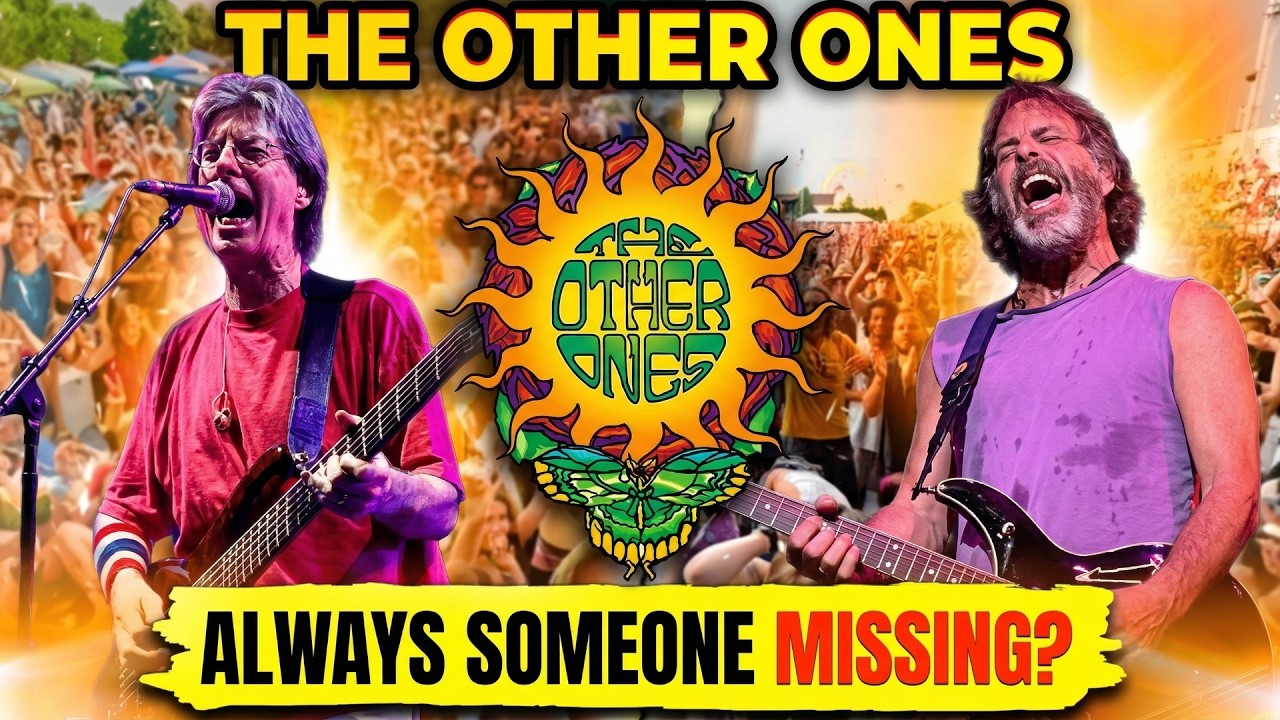
June 4, 1998. The Warfield Theater in San Francisco. Bob Weir, Phil Lesh, and Mickey Hart are about to play Grateful Dead songs in public for the first time since Jerry Garcia died. They’ve got a new name — The Other Ones — and a stacked lineup: Bruce Hornsby on keys, Steve Kimock and Mark Karan sharing guitar duties, Dave Ellis on saxophone, John Molo on drums.
But where’s Bill Kreutzmann? He’s not there. Not at the Warfield, not on the Further Festival tour that follows, not anywhere near The Other Ones in 1998. Nobody made a big announcement about it. There was no press release saying “Bill Kreutzmann declines to participate.” He just wasn’t there.
The shows themselves were good
The shows themselves were good — really good, actually. The Warfield setlist reads like a wish list: Jack Straw opener, Going Down the Road Feeling Bad, Scarlet Begonias into Fire on the Mountain. They weren’t reinventing anything. They were playing the songs straight, seeing if they could still do this without Jerry in the middle holding it together. The Further Festival tour kicked off — named after Ken Kesey’s bus — with The Other Ones headlining, Hot Tuna and Rusted Root supporting, amphitheaters across the country. The Deadheads showed up by the thousands.
Dave Ellis’s saxophone was changing the texture. The Dead occasionally had a sax player, but Ellis was integrated differently — in the improvisational conversations, adding jazzy lines during the jams that pushed things into new territory. It wasn’t just Grateful Dead minus Jerry. It was something adjacent, related, but different. Phil Lesh was obsessed with setlist construction, building shows like “little mini-dramas” with beginnings, middles, and ends.
Then Phil almost died. Late 1998 — liver disease he’d been dealing with for years. Emergency transplant. Life or death. The Other Ones just stopped. Four months of shows, one health crisis, done.
For two years, nothing
For two years, nothing. Phil recovering. Bob Weir focusing on RatDog. Mickey doing world music percussion projects. Billy still not involved — but also not really invited to be.
Summer 2000. The Other Ones announce they’re touring again. The lineup: Bob Weir, Mickey Hart, Bill Kreutzmann — finally, Billy’s back — Bruce Hornsby, Steve Kimock, Mark Karan, Dave Ellis, Alphonso Johnson on bass. But now Phil Lesh isn’t there. So you’ve got the opposite problem from ’98. In ’98, you had Phil but not Billy. In 2000, you’ve got Billy but not Phil.
Bob Weir later admitted he and Phil “fought like cats and dogs” during this period. Different visions for what the band should be. The fractures spilled into public view when Mickey Hart told a reporter, “Phil must have gotten the liver of a jerk” — a comment he quickly apologized for. They weren’t speaking. Phil was touring with Dylan instead, playing Phil and Friends shows while The Other Ones toured without him.
Three years since the Warfield show
Three years since the Warfield show. Two separate tours. And the four surviving core members of the Grateful Dead still hadn’t been on stage together. Not once.
Whatever the internal dynamics were, something shifted in 2002. August 3–4, Alpine Valley Music Theater in East Troy, Wisconsin. Grateful Dead Family Reunion. All four core members listed: Weir, Lesh, Hart, Kreutzmann. They opened the first night with an instrumental “He’s Gone” that melted into “Cryptical Envelopment,” then “The Other One,” then “Feel Like a Stranger.” Second set: “The Music Never Stopped” — you can’t write that. Then China Cat Sunflower into I Know You Rider, Terrapin Station, Morning Dew.
The online posts from that weekend tell the story. People comparing it to shows from the ’70s and ’80s, saying it was the closest they’d felt to the real thing since Jerry died. If you listen to the soundboard recordings — crystal clear, professional quality — you can hear what everyone in the crowd felt. This was what it was supposed to be four years ago.
Early 2003, they announced they were changing their
Early 2003, they announced they were changing their name. Not The Other Ones anymore. Now they were The Dead. A bigger commitment. The Other Ones always felt temporary, like testing the waters. The Dead was direct — saying this is the continuation.
The Other Ones existed for four years. Not a reunion — a negotiation. A series of attempts. Someone was always missing. Billy in ’98. Phil in 2000. It took health crises, creative disagreements, and lineup musical chairs to get all four of them on stage at the same time. And when they finally did, at a festival in Wisconsin that most people outside the Dead community barely noticed, they changed the name and moved on.
The Other Ones wasn’t a triumphant resurrection. It was four years of grief work in public — of musical arguments and health scares and compromises and breakthroughs, of shows that were almost right but missing one crucial element, of finally getting everyone together and realizing: okay, now we can move forward.
The Song in Context
Understanding any Grateful Dead song requires understanding the partnership between Jerry Garcia and Robert Hunter that produced it. Hunter was not a conventional lyricist — he was a poet who happened to write for a rock band. His words drew from American folk traditions, Beat poetry, and a mythological imagination that created characters and landscapes existing outside of any specific time or place. Garcia’s melodies, in turn, had a quality that musicologists have struggled to categorize — folk-informed but jazz-inflected, simple on the surface but harmonically sophisticated beneath.
The songs they created together entered the Grateful Dead’s live repertoire and evolved constantly. A song might be performed hundreds of times over decades, and no two versions were identical. Tempos shifted, arrangements expanded and contracted, and improvisational passages grew or shrank depending on the band’s collective mood on any given night. For Deadheads, the song as recorded in the studio was merely a starting point — a sketch that live performance would elaborate into something far more complex and unpredictable.
The Live Experience
The Grateful Dead’s live performances were fundamentally different from those of any other major rock band. While most acts rehearsed and repeated a fixed setlist, the Dead approached each show as a unique event. Setlists were chosen shortly before the performance, and the transitions between songs — the spaces where improvisation lived — were entirely spontaneous. A concert might last three hours or more, moving through structured songs, extended jams, and passages of pure collective improvisation that could be transcendent or chaotic, sometimes both simultaneously.
This approach demanded extraordinary musical communication. Each member of the band had to listen constantly to every other member, responding in real time to melodic suggestions, rhythmic shifts, and dynamic changes. Garcia often described it as a conversation — not a performance, but a dialogue between musicians who had developed, over years of playing together, an almost telepathic understanding of each other’s musical instincts. When it worked, the result was music that felt inevitable and surprising at the same time.
The Deadhead Phenomenon
The community that formed around the Grateful Dead was unprecedented in popular music. Deadheads didn’t just attend concerts — they built a culture. Tape trading networks distributed live recordings across the country before the internet existed, creating a shared archive of performances that fans studied with scholarly intensity. The parking lot scene at Dead shows became a self-sustaining economy of food vendors, craft sellers, and itinerant entrepreneurs who followed the band from city to city.
What distinguished Deadhead culture from ordinary fandom was its participatory nature. Deadheads didn’t consume the Grateful Dead’s music passively — they actively shaped the experience. Their energy in the audience influenced the band’s playing. Their tape trading preserved and disseminated the music. Their economic activity in the parking lots created the ecosystem that made extended touring financially viable. The relationship between the Dead and their audience was genuinely symbiotic, each sustaining and inspiring the other across three decades of continuous performance.
Related Articles
- Bob Weir Has Died. What Happens to the Grateful Dead Now?
- Bob Weir’s Legacy: The Rhythm Guitarist Who Made the Grateful Dead Possible
- The Impossible Job: Replacing Jerry Garcia at Fare Thee Well
The Shakedown Archives publishes new research on Grateful Dead history each week. If you enjoyed this essay, you can subscribe to the companion YouTube channel below.
Subscribe on YouTube