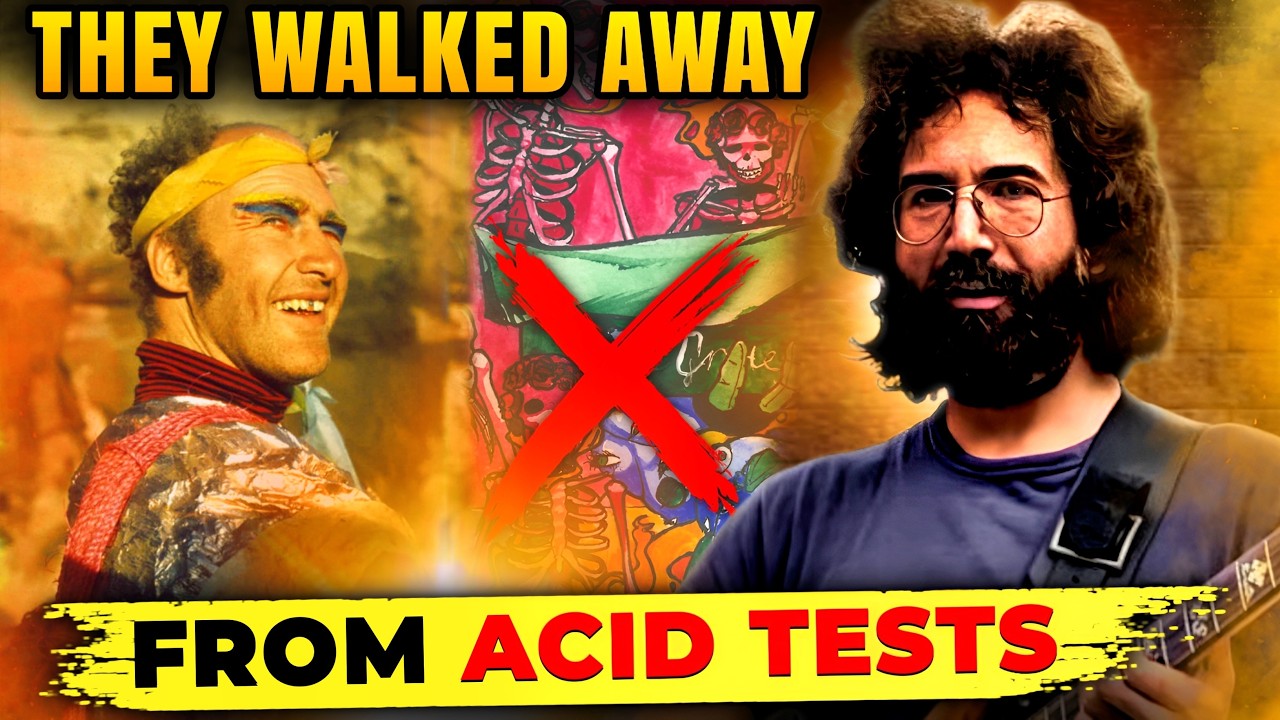
How Ken Kesey’s “Suicide” Changed The Grateful Dead Changed Forever
The Ouija Board Consultation
In late January 1966, Ken Kesey and Carolyn Mountain Girl Adams had both been arrested on marijuana charges, facing serious legal consequences. Desperate for guidance, Kesey convened a meeting in Bernal Heights and consulted a Ouija board about what to do. The board’s message was unambiguous: leave. Being a novelist prone to dramatic flourish, Kesey didn’t simply depart—he orchestrated an elaborate fake suicide to throw authorities off his trail. A Prankster truck was driven up the coast and abandoned near a cliff in Humboldt County with Kesey’s boots and a note, as if he’d taken his own life. By the end of January, Kesey was in Mexico.
The Grateful Dead at the Crossroads
The Grateful Dead had been integral to Kesey’s Acid Test movement, the legendary gatherings where hundreds of people ingested LSD with live music and elaborate light shows. Kesey and the Merry Pranksters had filmed the Dead performing at these events, which had become central to the Bay Area’s emerging psychedelic culture. The band’s association with Kesey elevated their status and drew them deeper into the Prankster orbit.
A Choice Between Two Worlds
With Kesey gone to Mexico and preoccupied with his legal troubles, the Dead faced a crucial decision. They could have pursued the Prankster connection, perhaps fleeing with Kesey or continuing to orbit his world. Instead, they chose independence. While remaining friends with the Pranksters, the Dead charted their own course. Owsley Stanley, who had been supporting the Acid Tests with his wealth, redirected his backing toward the Dead specifically. Stanley even rented a large pink house on Third Avenue in Los Angeles to support the Dead’s performances at the West Coast Acid Tests.
The Birth of a Band’s Identity
This decision to separate from Kesey’s direct influence defined the Grateful Dead’s entire career trajectory. Rather than becoming a component of the Prankster multimedia experiment, the Dead developed as an independent force in rock music. The band maintained the participatory, audience-inclusive ethos of the Acid Tests—those fundamental ideas about collective experience and audience co-creation—but applied them through their own vision. They would refine the concert experience, develop their own sound system innovations, and build a unique relationship with their fans.
The Aftermath of Choice
Kesey eventually returned from Mexico and would go on to other cultural projects, eventually settling in Oregon. The Acid Tests continued without him through 1966, concluding with the Acid Test Graduation, before LSD became illegal that October. But the Dead’s independence had set them on a path where they would become not a satellite of someone else’s vision, but architects of their own musical and cultural legacy. This choice—to walk away from Kesey and build something of their own—echoed through decades of touring, innovation, and devoted fan culture.
Subscribe to The Shakedown Archives for more Grateful Dead documentaries, and explore more stories at TheShakedownArchives.com.
The Shakedown Archives publishes new research on Grateful Dead history each week. If you enjoyed this essay, you can subscribe to the companion YouTube channel below.
Subscribe on YouTube