Donna Jean Godchaux’s Legacy: From Muscle Shoals to the Grateful Dead
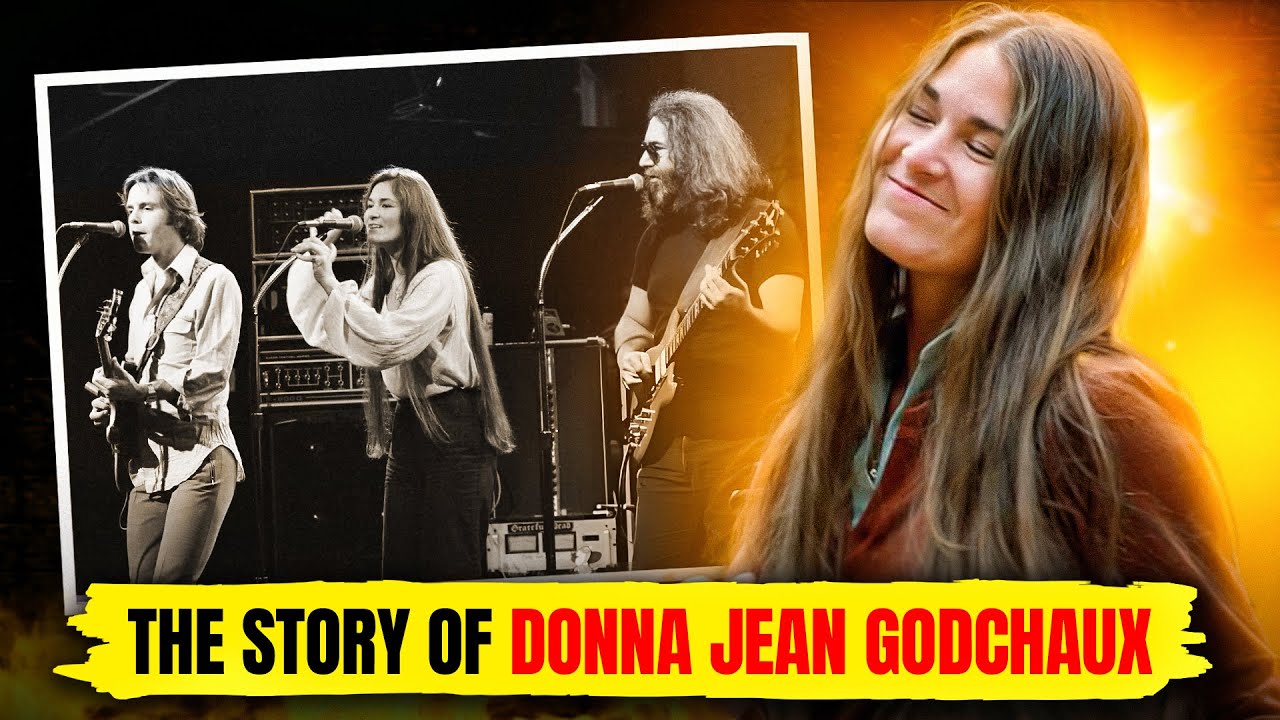
Donna Jean Thatcher was already a professional vocalist before she ever heard the Grateful Dead. Raised in Muscle Shoals, Alabama — the small town whose recording studios produced some of the greatest soul, R&B, and rock records of the twentieth century — she’d sung backup on sessions for Elvis Presley, Aretha Franklin, Percy Sledge, and Boz Scaggs before she was twenty-five. She wasn’t a hippie who wandered into the Dead’s orbit. She was a trained studio musician with credits that most professional singers would kill for.
That background is essential to understanding both Donna Jean’s contribution to the Grateful Dead and the controversy that followed her for decades. She brought a Muscle Shoals precision to a band that prized looseness. She brought a gospel and soul vocal tradition to a group rooted in folk, blues, and psychedelia. And she brought a professional standard of performance to a musical environment where the rules changed every night. The mismatch was productive and painful in almost equal measure.
Donna met Keith Godchaux in the early seventies
Donna met Keith Godchaux in the early seventies. By some accounts, it was Donna who pushed Keith toward the Dead — telling Garcia directly that her husband was the band’s next pianist. Whether that story is apocryphal or literal, Keith joined the Dead in September 1971, and Donna began appearing as a vocalist shortly after. By 1972, she was a regular presence on stage, adding harmonies and occasional lead vocals to the Dead’s expanding repertoire.
At her best, Donna Jean was extraordinary. Her harmonies on the Europe ’72 recordings — particularly on “Playing in the Band” and “He’s Gone” — add a dimension the Dead had never had. Her voice could soar over Garcia’s in a way that created genuine emotional altitude. On slower material like “Looks Like Rain” and “Sunrise,” her vocal warmth gave songs a humanity that the Dead’s instrumentally focused arrangements sometimes lacked. She could also bring the Muscle Shoals fire — her vocal on “Not Fade Away” from the mid-seventies has an intensity that earned standing ovations.
At her worst — and this is where the conversation gets uncomfortable — Donna’s vocals were erratic. In a studio setting, with multiple takes and controlled monitoring, she was reliably excellent. Live, with inconsistent stage monitors and the Dead’s habit of changing tempos and keys mid-song, her pitch could drift. Deadheads were ruthless about it. Tape traders would identify shows by the quality (or lack thereof) of Donna’s vocals. “Good Donna night” and “bad Donna night” became shorthand in collecting circles. The criticism ranged from legitimate musical observation to outright misogyny, and separating the two has been a project that the Dead community still hasn’t completed.
The monitor issue deserves more attention than it
The monitor issue deserves more attention than it usually gets. In the 1970s, stage monitoring technology was primitive compared to what vocalists work with today. In-ear monitors didn’t exist. Floor wedges were unreliable. The Dead’s live mix, run by Dan Healy, was optimized for instrumentalists — Garcia’s guitar, Lesh’s bass, the drums — not for a vocalist trying to stay on pitch over a band that could shift direction without warning. Donna was often singing blind, unable to hear herself clearly enough to correct in real time. Every vocalist who’s worked with unreliable monitors knows the result: you push harder, you overshoot, you drift sharp. That’s not a talent problem. It’s a technology problem.
There’s also the gender dynamic. The Grateful Dead were, from their founding until Donna’s arrival, an all-male band operating within a counterculture that talked about liberation but practiced familiar hierarchies. Donna was the first and only woman to perform regularly as a member of the Dead, and the scrutiny she received was disproportionate to anything her male bandmates faced. Garcia could have an off night and the community would chalk it up to the moment. Donna could have an off night and it would become a permanent indictment.
Donna and Keith left the Dead in early 1979. The official version says it was by mutual agreement. The reality, as covered in the Keith Godchaux episode, was more complicated. Keith’s playing had deteriorated, his health was declining, and the band had already auditioned Brent Mydland before the conversation happened. Donna’s departure was tied to Keith’s — a package deal, whether she wanted it or not.
After the Dead
After the Dead, Donna and Keith formed the Heart of Gold Band with other musicians and recorded at the Dead’s Front Street studio. Keith’s death in a car accident on July 23, 1980, at age thirty-two, ended that chapter brutally. Donna eventually remarried bassist David MacKay, continued performing, and in 2009 began playing with the reconstituted Dead variants — appearing with Phil Lesh and Friends, Furthur, and Dead & Company over the following decade. The return was a kind of vindication. The community that had spent years criticizing her vocals watched a sixty-something Donna Jean Godchaux-MacKay step back onstage and deliver with the authority of the Muscle Shoals professional she’d always been.
The argument this documentary makes — that Donna’s story reveals more about the Dead’s community than about Donna herself — is laid out in full above.
Subscribe to The Shakedown Archives on YouTube
youtube.com/@theshakedownarchives
The Song in Context
Understanding any Grateful Dead song requires understanding the partnership between Jerry Garcia and Robert Hunter that produced it. Hunter was not a conventional lyricist — he was a poet who happened to write for a rock band. His words drew from American folk traditions, Beat poetry, and a mythological imagination that created characters and landscapes existing outside of any specific time or place. Garcia’s melodies, in turn, had a quality that musicologists have struggled to categorize — folk-informed but jazz-inflected, simple on the surface but harmonically sophisticated beneath.
The songs they created together entered the Grateful Dead’s live repertoire and evolved constantly. A song might be performed hundreds of times over decades, and no two versions were identical. Tempos shifted, arrangements expanded and contracted, and improvisational passages grew or shrank depending on the band’s collective mood on any given night. For Deadheads, the song as recorded in the studio was merely a starting point — a sketch that live performance would elaborate into something far more complex and unpredictable.
The Live Experience
The Grateful Dead’s live performances were fundamentally different from those of any other major rock band. While most acts rehearsed and repeated a fixed setlist, the Dead approached each show as a unique event. Setlists were chosen shortly before the performance, and the transitions between songs — the spaces where improvisation lived — were entirely spontaneous. A concert might last three hours or more, moving through structured songs, extended jams, and passages of pure collective improvisation that could be transcendent or chaotic, sometimes both simultaneously.
This approach demanded extraordinary musical communication. Each member of the band had to listen constantly to every other member, responding in real time to melodic suggestions, rhythmic shifts, and dynamic changes. Garcia often described it as a conversation — not a performance, but a dialogue between musicians who had developed, over years of playing together, an almost telepathic understanding of each other’s musical instincts. When it worked, the result was music that felt inevitable and surprising at the same time.
The Deadhead Phenomenon
The community that formed around the Grateful Dead was unprecedented in popular music. Deadheads didn’t just attend concerts — they built a culture. Tape trading networks distributed live recordings across the country before the internet existed, creating a shared archive of performances that fans studied with scholarly intensity. The parking lot scene at Dead shows became a self-sustaining economy of food vendors, craft sellers, and itinerant entrepreneurs who followed the band from city to city.
What distinguished Deadhead culture from ordinary fandom was its participatory nature. Deadheads didn’t consume the Grateful Dead’s music passively — they actively shaped the experience. Their energy in the audience influenced the band’s playing. Their tape trading preserved and disseminated the music. Their economic activity in the parking lots created the ecosystem that made extended touring financially viable. The relationship between the Dead and their audience was genuinely symbiotic, each sustaining and inspiring the other across three decades of continuous performance.
Related Articles
- The Messy Truth About Keith Godchaux Leaving the Grateful Dead
- Brent Mydland and the Year the Grateful Dead’s Sound Was Reborn
- How Europe ’72 Rescued the Grateful Dead and Created the Greatest “Live” Album Ever Made
The Shakedown Archives publishes new research on Grateful Dead history each week. If you enjoyed this essay, you can subscribe to the companion YouTube channel below.
Subscribe on YouTube