The Night The Dead Collaborated With The Sufi Choir | A Historic 1971 Performance, Lost for 50 Years
When the Grateful Dead Played With Robed Mystics Around a Bonfire Inside a Wooden Ballroom
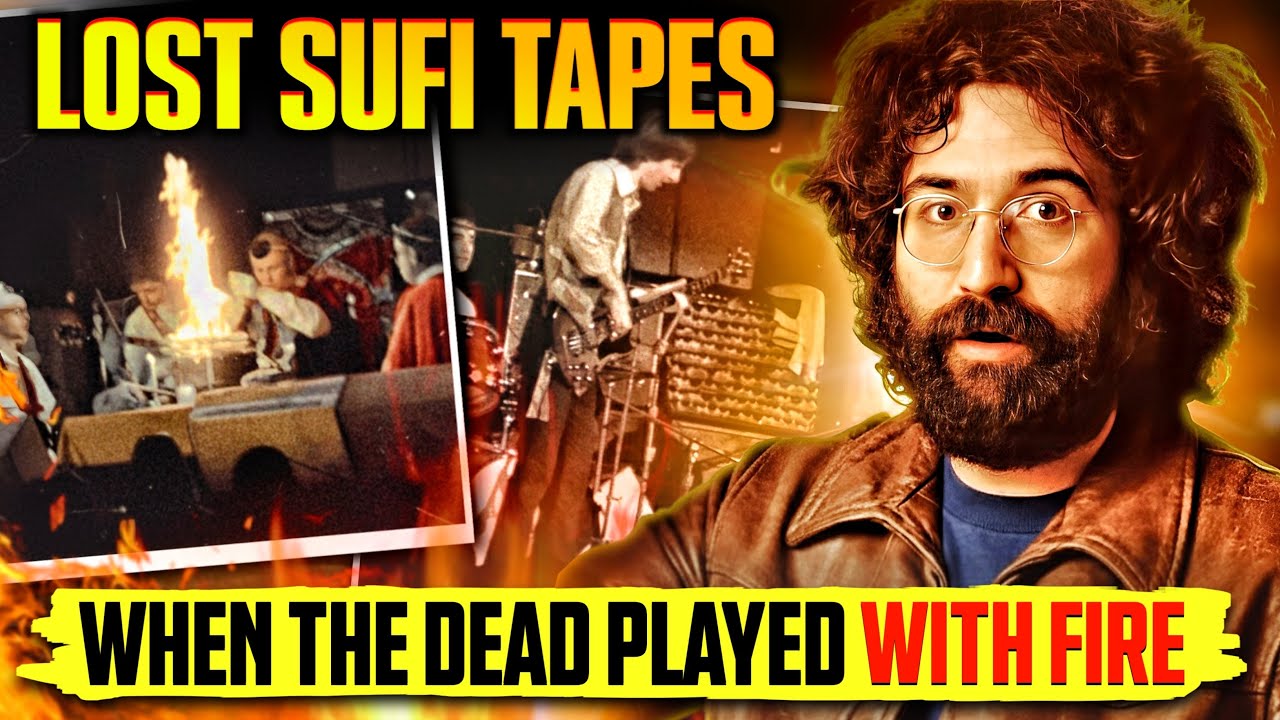
On March 24th, 1971, the Winterland Ballroom in San Francisco hosted one of the most unusual, striking, and genuinely strange events in Grateful Dead history—an event so profoundly strange and unconventional that even seasoned Deadheads arriving at the venue that evening weren’t entirely sure what they were about to witness or experience. It wasn’t a typical rock concert in any conventional sense. It was a benefit performance in support of the Sufi Choir of San Francisco, and the opening ritual of the evening involved robed men chanting and performing ceremonial movements around a roaring bonfire that was burning inside a wooden building, with flames shooting eight feet high into the air in a way that seemed both transcendent and deeply concerning from a fire safety perspective.
Michael Parrish was only 17 years old when his parents made the somewhat unusual decision to give him permission to drive to San Francisco on a school night to see the Grateful Dead perform. He arrived at Winterland around 8 p.m., expecting something resembling a standard Dead concert based on his previous experiences and knowledge of the band. What he encountered immediately upon entering the venue made him question whether he’d made a serious mistake in coming. The image that greeted him—a massive, roaring bonfire burning inside Winterland, which was itself a big wooden building, with flames reaching eight feet into the air—was genuinely terrifying from a rational perspective. Where was the city’s fire marshal? How was this conceivably legal? How were authorities allowing such a clearly dangerous setup inside a wooden structure filled with thousands of people?
A Benefit for Something Completely Different From a Normal Rock Show
This wasn’t simply another Dead show, another concert performance in the endless stream of Grateful Dead performances that had become a significant cultural phenomenon by 1971. Rather, it was a benefit concert organized to support and raise funds for an experiment in interfaith collaboration and mystical spiritual practice that most concertgoers didn’t fully understand and might have found quite alien to their expectations. The Sufi Choir of San Francisco represented an emerging American fascination with Eastern spirituality, mystical practice, and non-Western approaches to consciousness and spiritual development that had begun gaining mainstream attention and cultural currency in the late 1960s and early 1970s.
Sufism, the mystical and experiential dimension of Islam that emphasizes direct experience of the divine through music, movement, and ecstatic practice, offered American seekers a distinctive pathway to explore transcendent experience and spiritual development outside the traditional frameworks of Western religious traditions. The Sufi Choir’s music and rituals offered something genuinely different from the psychedelic rock that had made San Francisco famous.
The Grateful Dead’s willingness to participate in such an experimental, boundary-crossing benefit event spoke directly to their own deep openness to spiritual exploration, cross-cultural exchange, and community engagement. They weren’t simply playing a concert to make money or enhance their reputation, though those might have been secondary benefits. They were lending their significant cultural platform and their hard-earned credibility to something that mattered profoundly to people in their community, something that existed well outside the conventional mainstream of rock and roll and popular music.
The Strange and Transcendent Beauty of the Night
As the evening progressed and Parrish settled into understanding what was actually happening around him, he gradually began to comprehend the deeper intention and meaning behind the robed figures, the chanting, the bonfire with its towering flames. It wasn’t chaos or danger, though it certainly looked both. It was ritual. It was a deliberately constructed, carefully thought-out creation of sacred space, an intentional attempt to transport the audience beyond the normal, everyday confines of a rock concert into something more genuinely transcendent and spiritually significant.
The Grateful Dead, with their own well-documented and widely known deep interest in consciousness expansion, spiritual exploration, and the alteration of consciousness through music and community, were ideally and almost naturally suited to provide music for such an unusual and experimental event. Their demonstrable willingness to stretch beyond conventional concert formats, to participate in genuine experiments with different states of consciousness and community forms, made them natural and obvious collaborators for this distinctly unusual benefit event. The band brought their full instrumental and improvisational power and capability to support something that mattered deeply to their community and to the broader San Francisco spiritual scene.
Lost for Fifty Years, Then Recovered
The significance and importance of that March 24th, 1971 performance lay not just in its genuine weirdness and its departure from standard concert formats. It lay also in its historical obscurity and the way it was eventually lost and then recovered. For many decades, this show existed in a kind of historical limbo—known to those who had actually been there and experienced it, recorded somewhere in the Grateful Dead’s extensive tape archives, but largely forgotten or ignored by the broader community of Grateful Dead fans and music historians. It represented a meaningful moment when the Dead stepped fully and deliberately into their emerging role as cultural experimenters and pioneers, musicians willing to use their music and their cultural authority to support spiritual and community endeavors that were far outside the mainstream of popular culture.
The eventual recovery, documentation, and wider circulation of this performance restored an important and instructive chapter to Grateful Dead history, one that showed how deeply connected the band actually was to the spiritual seeking, consciousness exploration, and community building impulses that characterized their entire era. They weren’t simply musicians playing rock and roll for profit or even primarily for artistic expression. They were conscious participants in a broader, ongoing cultural experiment aimed fundamentally at expanding human experience, consciousness, and spiritual possibility.
Watch the full documentary on YouTube →
Subscribe to The Shakedown Archives for more Grateful Dead documentaries, and explore more stories at TheShakedownArchives.com.