Warren Haynes Had to be Jerry Garcia and Duane Allman — In the Same Year
In 2004, Warren Haynes played 80+ shows across The Dead and the Allman Brothers — learning 150 songs while both bands told him: don’t imitate the legend before you.
Warren Haynes joined the Allman Brothers Band in March 1989 as a temporary reunion hire. He stayed twenty-five years. Along the way, both Gregg Allman and Dickey Betts told him the same thing Phil Lesh would later say about Jerry Garcia‘s music: bring your own voice. Don’t copy the original.
In 2004, The Dead
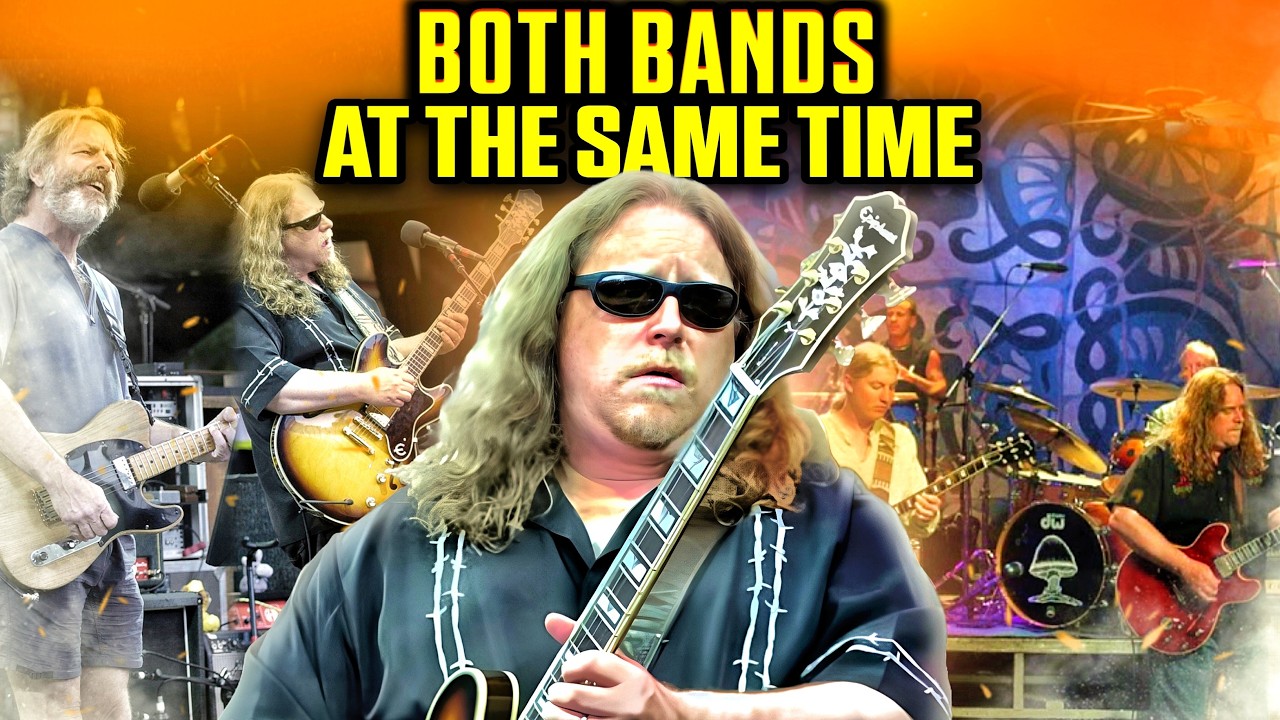
In 2004, The Dead — Bob Weir, Phil Lesh, Mickey Hart, Bill Kreutzmann, Jimmy Herring, Jeff Chimenti, and Haynes — launched the Wave That Flag Tour. Haynes learned 150 songs for a band that changed its setlist every night while rotating who called each song. Three days after playing the Tweeter Center in Camden with The Dead, he’d be at Jones Beach singing “Sugaree” without imitating a single Garcia phrase. Then back to the Allmans for “Blue Sky” — on a Stratocaster, not Duane’s Les Paul.
This video traces Haynes from his years with David Allan Coe through the Phil Lesh Quintet, Gov’t Mule, and the final Allman Brothers show at the Beacon Theatre on October 28, 2014 — and argues that carrying a legacy forward means refusing to pretend you’re someone you’re not.
Two Bands, Two Legacies
In 2004, Warren Haynes faced a challenge that no other guitarist in rock history had attempted. He was simultaneously the lead guitarist of the Allman Brothers Band and a core member of The Dead — the post-Jerry Garcia continuation of the Grateful Dead featuring Bob Weir, Phil Lesh, Mickey Hart, and Bill Kreutzmann. Each band had lost its founding guitarist — Duane Allman in 1971, Jerry Garcia in 1995 — and each carried an impossible weight of expectation from some of the most passionate fanbases in American music.
The logistics alone were staggering. Haynes played over 80 shows across the two bands that year, learning and maintaining a combined repertoire of approximately 150 songs. The Allman Brothers catalog demanded slide guitar mastery and a command of Southern blues-rock tradition. The Dead’s catalog required something entirely different — an ability to navigate open-ended improvisational passages that could stretch for twenty or thirty minutes, following musical ideas wherever they led.
Don’t Imitate the Legend
Both bands gave Haynes the same instruction: don’t try to sound like the guy you’re replacing. This was easier said than done. Duane Allman’s slide guitar on “Layla” and “Statesboro Blues” is among the most recognizable playing in rock history. Jerry Garcia’s tone — that warm, liquid sustain from his custom guitars through McIntosh amplifiers — is so distinctive that Deadheads can identify it in a single note.
Haynes solved the problem by doing what both Allman and Garcia had done: playing with absolute authenticity. Rather than mimicking their specific techniques, he absorbed their musical values — Allman’s commitment to the blues as a living tradition, Garcia’s belief that improvisation is a conversation rather than a performance — and expressed those values through his own voice. The result was playing that honored both legacies without being enslaved by either.
The Physical and Emotional Toll
The 2004 schedule was punishing. Beyond the 80-plus shows with the Allman Brothers and The Dead, Haynes was also leading his own band, Gov’t Mule, and making guest appearances with other artists. He was essentially working three full-time jobs, each demanding a different musical vocabulary and a different emotional register. The Allman Brothers shows were structured, building to predictable climaxes. The Dead shows were unpredictable, requiring a willingness to abandon plans mid-song and follow collective intuition into unknown territory.
Haynes has spoken in interviews about the emotional weight of standing in spaces that belonged to musicians who had died. Every night, he could feel the audience measuring him against a ghost. Some fans embraced his contributions; others resented the very premise of replacing the irreplaceable. Haynes navigated this tension with a grace that both bands publicly acknowledged, and his years with The Dead and the Allman Brothers cemented his reputation as one of the most versatile and emotionally intelligent guitarists of his generation.
The Song in Context
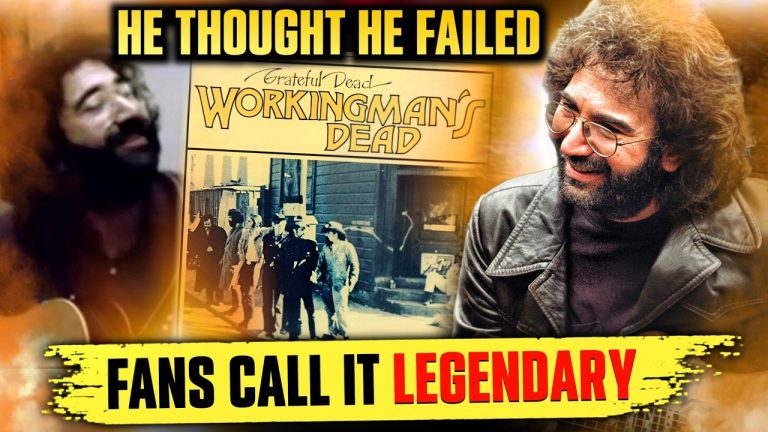
Understanding any Grateful Dead song requires understanding the partnership between Jerry Garcia and Robert Hunter that produced it. Hunter was not a conventional lyricist — he was a poet who happened to write for a rock band. His words drew from American folk traditions, Beat poetry, and a mythological imagination that created characters and landscapes existing outside of any specific time or place. Garcia’s melodies, in turn, had a quality that musicologists have struggled to categorize — folk-informed but jazz-inflected, simple on the surface but harmonically sophisticated beneath.
The songs they created together entered the Grateful Dead’s live repertoire and evolved constantly. A song might be performed hundreds of times over decades, and no two versions were identical. Tempos shifted, arrangements expanded and contracted, and improvisational passages grew or shrank depending on the band’s collective mood on any given night. For Deadheads, the song as recorded in the studio was merely a starting point — a sketch that live performance would elaborate into something far more complex and unpredictable.
The Live Experience
The Grateful Dead’s live performances were fundamentally different from those of any other major rock band. While most acts rehearsed and repeated a fixed setlist, the Dead approached each show as a unique event. Setlists were chosen shortly before the performance, and the transitions between songs — the spaces where improvisation lived — were entirely spontaneous. A concert might last three hours or more, moving through structured songs, extended jams, and passages of pure collective improvisation that could be transcendent or chaotic, sometimes both simultaneously.
This approach demanded extraordinary musical communication. Each member of the band had to listen constantly to every other member, responding in real time to melodic suggestions, rhythmic shifts, and dynamic changes. Garcia often described it as a conversation — not a performance, but a dialogue between musicians who had developed, over years of playing together, an almost telepathic understanding of each other’s musical instincts. When it worked, the result was music that felt inevitable and surprising at the same time.
The Deadhead Phenomenon
The community that formed around the Grateful Dead was unprecedented in popular music. Deadheads didn’t just attend concerts — they built a culture. Tape trading networks distributed live recordings across the country before the internet existed, creating a shared archive of performances that fans studied with scholarly intensity. The parking lot scene at Dead shows became a self-sustaining economy of food vendors, craft sellers, and itinerant entrepreneurs who followed the band from city to city.
What distinguished Deadhead culture from ordinary fandom was its participatory nature. Deadheads didn’t consume the Grateful Dead’s music passively — they actively shaped the experience. Their energy in the audience influenced the band’s playing. Their tape trading preserved and disseminated the music. Their economic activity in the parking lots created the ecosystem that made extended touring financially viable. The relationship between the Dead and their audience was genuinely symbiotic, each sustaining and inspiring the other across three decades of continuous performance.
Related Articles
- Why The Dead Took 7 Years To Rise Again
- Bob Weir Has Died. What Happens to the Grateful Dead Now?
- Bob Weir’s Legacy: The Rhythm Guitarist Who Made the Grateful Dead Possible
The Shakedown Archives publishes new research on Grateful Dead history each week. If you enjoyed this essay, you can subscribe to the companion YouTube channel below.
Subscribe on YouTube