Why the Grateful Dead Failed in the Studio But Dominated Live Music
The Grateful Dead were supposed to make great studio albums. They had the talent, the ambition, and—eventually—the budget. Instead, they became the most important live band in rock history by doing something radical: abandoning the studio as their primary artistic medium. This wasn’t failure—it was liberation.
The contradiction haunted the Dead from their debut in 1967 straight through the 1980s. Here was a band that could command amphitheaters and create transcendent four-hour concerts, yet when engineers rolled tape in controlled studio environments, something essential evaporated. The Grateful Dead’s greatest achievement wasn’t any single album. It was the realization that their art form—improvisational group telepathy—couldn’t exist within the tyranny of the recording booth.
The Grateful Dead’s self-titled debut arrived in March 1967 to almost complete indifference. Recorded in just three days, the album captured a band in a hurry but not a band at their best. The rawness sounds intentional only in retrospect; at the time, it sounded like incompetence. Critics ignored it. Audiences didn’t seek it out. The album spent weeks selling poorly while the Dead’s live reputation was already building toward something mythic.
This should have been their debut triumph—the official announcement of a revolutionary group. Instead, it became evidence of a fundamental incompatibility: the Dead’s power wasn’t in perfected takes or polished production. It existed in the moment, in the specific chemistry between five musicians responding to each other in real-time, in front of an audience that was collectively generating the psychic energy fueling the performance.
The studio had no audience. The tape recorder captured everything but what mattered most.
By 1968, the Dead were bankrolled and experimental. *Anthem of the Sun* represented their most ambitious studio effort—an expensive, experimental collage that nearly bankrupted the label. The album cost a staggering sum for its time and featured elaborate production techniques: layering, editing, studio experimentation. The Dead were trying to *manufacture* the transcendence they achieved spontaneously on stage.
It didn’t work. *Anthem of the Sun* sounded like what it was: a band trying to bottle lightning. The songs dissolved into effects-heavy production that obscured rather than revealed the group’s brilliance. The album failed commercially and critically, leaving the Dead with a hard lesson: technology and money couldn’t solve the core problem. You can’t record improvisation the way you record a composed song.
By 1969, the Dead had access to the latest recording technology—16-track recording capabilities that were genuinely state-of-the-art. *Aoxomoxoa* cost $180,000, an astronomical sum in 1969. With that budget and technology, surely the Dead could finally capture their live magic on tape.
Instead, *Aoxomoxoa* became the answer to a question nobody asked. The album was technically impressive and commercially disappointing. It proved what the Dead were learning slowly and painfully: that studio albums were the wrong medium for their art. The innovation was there. The musicianship was undeniable. But the essential ingredient—the unpredictability, the moment-to-moment discovery, the audience participation in the creative act—couldn’t exist within the walls of a recording studio.
Everything changed with *Live/Dead* in 1969. For the first time, a Grateful Dead recording actually sounded like the Grateful Dead. The album was recorded live, capturing performances from the Fillmore East in New York. Suddenly, the music had the breathing space, the momentum, the spontaneity that defined the Dead’s live reputation.
*Live/Dead* didn’t solve every problem—live albums have their own technical limitations. But it proved something crucial: the Dead’s authentic document wasn’t going to be a studio creation. It was going to be live performance, captured as it happened. This wasn’t a compromise. It was a recognition of reality. The Dead were a live band. That wasn’t a limitation—it was their identity.
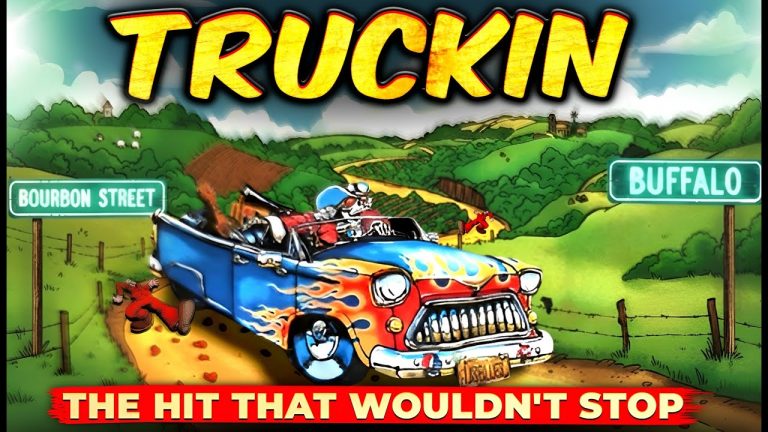
The most successful phase of the Dead’s recording career came when they stopped trying to be the Dead in the studio. *Workingman’s Dead* and *American Beauty*, both released in 1970, succeeded precisely because they abandoned the goal of capturing live improvisation on tape. Instead, the band wrote compact, folk-influenced songs designed from the ground up for the studio format. “Casey Jones,” “Truckin’,” “Friend of the Devil”—these were finished compositions, not launching points for 20-minute explorations.
These albums worked because they played to the strengths of studio recording, not against them. They stopped fighting the medium. But this success came with an implicit admission: the Dead were excellent songwriters *when they accepted the studio’s constraints*. When they tried to be themselves in the studio, they failed. When they became a different version of themselves, they succeeded.
The irony was sharp: the Dead’s studio hits were the Dead rebranding themselves. The real Dead—the ones that mattered artistically and culturally—existed primarily in live performance.
Throughout the 1970s and into the 1980s, a pattern solidified. Studio albums became obligations. The record label expected them. The industry demanded them. But the real Dead, the actual historical record that mattered, was being documented in concert recordings. The 2,300+ live performances that would define the Dead’s legacy were largely unavailable to the public at the time, existing only in bootleg form and collector’s tapes. Yet everyone knew: *those* were the real documents. That’s where the art actually happened.
By 1987, with *In the Dark*, the Dead finally achieved a major studio hit. But even this success came with a twist—the album was recorded live in the studio at Marin Veterans Memorial Auditorium, capturing an audience and the associated energy that made the performance feel less sterile. The Dead had to essentially fake a concert setting to make their studio recording feel authentic.
This is the Grateful Dead’s true legacy regarding studio versus live music. Their studio albums are important—important as evolution, as documentation, as commercial products. But they’re fundamentally secondary. The real Grateful Dead lives in the archive of live performances, in the bootlegs and official releases that finally brought the band’s greatest moments to the masses decades after they occurred.
The Dead discovered something that transformed rock music: a band doesn’t have to excel in the studio to be historically essential. The studio had been rock and roll’s assumed center of gravity since the 1950s—the place where the “real” art happened. The Beatles confirmed this. The Rolling Stones proved it. But the Grateful Dead flipped the assumption. The studio became the margin. Live performance was the text.
This distinction wasn’t unique to the Dead—Zeppelin had their myths, Skynyrd had their moments, the Allman Brothers recorded live albums that captured their essence. But the Dead were the first major rock band to say clearly and persistently: our real art happens on stage, and the studio exists to serve that truth, not to contradict it.
Understanding the Dead’s studio struggle isn’t about cataloging failure. It’s about recognizing the moment rock music expanded its definition of what could constitute a great artist, a major work, a historical achievement. The Grateful Dead won by accepting that they were built for a different space entirely—the live concert hall, the festival grounds, the community space where musicians and audience generated something together that no individual effort could create.
Their failed studio albums taught them what the 2,300+ live performances would eventually prove: that’s where the real Dead lived.