Dark Star’s Transformation: From 1968 Single to Grateful Dead’s Live Show Classic
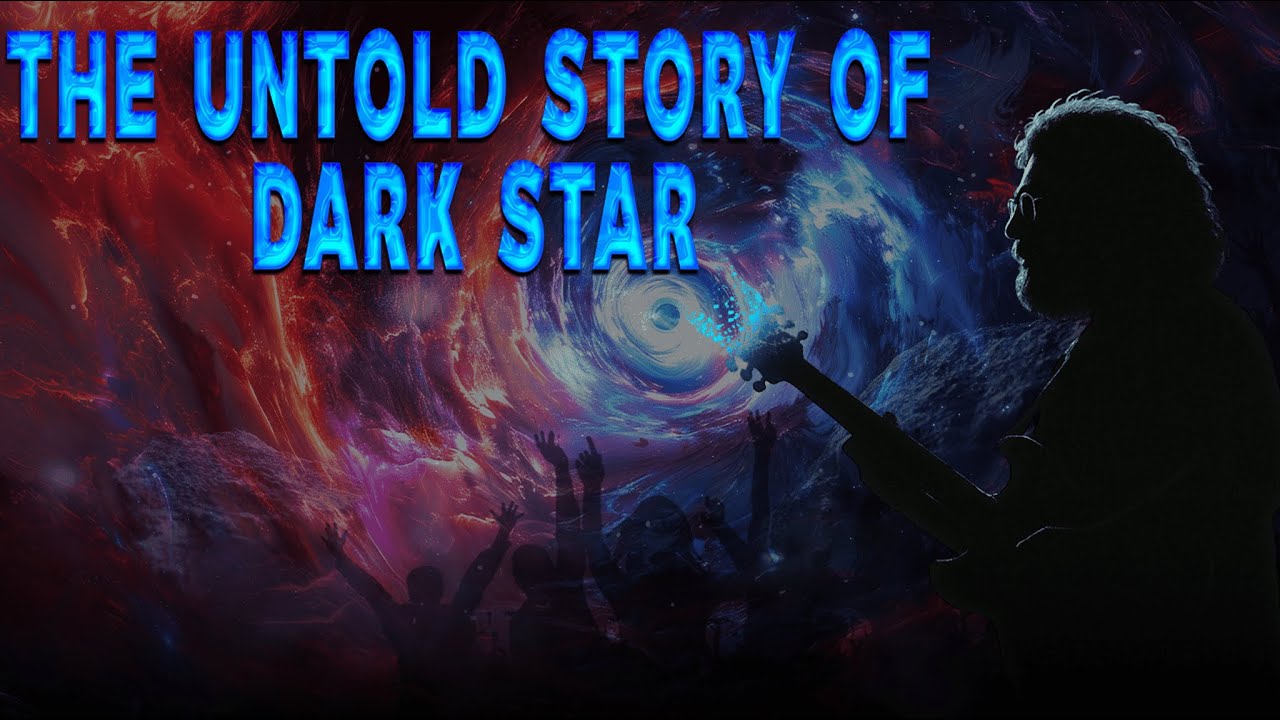
In February 1968, when the Grateful Dead recorded “Dark Star” for Warner Bros. Records, few could have anticipated that this understated two-minute-and-forty-five-second composition would eventually become the definitive expression of the band’s improvisational philosophy. Written by Robert Hunter and Jerry Garcia, the song emerged during a transitional moment for the Dead—a period when the San Francisco psychedelic scene that birthed them was beginning to evolve into something more ambitious and structurally complex.
The original studio recording reveals Hunter’s lyrical minimalism and Garcia’s restrained guitar work. Released as the B-side to “Born Cross-Eyed,” the track’s modest length and stripped-down arrangement suggested nothing of its future potential. The composition itself is deceptively simple: a dark minor-key melody, ethereal and haunting, with Hunter’s cryptic lyrics conjuring imagery of cosmic wandering and existential uncertainty. But within this spare framework lay infinite possibility—the architectural foundation upon which the Dead would build one of rock music’s most expansive and endlessly variable performance pieces.
The transformation began almost immediately
The transformation began almost immediately. By 1968 and into 1969, as the Dead moved increasingly toward extended improvisations and developed their distinctive approach to live performance, “Dark Star” became the primary vehicle for these experiments. What started as a tight, composed song gradually expanded into a 15, 20, and eventually 30-plus-minute exploration of musical space. Garcia and the band discovered that Dark Star’s harmonic structure and ethereal quality created the perfect launching pad for free exploration while maintaining sufficient tonal cohesion to prevent complete dissolution into chaos.
The genius of this development lay in understanding the song’s essential ambiguity. Hunter’s lyrics and Garcia’s melodic line were evocative rather than concrete, suggesting rather than demanding narrative closure. This openness became the Dead’s greatest asset. Unlike more traditionally structured rock songs that resist extended development without losing their identity, Dark Star somehow became more itself the longer the band played it—more mysterious, more searching, more true to its fundamental character.
The November 1969 recording of Dark Star from the Fillmore East, documented on the album *Live/Dead*, stands as the towering achievement of the band’s early period. Stretching beyond 23 minutes, this version remains the template against which all subsequent Dark Star performances are measured. Here, the band demonstrates complete command of extended form, with each member understanding when to push forward, when to recede into supportive texture, and when to leave space for others.
Jerry Garcia’s guitar work throughout this performance deserves
Jerry Garcia’s guitar work throughout this performance deserves particular study. Rather than overwhelming the piece with virtuosic runs, he shapes the overall emotional arc through carefully placed melodic statements and textural shifts. His playing remains tethered to Dark Star’s core melody even as the band ventures into abstract territories, creating a philosophical dialogue between the song’s essential identity and the moment-by-moment improvisational present. This approach became the model for how the Dead would handle extended jams throughout their career.
Perhaps Dark Star’s most distinctive contribution to Grateful Dead lore emerged in the segues it facilitated. The “Dark Star > St. Stephen > The Eleven” sequences—particularly those from late 1969 and 1970—created some of the most thrilling moments in the band’s recorded history. These medleys functioned as extended compositions in themselves, with Dark Star’s exploratory framework providing the ideal transition point between the crystalline structure of Hunter’s “St. Stephen” and the complex time signatures of “The Eleven.”
These sequences demonstrated a crucial aspect of Dead philosophy: improvisation and composition are not opposing forces but complementary elements within a larger artistic vision. The segues showcased how the band could move between different compositional languages while maintaining coherence and emotional arc. They revealed the Dead’s understanding that a concert is not a sequence of discrete songs but a continuous musical narrative with its own inevitable momentum and logic.
Garcia frequently described Dark Star as “a song
Garcia frequently described Dark Star as “a song that’s different every time you play it.” This statement, which might sound like platitude about improvisation, actually articulates something fundamental about the band’s artistic approach. Unlike most rock compositions, which aim for consistency across performances, Dark Star explicitly embraced variation as essential to its identity. Each performance was complete and valid precisely because it was unrepeatable.
This philosophy positioned the Dead against the broader rock music tendency toward reproducibility. In an era when bands increasingly aimed to replicate studio recordings in concert, the Dead—through Dark Star in particular—insisted on the primacy of the live moment. No two nights could ever sound alike; no audience would ever experience the same song twice. This radical commitment to impermanence and specificity became central to Deadhead culture, creating a collecting mania around tapes and recordings, a community united by the pursuit of the perfect or most transcendent version.
By the late 1970s and early 1980s, Dark Star’s presence in the Dead’s setlists declined dramatically. The song simply disappeared from performances for extended periods, suggesting that even the band recognized its specialness—that it couldn’t be routinized or taken for granted. Perhaps there was also artistic exhaustion with the piece; after more than a decade of intensive exploration, even Dark Star’s seemingly infinite capacity for variation had its limits.
But the rarity only deepened Deadheads’ reverence
But the rarity only deepened Deadheads’ reverence. When Dark Star appeared in performances during the 1990s revival period, the response was electric—a crowd reaction that acknowledged both the song’s historical importance and its long absence. These later versions carried additional weight, performed by a band simultaneously returning to its roots and bringing the wisdom of decades to the material.
Dark Star represents something crucial about the Grateful Dead’s essential nature and appeal. The song is not great despite its ambiguity and formal indeterminacy—it is great precisely because of these qualities. It embodies a fundamentally optimistic belief in the redemptive power of present-moment creativity, in the idea that artists and audience can together create meaning through spontaneous action.
For Deadheads, Dark Star became the ultimate expression of what made the Dead special: not technical virtuosity or commercial appeal, but rather a commitment to exploration, variation, and the irreducible specificity of the live moment. Decades after its 1968 origins, Dark Star remains the song that best captures what drew millions to follow the Grateful Dead across the decades—the promise that something genuinely unknown and unexpected might emerge from the space between one note and the next.
The Song in Context
Understanding any Grateful Dead song requires understanding the partnership between Jerry Garcia and Robert Hunter that produced it. Hunter was not a conventional lyricist — he was a poet who happened to write for a rock band. His words drew from American folk traditions, Beat poetry, and a mythological imagination that created characters and landscapes existing outside of any specific time or place. Garcia’s melodies, in turn, had a quality that musicologists have struggled to categorize — folk-informed but jazz-inflected, simple on the surface but harmonically sophisticated beneath.
The songs they created together entered the Grateful Dead’s live repertoire and evolved constantly. A song might be performed hundreds of times over decades, and no two versions were identical. Tempos shifted, arrangements expanded and contracted, and improvisational passages grew or shrank depending on the band’s collective mood on any given night. For Deadheads, the song as recorded in the studio was merely a starting point — a sketch that live performance would elaborate into something far more complex and unpredictable.
The Live Experience
The Grateful Dead’s live performances were fundamentally different from those of any other major rock band. While most acts rehearsed and repeated a fixed setlist, the Dead approached each show as a unique event. Setlists were chosen shortly before the performance, and the transitions between songs — the spaces where improvisation lived — were entirely spontaneous. A concert might last three hours or more, moving through structured songs, extended jams, and passages of pure collective improvisation that could be transcendent or chaotic, sometimes both simultaneously.
This approach demanded extraordinary musical communication. Each member of the band had to listen constantly to every other member, responding in real time to melodic suggestions, rhythmic shifts, and dynamic changes. Garcia often described it as a conversation — not a performance, but a dialogue between musicians who had developed, over years of playing together, an almost telepathic understanding of each other’s musical instincts. When it worked, the result was music that felt inevitable and surprising at the same time.
The Deadhead Phenomenon
The community that formed around the Grateful Dead was unprecedented in popular music. Deadheads didn’t just attend concerts — they built a culture. Tape trading networks distributed live recordings across the country before the internet existed, creating a shared archive of performances that fans studied with scholarly intensity. The parking lot scene at Dead shows became a self-sustaining economy of food vendors, craft sellers, and itinerant entrepreneurs who followed the band from city to city.
What distinguished Deadhead culture from ordinary fandom was its participatory nature. Deadheads didn’t consume the Grateful Dead’s music passively — they actively shaped the experience. Their energy in the audience influenced the band’s playing. Their tape trading preserved and disseminated the music. Their economic activity in the parking lots created the ecosystem that made extended touring financially viable. The relationship between the Dead and their audience was genuinely symbiotic, each sustaining and inspiring the other across three decades of continuous performance.
Related Articles
- From Jug Bands to Grateful Dead: The Folk and Bluegrass Roots of American Rock
- Frankie Weir, Sugar Magnolia, and the Women Who Actually Ran the Grateful Dead
- His Father Swore on a Bible. Then Robbed the Grateful Dead.
The Shakedown Archives publishes new research on Grateful Dead history each week. If you enjoyed this essay, you can subscribe to the companion YouTube channel below.
Subscribe on YouTube