Casey Jones Grateful Dead: The Song Behind the Myth – Origins, Drug Metaphor & The Band’s Frustration
When “Casey Jones” roars out of speakers at Grateful Dead concerts—that driving locomotive rhythm, the unmistakable chorus—audiences immediately recognize it as one of the band’s most iconic tracks. Yet few listeners understand the actual story Robert Hunter and Jerry Garcia were telling. The song that became synonymous with the Grateful Dead’s supposedly hedonistic ethos is, paradoxically, a carefully constructed cautionary tale. Its journey from American railroad folklore to 1970 classic rock staple reveals how even masterfully crafted songwriting can be overshadowed by surface-level interpretation and cultural mythology.
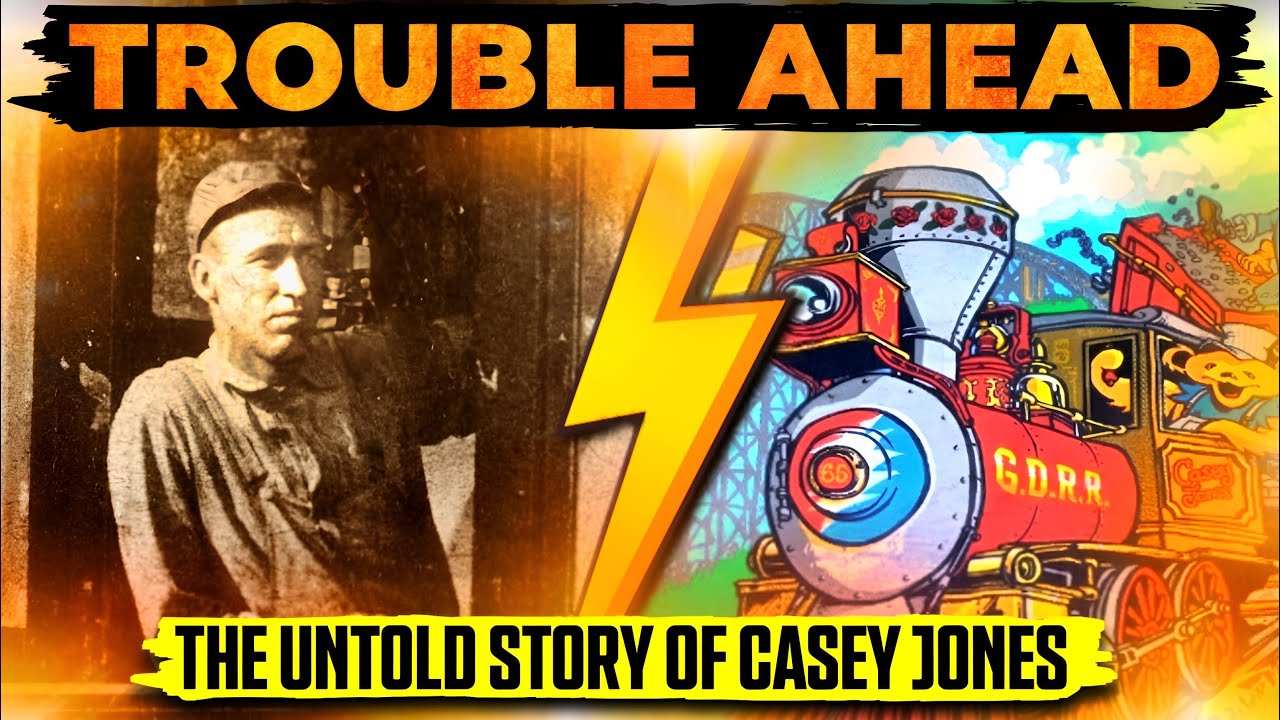
Before there was a Grateful Dead “Casey Jones,” there was a real man: Jonathan Luther “Casey” Jones, an engineer for the Illinois Central Railroad. On April 30, 1900, Jones was operating the Cannonball Express when his train collided with a stalled freight train near Vaughn, Mississippi. Jones remained at the controls, applying the brakes and blowing the whistle in an attempt to avoid disaster. He died in the crash—the only fatality—and became an instant folk hero. Legend transformed him into a man who sacrificed himself to save his passengers, though historical accounts suggest the narrative was more complicated.
The railroad engineer’s death spawned numerous folk ballads
The railroad engineer’s death spawned numerous folk ballads throughout the twentieth century, each interpreting the Casey Jones story through different lenses. By the time Robert Hunter set pen to paper in 1970, the original Casey Jones had become a blank canvas onto which American songwriters could project any number of meanings—heroism, tragedy, the unstoppable momentum of forces beyond our control.
What Robert Hunter did with the Casey Jones legend was audacious. For the Workingman’s Dead sessions—the Dead’s 1970 album that would prove their commercial breakthrough—Hunter wrote a song that preserved the railway imagery while completely recontextualizing its meaning. “Driving that train, high on cocaine, Casey Jones you better watch your speed,” Hunter wrote. Suddenly, the train wasn’t a literal locomotive. It was a metaphor for spiraling drug addiction, for the inevitable crash that comes when you lose control.
Hunter’s lyrical framework was deceptively simple but deeply effective. The song describes Casey Jones as someone in the thrall of substance abuse, operating machinery (the “train”) while impaired, hurtling toward inevitable disaster. “Trouble ahead, trouble behind,” Hunter sang, capturing the inescapable nature of addiction—boxed in by consequences both past and future. The “dispatcher” represented authority figures trying to warn him off. The final crash wasn’t glorified or romanticized; it was presented as the logical endpoint of the behavior the song chronicled.
This was sophisticated songwriting
This was sophisticated songwriting, yet the song’s reception would prove that sophistication and surface-level interpretation don’t always align.
Jerry Garcia contributed the musical architecture that made “Casey Jones” work. Garcia and Hunter had developed a strong creative partnership by 1970, and their collaboration on this track demonstrated complementary strengths. Hunter provided the lyrical wit and narrative drive; Garcia created the musical momentum. The driving, relentless rhythm that Grateful Dead drummer Bill Kreutzmann and bassist Phil Lesh built around Garcia’s composition captured the dangerous velocity of a train—and a life—out of control.
The song’s structure was immediate and accessible in ways much of the Dead’s work wasn’t. It had a clear verse-chorus architecture, memorable hooks, and a pace that felt inevitable and slightly panicked. Kreutzmann’s drumming pushed the song forward with inexorable momentum. The Dead, often regarded as improvisational jammers, showed they could also write tightly constructed, radio-friendly rock songs when the material called for it.
Here’s where the tragedy of misinterpretation enters the
Here’s where the tragedy of misinterpretation enters the story. “Casey Jones” became wildly popular—one of the Dead’s most recognizable songs, a staple of classic rock radio, a concert closer that crowds instantly recognized and loved. But its very popularity created a feedback loop of misunderstanding. Audiences heard “cocaine” and “high” and concluded the song was celebrating drug use. The Grateful Dead, already burdened with the reputation of being the ultimate drug-using band, found that one of their most carefully anti-drug statements was being read as pro-drug anthem.
Jerry Garcia expressed frustration about this misinterpretation. The band had never intended to glorify cocaine use or any substance abuse. The song was a narrative about the dangers of addiction, set to music that captures the desperate momentum of that descent. Yet the cultural moment—the early 1970s, the association between the Dead and the counterculture, the mere presence of drug vocabulary in the lyrics—meant the cautionary intent was frequently lost.
This dynamic haunted the band. “Casey Jones” became the song most likely to be cited as evidence that the Grateful Dead promoted drug culture, when in fact it warned against precisely that. The song’s popularity meant its meaning reached millions, but not always in the form Hunter and Garcia intended.
Despite (or perhaps because of) the interpretation issues
Despite (or perhaps because of) the interpretation issues, “Casey Jones” became the Dead’s most accessible song—a gateway for countless listeners encountering the band for the first time. Its radio-friendly structure and recognizable hook meant it reached audiences the band’s more experimental material never would. For many people, “Casey Jones” was their first taste of Grateful Dead music, and it demonstrated the band’s ability to write genuine rock songs alongside their extended improvisational pieces.
The song’s position in the Workingman’s Dead album is significant. The album emerged as a more accessible, less psychedelic statement than much of the Dead’s catalog. It featured material ranging from subtle, almost country-tinged songwriting to the driving energy of “Casey Jones.” The album showed breadth and songwriting sophistication. Yet “Casey Jones” overshadowed much of that nuance, becoming the album’s commercial flagship.
In live performance, “Casey Jones” became a concert staple—often appearing late in setlists, sometimes as a closer. The song’s driving rhythm and clear structure made it a reliable crowd-pleaser, a moment when even casual Dead fans could sing along and feel connected to the music.
Fifty-plus years later
Fifty-plus years later, “Casey Jones” remains one of the most debated songs in the Grateful Dead catalog. Serious listeners understand that Hunter crafted a cautionary narrative, not a celebration. The song reveals how popular music can be misread despite authorial intent, how a few key phrases can overwhelm lyrical complexity, and how cultural mythology shapes interpretation more powerfully than textual evidence.
“Casey Jones” is simultaneously the Grateful Dead’s biggest hit and one of their most misunderstood statements. It’s a masterclass in accessible songwriting that became burdened by its own accessibility. Robert Hunter and Jerry Garcia created something enduring, something that still resonates in concert halls and on rock radio stations around the world—yet the song they wrote about the dangers of losing control became itself a victim of forces beyond its creators’ control.
The Song in Context
Understanding any Grateful Dead song requires understanding the partnership between Jerry Garcia and Robert Hunter that produced it. Hunter was not a conventional lyricist — he was a poet who happened to write for a rock band. His words drew from American folk traditions, Beat poetry, and a mythological imagination that created characters and landscapes existing outside of any specific time or place. Garcia’s melodies, in turn, had a quality that musicologists have struggled to categorize — folk-informed but jazz-inflected, simple on the surface but harmonically sophisticated beneath.
The songs they created together entered the Grateful Dead’s live repertoire and evolved constantly. A song might be performed hundreds of times over decades, and no two versions were identical. Tempos shifted, arrangements expanded and contracted, and improvisational passages grew or shrank depending on the band’s collective mood on any given night. For Deadheads, the song as recorded in the studio was merely a starting point — a sketch that live performance would elaborate into something far more complex and unpredictable.
Related Articles
- Tiger Rose: The Mysterious Album Robert Hunter Tried to Erase From History
- The Messy Truth About Keith Godchaux Leaving the Grateful Dead
- Bob Weir’s Legacy: The Rhythm Guitarist Who Made the Grateful Dead Possible
The Shakedown Archives publishes new research on Grateful Dead history each week. If you enjoyed this essay, you can subscribe to the companion YouTube channel below.
Subscribe on YouTube