How Europe ’72 Rescued the Grateful Dead and Created the Greatest “Live” Album Ever Made
By early 1972, the Grateful Dead were broke. Lenny Hart — Mickey Hart‘s father, who’d been managing the band’s finances — had embezzled over $150,000 and disappeared. The band owed money to their label, their crew, and each other. They needed a commercial hit, and they needed it fast. The solution was a European tour that would be recorded for a live album — an album that would become Europe ’72, the triple-LP that rescued the band financially and established the template for everything the Grateful Dead would become.
The tour ran from April 7 through May 26, 1972 — twenty-two shows across England, Denmark, Germany, France, Luxembourg, and the Netherlands. Bill Graham, the legendary promoter who’d run the Fillmore, handled logistics. The Dead traveled with a massive entourage: band members, crew, wives, girlfriends, children, and a sixteen-track mobile recording unit that captured every note of every performance. The operation was expensive, chaotic, and musically extraordinary.
The band that arrived in Europe was arguably
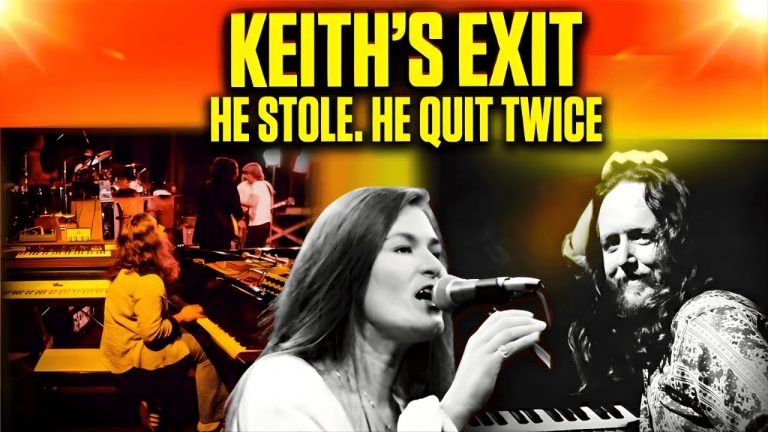
The band that arrived in Europe was arguably the strongest lineup in Dead history. Garcia was at his improvisational peak — fluid, inventive, capable of sustaining melodic ideas across twenty-minute jams without repeating himself. Phil Lesh’s bass playing had evolved into something closer to a lead instrument than a rhythm section anchor. Bob Weir’s rhythm guitar had matured into the percussive, chord-based style that would define his playing for the next three decades. Keith Godchaux, who’d joined just months earlier, brought a jazz-informed keyboard approach that gave the band harmonic possibilities they’d never had. And Donna Jean Godchaux’s vocals added a dimension — gospel warmth, Muscle Shoals precision — that expanded the Dead’s range.
The performances across Europe were consistently outstanding. The April 8 show at Wembley Empire Pool. The April 14 show at Tivolis Koncertsal in Copenhagen. The legendary April 26 performance at the Jahrhunderthalle in Frankfurt. Night after night, the band delivered extended improvisations that pushed their catalog into new territory. “Playing in the Band” became a vehicle for thirty-minute explorations. “Dark Star” reached heights of abstraction that the band hadn’t achieved before. New songs — “He’s Gone,” “Jack Straw,” “Brown-Eyed Women,” “Ramble On Rose” — debuted alongside the established repertoire and immediately sounded like they’d been in the setlist for years.
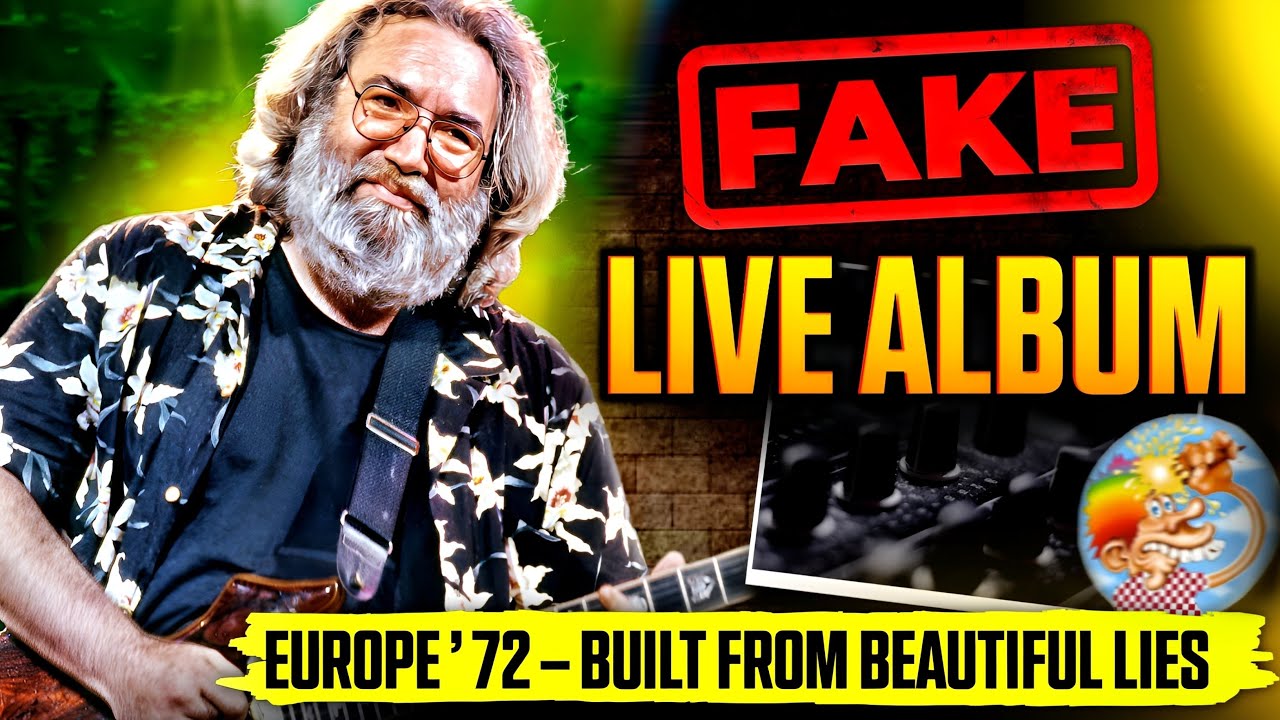
What most people don’t know about Europe ’72 is how much of the album is overdubbed. The “live” recordings were taken back to the studio, where Garcia, Weir, and the others added vocal harmonies, re-recorded guitar parts, and polished performances that were already excellent. The overdubs weren’t corrective — the live performances were genuinely great — but they were extensive enough that calling Europe ’72 a “live album” requires an asterisk. The vocal harmonies on tracks like “China Cat Sunflower” and “I Know You Rider” are studio additions, layered over live instrumental tracks. Garcia re-tracked some guitar solos. The mix was shaped and refined in ways that no purely live recording would allow.
This has been a point of contention among
This has been a point of contention among Deadheads for decades. Purists argue that the overdubs undermine the album’s authenticity — that the whole point of the Dead’s music was its ephemerality, its imperfection, its you-had-to-be-there quality. Defenders counter that the overdubs made the album commercially viable, which was the entire purpose. The Dead needed a hit. A raw, unpolished live recording — however musically authentic — wouldn’t have sold enough copies to dig the band out of its financial hole. The overdubs were a pragmatic compromise that saved the organization.
They worked. Europe ’72 was a commercial success, eventually going double platinum. It introduced the Dead to an audience that had never seen them live, and it established the band’s reputation as the premier live act in rock music. The album’s success funded the Dead’s operations for years and gave them the financial stability to build the Wall of Sound, launch their own record label (Grateful Dead Records), and enter the most ambitious phase of their career.
The irony is that the real Europe ’72 performances — the complete, unedited recordings — are now available through the Dead’s archival release program and through tape trading networks. And they’re better than the album. The raw recordings have an energy, a spontaneity, and a willingness to risk failure that the polished album sanded away. The studio overdubs made Europe ’72 a great album. The unedited tapes reveal it as a great tour — one of the greatest in rock history.
The full story of how the tour came
The full story of how the tour came together, what was at stake, and what the overdubs changed is.
Subscribe to The Shakedown Archives on YouTube
youtube.com/@theshakedownarchives
The Song in Context
Understanding any Grateful Dead song requires understanding the partnership between Jerry Garcia and Robert Hunter that produced it. Hunter was not a conventional lyricist — he was a poet who happened to write for a rock band. His words drew from American folk traditions, Beat poetry, and a mythological imagination that created characters and landscapes existing outside of any specific time or place. Garcia’s melodies, in turn, had a quality that musicologists have struggled to categorize — folk-informed but jazz-inflected, simple on the surface but harmonically sophisticated beneath.
The songs they created together entered the Grateful Dead’s live repertoire and evolved constantly. A song might be performed hundreds of times over decades, and no two versions were identical. Tempos shifted, arrangements expanded and contracted, and improvisational passages grew or shrank depending on the band’s collective mood on any given night. For Deadheads, the song as recorded in the studio was merely a starting point — a sketch that live performance would elaborate into something far more complex and unpredictable.
The Live Experience
The Grateful Dead’s live performances were fundamentally different from those of any other major rock band. While most acts rehearsed and repeated a fixed setlist, the Dead approached each show as a unique event. Setlists were chosen shortly before the performance, and the transitions between songs — the spaces where improvisation lived — were entirely spontaneous. A concert might last three hours or more, moving through structured songs, extended jams, and passages of pure collective improvisation that could be transcendent or chaotic, sometimes both simultaneously.
This approach demanded extraordinary musical communication. Each member of the band had to listen constantly to every other member, responding in real time to melodic suggestions, rhythmic shifts, and dynamic changes. Garcia often described it as a conversation — not a performance, but a dialogue between musicians who had developed, over years of playing together, an almost telepathic understanding of each other’s musical instincts. When it worked, the result was music that felt inevitable and surprising at the same time.
The Deadhead Phenomenon
The community that formed around the Grateful Dead was unprecedented in popular music. Deadheads didn’t just attend concerts — they built a culture. Tape trading networks distributed live recordings across the country before the internet existed, creating a shared archive of performances that fans studied with scholarly intensity. The parking lot scene at Dead shows became a self-sustaining economy of food vendors, craft sellers, and itinerant entrepreneurs who followed the band from city to city.
What distinguished Deadhead culture from ordinary fandom was its participatory nature. Deadheads didn’t consume the Grateful Dead’s music passively — they actively shaped the experience. Their energy in the audience influenced the band’s playing. Their tape trading preserved and disseminated the music. Their economic activity in the parking lots created the ecosystem that made extended touring financially viable. The relationship between the Dead and their audience was genuinely symbiotic, each sustaining and inspiring the other across three decades of continuous performance.
The Business of the Dead
The Grateful Dead’s business model was as unconventional as their music. While other major bands relied on record sales as their primary revenue source, the Dead built their economy on live performance. Their recording contracts were modest by industry standards, and they made little effort to produce radio-friendly singles. Instead, they invested in their live operation — a touring infrastructure that employed dozens of crew members and generated revenue through ticket sales, merchandise, and the loyalty of an audience that returned show after show.
This model was risky. It required constant touring to maintain cash flow, and it left the band vulnerable to the physical toll of life on the road. But it also gave them a degree of independence that few artists in the music industry have ever achieved. The Dead answered to their audience, not to record executives. They could play what they wanted, for as long as they wanted, in the way they wanted — a creative freedom that was the foundation of everything they built.
Related Articles
- His Father Swore on a Bible. Then Robbed the Grateful Dead.
- Why the Grateful Dead Needed Two Drummers — The Rhythm Devils Origin Story
- Frankie Weir, Sugar Magnolia, and the Women Who Actually Ran the Grateful Dead
The Shakedown Archives publishes new research on Grateful Dead history each week. If you enjoyed this essay, you can subscribe to the companion YouTube channel below.
Subscribe on YouTube