Why Hardcore Punk Loved the Dead: Henry Rollins & the Grateful Dead’s Anti-Establishment Legacy
The conventional narrative of rock history draws a clean line between 1960s hippie culture and 1970s punk rock. According to this version, punks and hippies were fundamentally opposed—spiritual versus cynical, loose versus tight, analog versus digital. The Grateful Dead, as the quintessential hippie institution, should have been public enemy number one for the leather-jacketed, safety-pin-adorned youth who declared war on the bloated excess of classic rock.
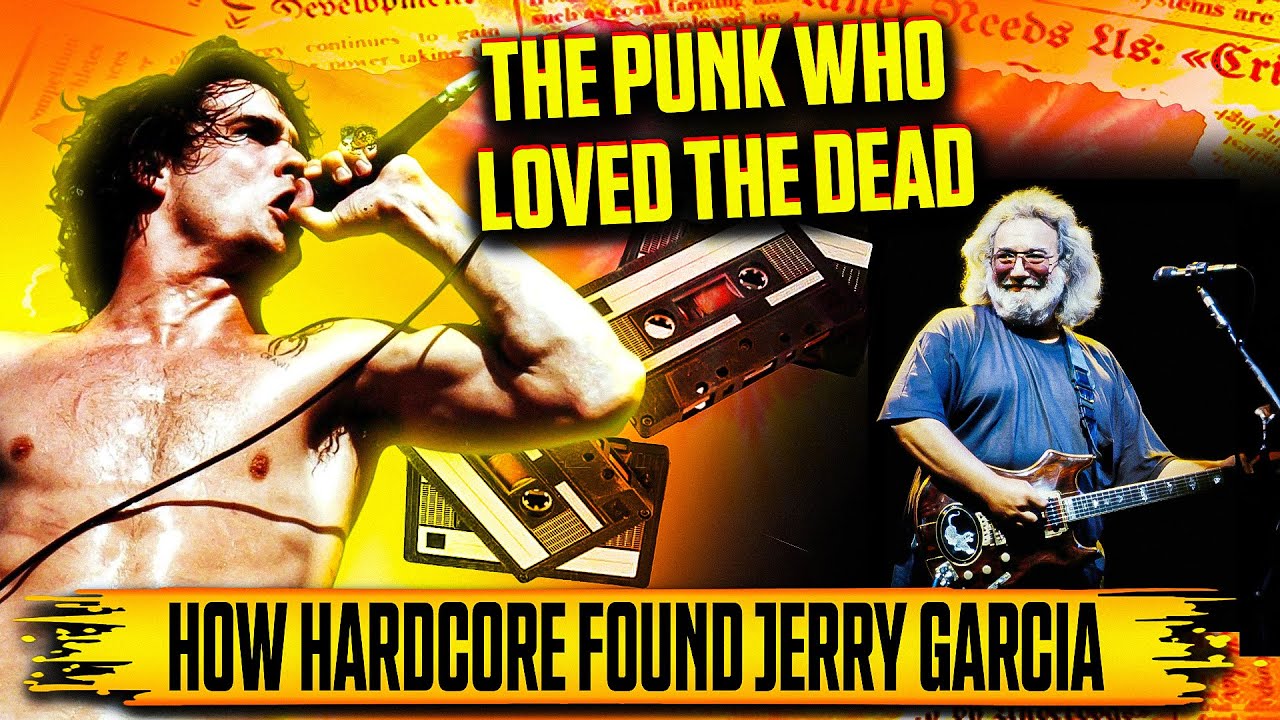
Yet the reality was far more nuanced and revealing about how both movements actually functioned. Henry Rollins, the uncompromising vocalist of Black Flag, one of punk’s most influential and aggressive bands, has spoken candidly about his appreciation for the Grateful Dead’s work ethic and improvisational fearlessness. This wasn’t a casual observation—it represented a fundamental recognition that the Dead embodied something punks claimed to champion but rarely acknowledged in their elder predecessors.
The punk movement of 1976-77 defined itself explicitly
The punk movement of 1976-77 defined itself explicitly in opposition to what they called “dinosaur rock”—bloated stadium bands with inflated egos, corporate record labels, and songs crafted by committee. The Grateful Dead were frequently cited as the epitome of this excess. The Dead’s live shows stretched past three hours, their improvisation seemed indulgent, and their fanbase created an almost religious following that made many punks uncomfortable.
Yet this critique missed something essential about who the Dead actually were.
When you examine the Grateful Dead’s actual business practices and philosophical positioning, they were closer to punk ideology than any glance at their music suggested. The Dead were explicitly anti-corporate in an era when that stance was genuinely countercultural. They rejected the traditional music industry structure with a clarity and consistency that made them genuinely threatening to the established order.
In 1973, the Grateful Dead launched Grateful Dead
In 1973, the Grateful Dead launched Grateful Dead Records, their own independent label. This wasn’t a vanity project—it was a calculated move to retain artistic control and economic sovereignty. The band owned their own sound, controlled their own distribution, and bypassed the corporate gatekeepers who determined what music reached the public. For a major touring act to maintain this level of independence was extraordinary. Most comparable bands would have been locked into contracts with major labels, subject to producer notes, radio-friendly edit requirements, and corporate marketing strategies.
The Dead’s touring operation was similarly DIY in spirit. They maintained direct relationships with their audience, encouraged bootleg tape trading, and deliberately avoided the MTV infrastructure that was beginning to dominate rock music in the late 1970s. They built an alternative distribution network—the tape trading community—that predated the internet by decades. Fans recorded shows, copied tapes, and shared them, creating a decentralized media ecosystem that the record industry couldn’t control.
This was exactly what punk was claiming to champion. Yet punk musicians and critics rarely acknowledged that the Grateful Dead had already implemented these values at scale.
The tension between punk and the Dead was
The tension between punk and the Dead was fundamentally aesthetic rather than philosophical. Both movements rejected mainstream commercial culture. Both valued authenticity, artistic control, and community over polish and market appeal. But they expressed these values through completely different sonic languages.
Punk rock was about compression—distortion, speed, simplicity, aggression. The Grateful Dead were about expansion—complexity, patience, nuance, exploration. When a Black Flag song lasted four minutes and hammered the same three chords with maximalist intensity, it created an entirely different emotional and political statement than a Grateful Dead jam that unfolded over twenty minutes through multiple key changes and improvisational variations.
Yet both approaches were philosophically sound expressions of artistic freedom. The Dead’s refusal to simplify their compositions for radio play was as much a statement of anti-establishment defiance as punk’s deliberate rejection of technical sophistication. Both said: we will not compromise our artistic vision for commercial viability.
Henry Rollins’ public respect for the Dead acknowledged
Henry Rollins’ public respect for the Dead acknowledged this deeper reality. Rollins, as an artist who built his entire career on uncompromising artistic standards and DIY ethics, recognized that the Dead had lived by these principles when it was genuinely difficult to do so. The Dead were already running their own label, already refusing corporate interference, already building alternative distribution networks when punk rockers were still being signed to major labels and told what their albums should sound like.
The punk uniform included a particular sartorial rejection of hippie culture—nowhere more literally than the “Kill the Grateful Dead” t-shirt, which became a punk staple and symbol of generational rejection. Kurt Cobain wore one. It represented punk’s need to define itself against what came before, to establish cultural boundaries and claim ownership of counterculture.
But this was performative rejection masking deeper alignment. Both the Dead and the punks were fighting the same actual enemy: the corporate music machine that sought to package and homogenize authentic artistic expression into consumable product.
The real difference was that the Dead were
The real difference was that the Dead were winning the fight through different means. By the time punk emerged, the Grateful Dead had already built a self-sustaining economic and cultural ecosystem that the music industry couldn’t absorb, monetize, or control. Tickets to Dead shows were reasonably priced. The bootleg tape trade was actively encouraged. The band maintained artistic control. Fans formed genuine community bonds rather than passive consumer relationships.
Punk imagined these things. The Dead actually built them.
What neither movement wanted to acknowledge was that they shared not just philosophy but enemies. Both were positioning themselves against the same corporate consolidation of music industry power. Both rejected the radio-friendly, highly produced, committee-created rock and roll that dominated mainstream culture.
The difference was tactical
The difference was tactical. Punk believed the solution lay in shock, offense, and aggressive refusal. The Dead believed it lay in building alternative institutions and demonstrating that another way was possible.
As punk evolved from revolutionary pose into commodity itself, this distinction became clearer. Black Flag maintained artistic integrity through independent labels and uncompromising artistic standards—the same path the Grateful Dead had pioneered. The Dead’s legacy of independence, community focus, and artistic autonomy became the actual blueprint that surviving punk acts would follow when they wanted to maintain authenticity beyond their first album.
Henry Rollins’ respect for the Grateful Dead wasn’t a contradiction of punk values—it was a recognition that the Dead had actually lived out what punk only claimed to believe. The real story of late-1970s rock music isn’t punks destroying dinosaurs. It’s two different expressions of authentic counterculture—one fast and compressed, one slow and expansive—both fighting the same corporate machine through different methods and styles.
The irony of the “Kill the Grateful Dead”
The irony of the “Kill the Grateful Dead” t-shirt is that the Dead were already beyond killing. They’d already escaped the industry structure that the punks were still fighting. Both movements would ultimately prove that the only way to maintain artistic freedom in commercial music was to do exactly what the Grateful Dead had been doing all along: build your own institutions, maintain direct relationships with your audience, and refuse to compromise your artistic vision for mainstream acceptance.
That wasn’t hippie ideology. That was revolution.
Related Articles
- Why The Dead Took 7 Years To Rise Again
- His Father Swore on a Bible. Then Robbed the Grateful Dead.
- How Ken Kesey’s “Suicide” Changed The Grateful Dead Forever
The Shakedown Archives publishes new research on Grateful Dead history each week. If you enjoyed this essay, you can subscribe to the companion YouTube channel below.
Subscribe on YouTube