Bob Weir’s Legacy: The Rhythm Guitarist Who Made the Grateful Dead Possible
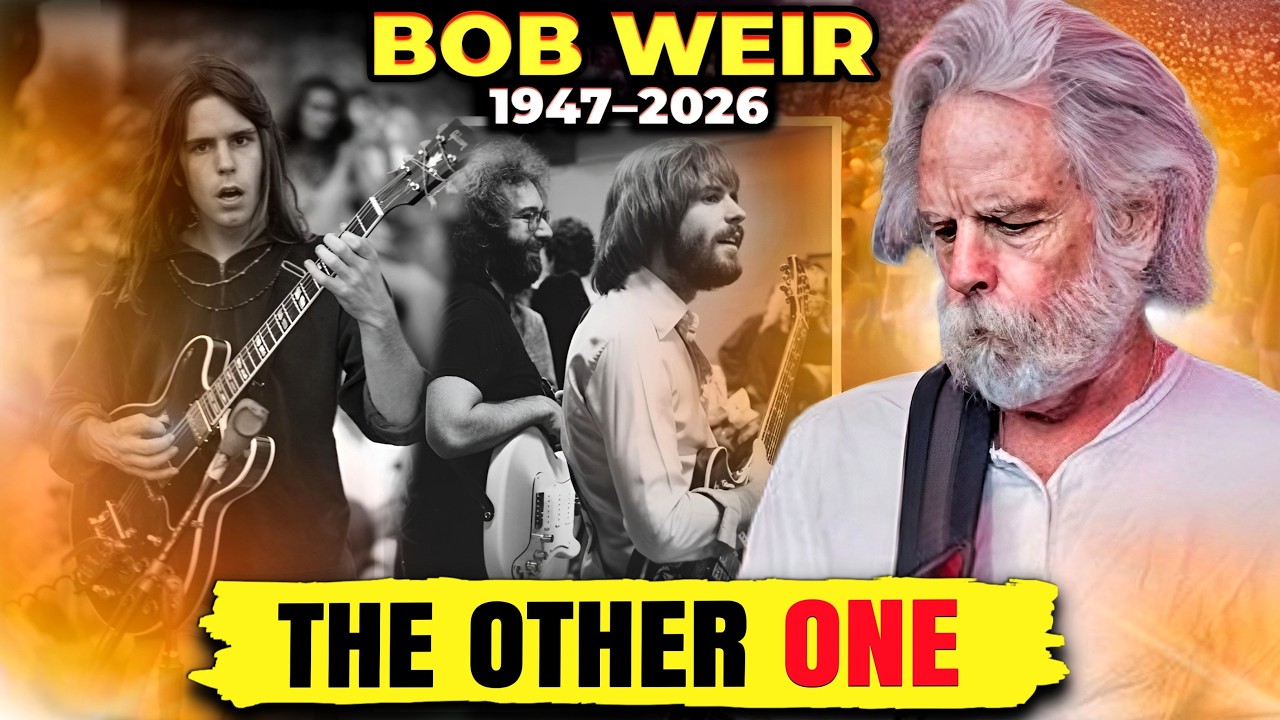
When Bob Weir joined the Grateful Dead on New Year’s Eve 1963 at Dana Morgan Music in Palo Alto, he was sixteen years old, relatively inexperienced, and stepping into a band that already had a distinctive direction. He was the youngest original member joining a group led by Jerry Garcia, and the conventional expectation might have been that Weir would spend his tenure trying to keep up with his more experienced bandmates. Instead, he became the architectural foundation upon which the Dead’s sound was built.
Understanding Bob Weir’s significance requires moving past the assumption that lead guitar equals musical dominance. The Grateful Dead’s sound was revolutionary not because Jerry Garcia was a brilliant improviser—though he was—but because the entire band was structured to enable that improvisational freedom. Garcia needed space to explore harmonic territories, chase melodic ideas, and respond to what was happening around him in real time. The rhythm section created the temporal framework, but the rhythm guitarist created the harmonic framework. That was Weir’s role, and he transformed it.
Most rhythm guitarists of the 1960s played what’s
Most rhythm guitarists of the 1960s played what’s known as “strumming”—chords played with consistent rhythmic patterns that provided steady harmonic support. Weir rejected this approach almost entirely. Instead, he developed what musicians call “counterpoint” and “chord voicings” that functioned more like conversation than accompaniment. Weir would voice chords in ways that created harmonic movement within the chord itself, using different inversions and extensions that added color and complexity to what might have otherwise been simple harmonic territories.
Consider a song like “Truckin'”—one of the band’s most straightforward rockers. A traditional rhythm guitarist might play a steady strum pattern supporting the verse’s basic chord progression. Weir instead plays lines that move independently from Garcia’s lead, creating a musical texture that’s more akin to two melodic instruments in conversation than a single instrument providing foundational support. This approach was unconventional and, to some ears in the mid-1960s, might have sounded loose or imprecise. In fact, it was meticulously considered.
This technique, now often called the “Bobby sound,” fundamentally shaped what the Grateful Dead could do as a band. Because Weir’s playing was harmonically independent and rhythmically flexible, Garcia could solo with a freedom that would have been impossible with a more conventional rhythm guitarist. Garcia didn’t have to worry about following predictable chord patterns. He could explore tangentially, take harmonic detours, and trust that Weir would create harmonic context that made those explorations coherent rather than chaotic.
The Dead’s live performances were built on this
The Dead’s live performances were built on this foundation. A typical Dead show might include a song that lasted forty minutes or more, with the band moving through multiple sections, key changes, and entirely improvised passages. This was only possible because Weir could maintain harmonic coherence while the song itself was in a state of constant musical transformation. He wasn’t following the chord chart; he was creating the harmonic environment in which others could explore.
Weir’s role became even more significant when considering the band’s evolution beyond the Garcia-Hunter songwriting partnership. When Phil Lesh began composing original music, or when the Dead experimented with unusual time signatures and harmonic territories (like on the album “Aoxomoxoa”), Weir’s sophisticated harmonic approach allowed the band to move into those spaces. He could accommodate Mickey Hart‘s polyrhythmic percussion explorations, Billy Kreutzmann’s varied drumming approaches, and Phil’s increasingly complex bass lines because his playing was itself complex enough to interact meaningfully with all of these elements.
Beyond his work with the Grateful Dead, Weir’s career trajectory demonstrated his commitment to musical exploration and evolution. Bobby and the Midnites, his primary side project, allowed him to explore different musical genres and work with musicians outside the Dead’s orbit. The Midnites were a vehicle for funk, soul, and R&B influences that the Dead’s structure couldn’t always accommodate. RatDog, formed in the late 1990s, represented another exploration—a more stripped-down approach that emphasized spontaneity and experimentation.
More recently
More recently, Wolf Bros, his collaboration with Mayer, represented a continuation of this legacy. Weir and Mayer together created a musical partnership that honored the Dead’s improvisational tradition while bringing contemporary sensibilities and new approaches. This willingness to collaborate with musicians from different generations and backgrounds reflects something fundamental about Weir’s philosophy: the music only works when you’re willing to take risks, invite different perspectives, and allow the music to evolve.
Weir was also the Dead’s strongest advocate for continuing the band’s legacy after Jerry Garcia’s death in 1995. At a moment when many assumed the Grateful Dead would simply cease to exist, Weir understood that the music and the community it had built deserved to continue. The various collaborations and iterations that followed—from Dylan touring with the Dead to Branford Marsalis sitting in to Bruce Hornsby becoming a regular collaborator—all reflected Weir’s vision that the Dead wasn’t a fixed entity to be preserved but a living tradition to be honored through evolution.
This vision was grounded in something Weir understood deeply: the Dead had never been about reproducing previous performances. Every show was different. The same song could be completely transformed through improvisation. The band could spend twenty years together and still discover new possibilities in the material they were playing. Weir’s harmonic sophistication enabled that constant discovery because his playing was itself a form of conversation rather than repetition.
The technical vocabulary of music theory
The technical vocabulary of music theory—counterpoint, voice leading, harmonic rhythm—doesn’t fully capture what made Weir essential to the Dead’s sound. What mattered was that Weir approached the rhythm guitarist’s role as an active, creative position rather than a supportive one. He treated the rhythm guitar part as equally important as the lead guitar part, which meant Garcia was freed to pursue his own explorations. This wasn’t a case of one musician being more important than another; it was a case of two musicians working in deliberate partnership where each enabled the other’s creativity.
For musicians and bands studying the Dead’s longevity and influence, Weir’s role offers crucial lessons. The Dead’s forty-year run wasn’t sustained by a single virtuoso surrounded by competent accompanists. It was sustained by multiple musicians at the highest level of creative commitment, each bringing sophisticated musical thinking to their particular role. Weir’s contribution was exactly as essential as Garcia’s, even if his role was less visible to casual observers.
Bob Weir’s legacy is the legacy of someone who understood that being the best rhythm guitarist in a great band is an art form, not a compromise. His harmonic sophistication, his improvisational flexibility, and his willingness to engage in genuine musical conversation rather than simple accompaniment created the conditions in which the Grateful Dead’s music could thrive. He didn’t just support the Dead’s sound; he architected it. And in doing so, he demonstrated a model of musical collaboration that has influenced musicians and bands for decades.
The Song in Context
Understanding any Grateful Dead song requires understanding the partnership between Jerry Garcia and Robert Hunter that produced it. Hunter was not a conventional lyricist — he was a poet who happened to write for a rock band. His words drew from American folk traditions, Beat poetry, and a mythological imagination that created characters and landscapes existing outside of any specific time or place. Garcia’s melodies, in turn, had a quality that musicologists have struggled to categorize — folk-informed but jazz-inflected, simple on the surface but harmonically sophisticated beneath.
The songs they created together entered the Grateful Dead’s live repertoire and evolved constantly. A song might be performed hundreds of times over decades, and no two versions were identical. Tempos shifted, arrangements expanded and contracted, and improvisational passages grew or shrank depending on the band’s collective mood on any given night. For Deadheads, the song as recorded in the studio was merely a starting point — a sketch that live performance would elaborate into something far more complex and unpredictable.
The Live Experience
The Grateful Dead’s live performances were fundamentally different from those of any other major rock band. While most acts rehearsed and repeated a fixed setlist, the Dead approached each show as a unique event. Setlists were chosen shortly before the performance, and the transitions between songs — the spaces where improvisation lived — were entirely spontaneous. A concert might last three hours or more, moving through structured songs, extended jams, and passages of pure collective improvisation that could be transcendent or chaotic, sometimes both simultaneously.
This approach demanded extraordinary musical communication. Each member of the band had to listen constantly to every other member, responding in real time to melodic suggestions, rhythmic shifts, and dynamic changes. Garcia often described it as a conversation — not a performance, but a dialogue between musicians who had developed, over years of playing together, an almost telepathic understanding of each other’s musical instincts. When it worked, the result was music that felt inevitable and surprising at the same time.
The Deadhead Phenomenon
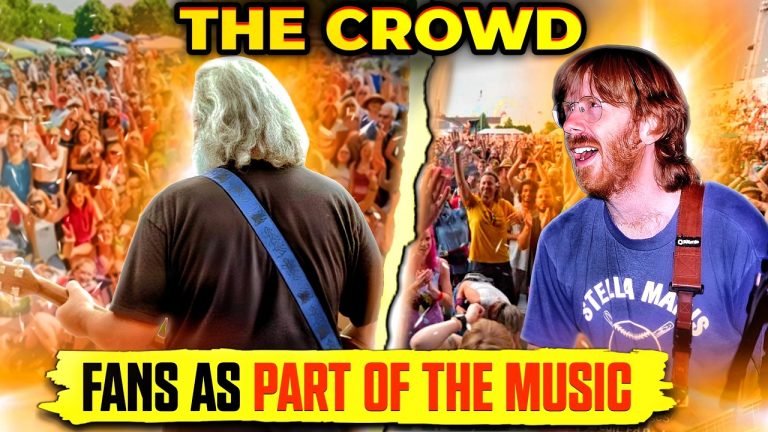
The community that formed around the Grateful Dead was unprecedented in popular music. Deadheads didn’t just attend concerts — they built a culture. Tape trading networks distributed live recordings across the country before the internet existed, creating a shared archive of performances that fans studied with scholarly intensity. The parking lot scene at Dead shows became a self-sustaining economy of food vendors, craft sellers, and itinerant entrepreneurs who followed the band from city to city.
What distinguished Deadhead culture from ordinary fandom was its participatory nature. Deadheads didn’t consume the Grateful Dead’s music passively — they actively shaped the experience. Their energy in the audience influenced the band’s playing. Their tape trading preserved and disseminated the music. Their economic activity in the parking lots created the ecosystem that made extended touring financially viable. The relationship between the Dead and their audience was genuinely symbiotic, each sustaining and inspiring the other across three decades of continuous performance.
Related Articles
- Why The Dead Took 7 Years To Rise Again
- Bob Weir Has Died. What Happens to the Grateful Dead Now?
- Warren Haynes Had to be Jerry Garcia and Duane Allman — In the Same Year
The Shakedown Archives publishes new research on Grateful Dead history each week. If you enjoyed this essay, you can subscribe to the companion YouTube channel below.
Subscribe on YouTube