His Father Swore on a Bible. Then Robbed the Grateful Dead.
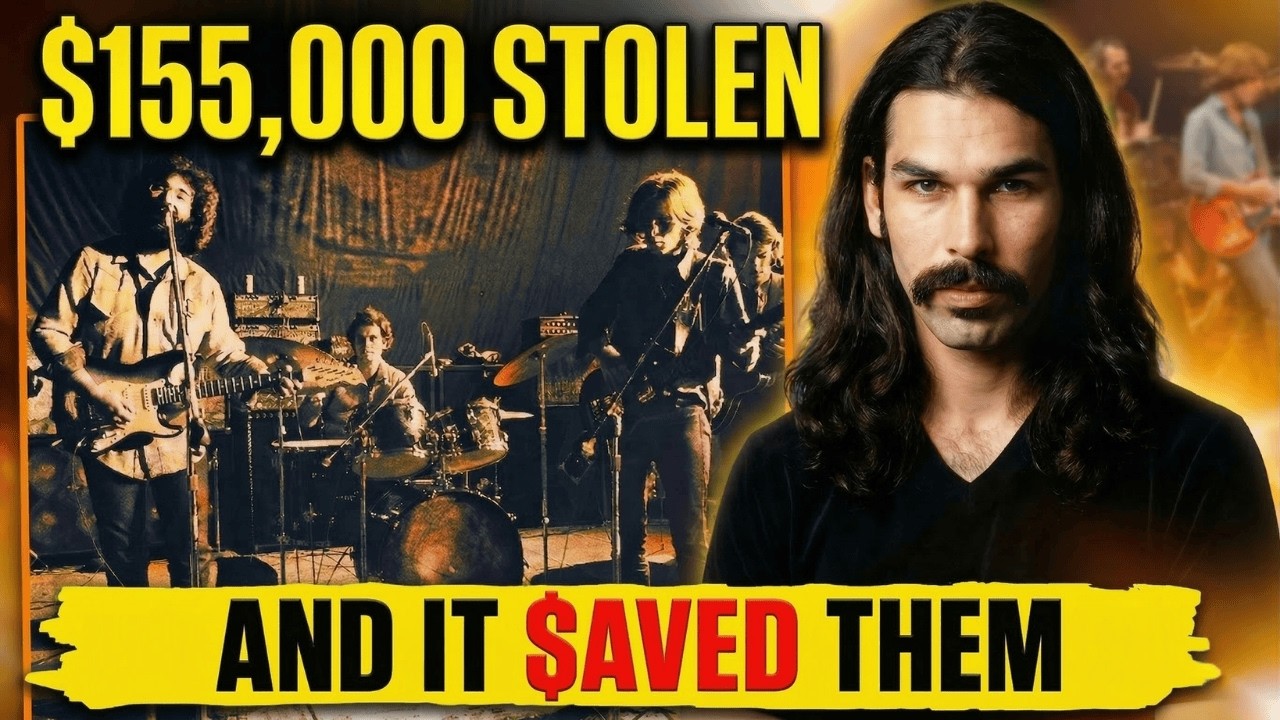
In 1970, Lenny Hart — Mickey Hart’s father, a self-proclaimed reverend who literally swore on a Bible he wouldn’t rip the band off — stole up to $350,000 from the Grateful Dead. The exact amount depends on who you ask. Sam Cutler said on The Deadcast it was $350,000. Other accounts put it closer to $155,000. Either way, adjusted for inflation, even the low estimate exceeds a million dollars today.
Lenny Hart had been managing the band’s finances since late 1969, a period when the Dead were finally making real money but had zero infrastructure — no accountants, no organization, just musicians who’d rather play than deal with business. Before the theft surfaced, Lenny had pushed the band into a psychedelic western film called Zachariah. The Dead took horseback riding lessons for it. Jerry Garcia fell off a horse, decided he hated the whole Hollywood thing, and the project collapsed. But Lenny had already pocketed the advance. He did the same with the money from Garcia’s Zabriskie Point soundtrack — just took the checks.
When the embezzlement surfaced in February 1970
When the embezzlement surfaced in February 1970, Lenny disappeared. Mickey stuck around for almost another year, but the weight of what his father had done never lifted. His last show was February 18, 1971, at the Capitol Theatre in Port Chester, New York. Pig Pen sang “Hard to Handle.” The band was tight. Nobody in the crowd knew one of the drummers wouldn’t be back for a long time.
How Mickey’s departure actually went down is disputed. Bill Kreutzmann said years later that Mickey had become erratic after the betrayal and that the band asked him to take a break. Mickey’s version was different — he claimed there was no formal firing, that he just needed time away and came back when he was ready in 1974.
What’s not disputed is the musical impact. The Hart-Kreutzmann polyrhythmic foundation was essential to the Dead’s sound. That interlocking percussion, the way they’d build complex rhythmic structures under the improvisation — that’s what separated the Dead from every other band. Losing half of that changed everything. Early 1971 sounded different. The Dark Star jams that used to stretch past 30 minutes came in shorter. The band focused more on rock and country-leaning material — shorter, structured songs instead of extended improvisational workouts.
But 1971 wasn’t the lost year people make
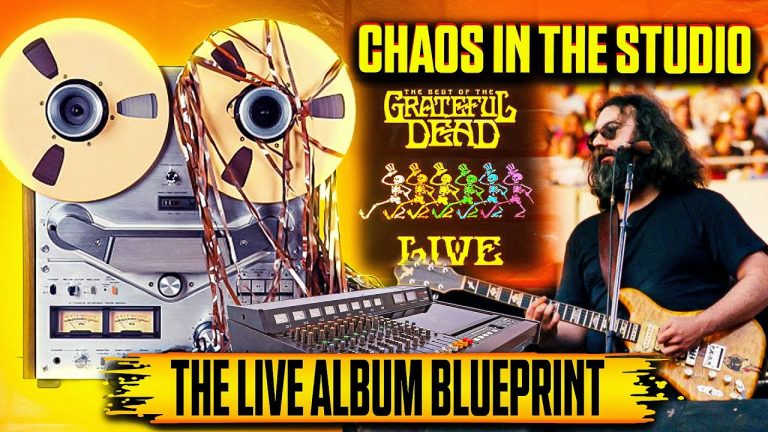
But 1971 wasn’t the lost year people make it out to be. April 25–29, five nights at the Fillmore East — Bill Graham recorded the whole run. On April 27, the band played a 35-minute Dark Star into St. Stephen into Not Fade Away medley that completely contradicts the narrative that ’71 lacked improvisation. Portions of those shows ended up on the Skull and Roses live album. Pig Pen was taking up more space in the five-piece lineup, stretching out on “Good Lovin'” and the organ work on “The Other One” in ways the six-piece configuration hadn’t always allowed.
Then Keith Godchaux arrived. In September 1971, a woman named Donna Jean approached Garcia at Keystone Corner in San Francisco, told him her husband Keith needed to be in the band, and asked for Garcia’s phone number. Garcia gave it to her. Keith auditioned days later and was playing his first show by October 19 at the University of Minnesota. The improvisation became “telepathically trippy” again. Not the same as ’68 or ’69, but exploratory in new directions.
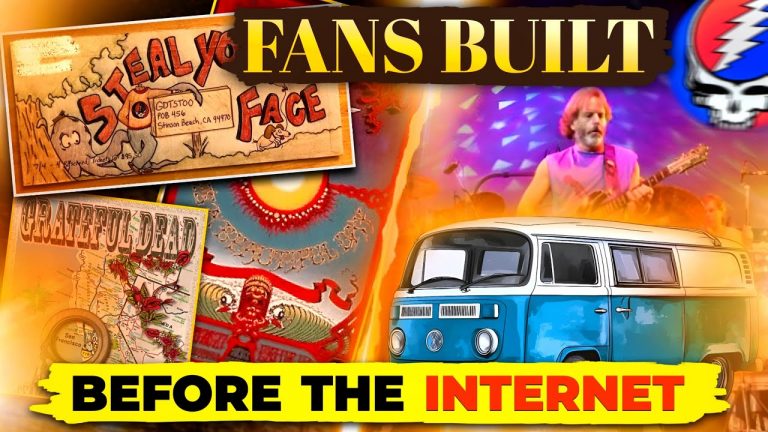
Meanwhile, the betrayal was transforming into art. On April 17, 1972, at Tivoli Gardens in Copenhagen during the Europe ’72 tour, the band debuted a new song. The tape boxes labeled it “He’s Long Gone” before it had an official title. The lyrics weren’t subtle: Steal your face right off your head. A direct shot at the man who’d literally stolen their money. That phrase — Steal Your Face — became the iconic skull logo. The entire Steal Your Face imagery that’s now synonymous with the Grateful Dead came from Mickey Hart’s father being a con man in a reverend’s collar.
1971 wasn’t a failure year. It was a transition year. Lost a drummer, gained a pianist, got robbed, restructured, adjusted their sound, and still delivered shows that hold up. The band reorganized their entire management structure — three people splitting duties instead of one. They got more involved in their own business, had to. And Europe ’72 happened next. One of the most legendary tours in rock history. Mickey returning in ’74. The mid-’70s peak that gave us May 8, 1977, at Barton Hall — the show New York Times readers voted the best Dead show of all time, the one added to the National Recording Registry at the Library of Congress. None of that happens without 1971.
The Song in Context
Understanding any Grateful Dead song requires understanding the partnership between Jerry Garcia and Robert Hunter that produced it. Hunter was not a conventional lyricist — he was a poet who happened to write for a rock band. His words drew from American folk traditions, Beat poetry, and a mythological imagination that created characters and landscapes existing outside of any specific time or place. Garcia’s melodies, in turn, had a quality that musicologists have struggled to categorize — folk-informed but jazz-inflected, simple on the surface but harmonically sophisticated beneath.
The songs they created together entered the Grateful Dead’s live repertoire and evolved constantly. A song might be performed hundreds of times over decades, and no two versions were identical. Tempos shifted, arrangements expanded and contracted, and improvisational passages grew or shrank depending on the band’s collective mood on any given night. For Deadheads, the song as recorded in the studio was merely a starting point — a sketch that live performance would elaborate into something far more complex and unpredictable.
The Live Experience
The Grateful Dead’s live performances were fundamentally different from those of any other major rock band. While most acts rehearsed and repeated a fixed setlist, the Dead approached each show as a unique event. Setlists were chosen shortly before the performance, and the transitions between songs — the spaces where improvisation lived — were entirely spontaneous. A concert might last three hours or more, moving through structured songs, extended jams, and passages of pure collective improvisation that could be transcendent or chaotic, sometimes both simultaneously.
This approach demanded extraordinary musical communication. Each member of the band had to listen constantly to every other member, responding in real time to melodic suggestions, rhythmic shifts, and dynamic changes. Garcia often described it as a conversation — not a performance, but a dialogue between musicians who had developed, over years of playing together, an almost telepathic understanding of each other’s musical instincts. When it worked, the result was music that felt inevitable and surprising at the same time.
The Deadhead Phenomenon
The community that formed around the Grateful Dead was unprecedented in popular music. Deadheads didn’t just attend concerts — they built a culture. Tape trading networks distributed live recordings across the country before the internet existed, creating a shared archive of performances that fans studied with scholarly intensity. The parking lot scene at Dead shows became a self-sustaining economy of food vendors, craft sellers, and itinerant entrepreneurs who followed the band from city to city.
What distinguished Deadhead culture from ordinary fandom was its participatory nature. Deadheads didn’t consume the Grateful Dead’s music passively — they actively shaped the experience. Their energy in the audience influenced the band’s playing. Their tape trading preserved and disseminated the music. Their economic activity in the parking lots created the ecosystem that made extended touring financially viable. The relationship between the Dead and their audience was genuinely symbiotic, each sustaining and inspiring the other across three decades of continuous performance.
The Business of the Dead
The Grateful Dead’s business model was as unconventional as their music. While other major bands relied on record sales as their primary revenue source, the Dead built their economy on live performance. Their recording contracts were modest by industry standards, and they made little effort to produce radio-friendly singles. Instead, they invested in their live operation — a touring infrastructure that employed dozens of crew members and generated revenue through ticket sales, merchandise, and the loyalty of an audience that returned show after show.
This model was risky. It required constant touring to maintain cash flow, and it left the band vulnerable to the physical toll of life on the road. But it also gave them a degree of independence that few artists in the music industry have ever achieved. The Dead answered to their audience, not to record executives. They could play what they wanted, for as long as they wanted, in the way they wanted — a creative freedom that was the foundation of everything they built.
Related Articles
- Why the Grateful Dead Needed Two Drummers — The Rhythm Devils Origin Story
- How Europe ’72 Rescued the Grateful Dead and Created the Greatest “Live” Album Ever Made
- Frankie Weir, Sugar Magnolia, and the Women Who Actually Ran the Grateful Dead
The Shakedown Archives publishes new research on Grateful Dead history each week. If you enjoyed this essay, you can subscribe to the companion YouTube channel below.
Subscribe on YouTube