Truckin’: How a New Orleans Drug Bust Became the Grateful Dead’s National Anthem
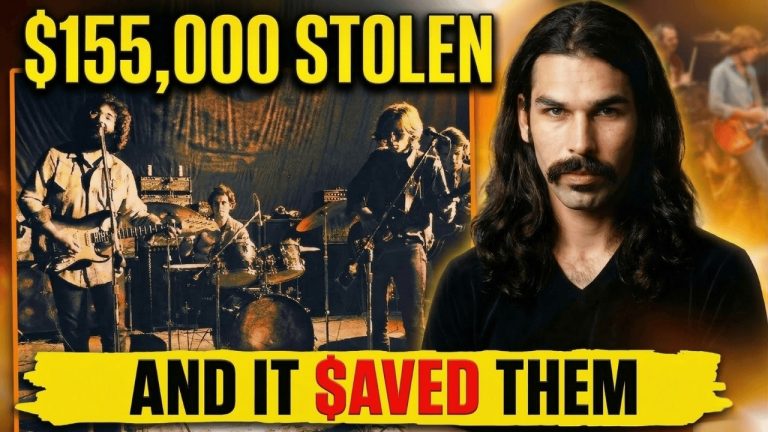
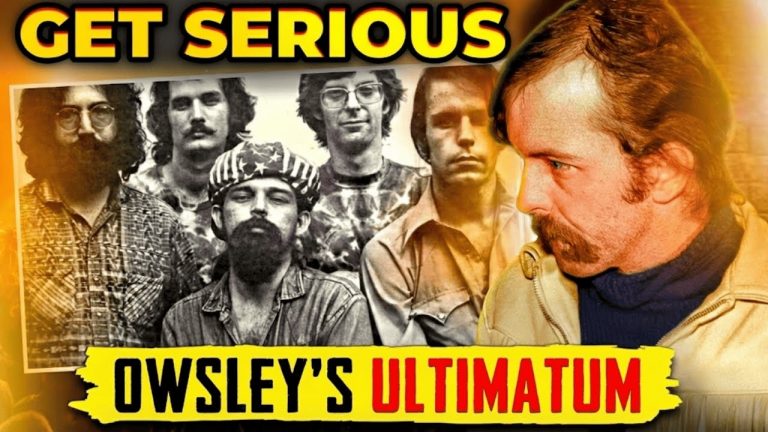
On January 31, 1970, the Grateful Dead were busted at a hotel in New Orleans. Nineteen people were arrested — band members, crew, and associates — after police raided their rooms at the Royal Orleans Hotel and found LSD, marijuana, and various other substances. The bust was a setup. A narcotics agent had infiltrated the Dead’s entourage, and the raid was timed for maximum publicity. The charges were eventually reduced or dropped, but the experience shook the band. And it gave Robert Hunter the material for what became the Grateful Dead’s most commercially successful song.
“Truckin'” appeared on American Beauty in November 1970, less than a year after the New Orleans bust. Hunter’s lyrics were unusually autobiographical for a writer who preferred mythic imagery and literary allusion. The New Orleans reference is explicit — the song describes the bust, the paranoia, and the grim humor of watching your entire operation get rounded up by cops. But Hunter framed the specifics within a broader narrative about life on the road, about the accumulated weight of years spent touring, and about the philosophical resignation that comes from having your worst fears confirmed and surviving anyway.
The music matched the lyric’s weary wisdom
The music matched the lyric’s weary wisdom. Garcia’s melody is deceptively simple — a country-rock shuffle built on a repeating chord progression that sounds like something you’d hear in a roadhouse. The arrangement on American Beauty is clean, almost polished, with Garcia’s guitar tone warm and present. But the simplicity is strategic. “Truckin'” is a song about endurance, not virtuosity. The music plods forward the way a tour bus plods forward — steady, reliable, carrying its passengers whether they want to keep going or not.
The song entered the Dead’s live repertoire immediately and stayed there for the next twenty-five years. In performance, “Truckin'” evolved dramatically. The studio version runs about five and a half minutes. Live versions from the early seventies could stretch to fifteen or twenty, with the band using the song’s chord structure as a launching pad for extended jams that bore little resemblance to the recorded arrangement. The “Truckin'” jam became one of the Dead’s most reliable improvisational vehicles — a space where Garcia could explore melodic ideas over a rhythm section that knew the territory so well it could follow him anywhere.
What made “Truckin'” commercially significant was its crossover appeal. The song reached number sixty-four on the Billboard Hot 100 — a modest chart position by mainstream standards, but a remarkable achievement for a band that had never prioritized singles. More importantly, the song’s AM-radio accessibility introduced the Grateful Dead to listeners who’d never attend a show, never trade tapes, never set foot on Shakedown Street. “Truckin'” was the Dead’s ambassador to the mainstream, and it worked because Hunter’s lyrics operated on two levels simultaneously. Casual listeners heard a catchy road song. Deadheads heard a coded account of the New Orleans bust, the paranoia of the Nixon era, and the defiant survival philosophy that defined the Dead’s community.
In 1997, the Library of Congress designated “Truckin'”
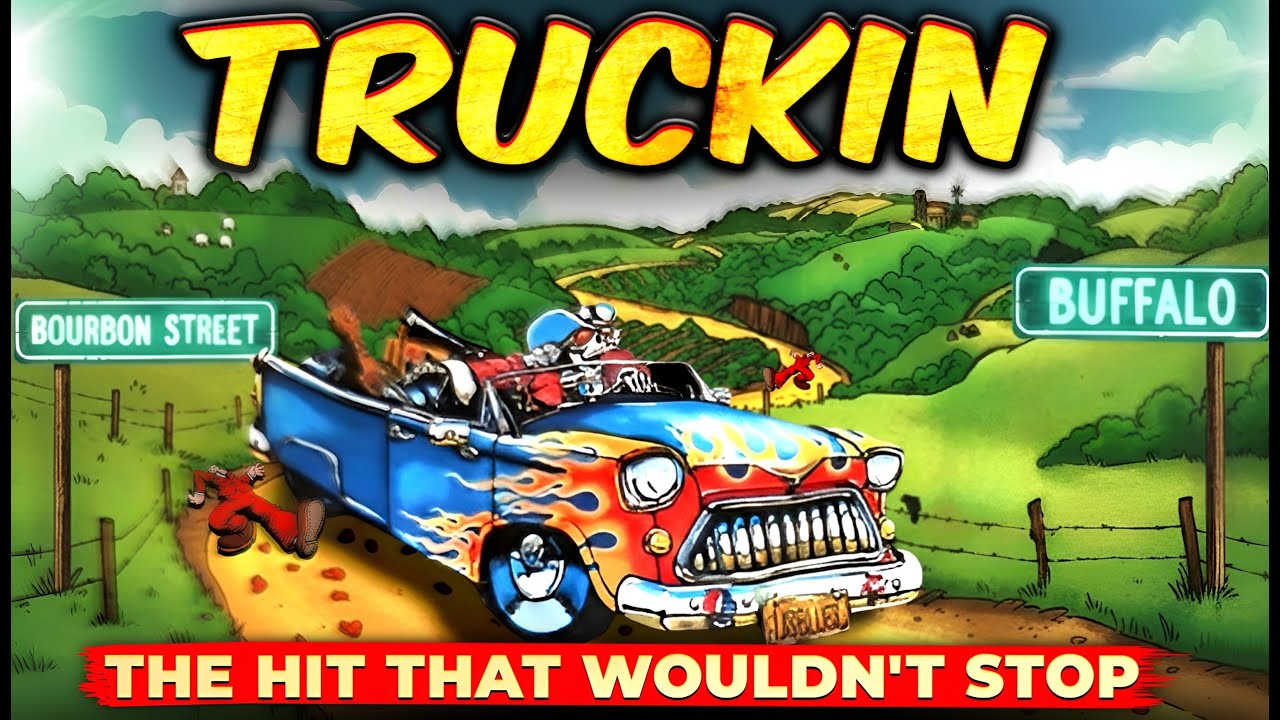
In 1997, the Library of Congress designated “Truckin'” as a National Treasure — an official recognition that placed it alongside works by Gershwin, Ellington, and Copland in the canon of American cultural achievement. The designation was partly symbolic, but it reflected a genuine truth: “Truckin'” had transcended its origins as a song about a drug bust and become a document of American experience. Hunter’s lyrics about being “busted down on Bourbon Street” and deciding to keep going captured something essential about the resilience, the stubbornness, and the dark humor that defines a particular strain of American identity.
The live versions tell a different story than the studio recording. Onstage, “Truckin'” became a vehicle for the kind of collective improvisation that defined the Dead’s best work. The jams that emerged from the song’s chord changes — particularly in the 1972-1974 period — rank with the Dead’s most adventurous playing. Garcia would push the jam into dissonance, Lesh would anchor it with his contrapuntal bass, and the drummers would modulate the intensity until the whole thing reached a peak and collapsed back into the familiar melody. The audience would erupt every time the band found its way home.
The full story of the New Orleans bust, the song’s evolution, and its unlikely journey from drug-bust diary to Library of Congress artifact is.
Subscribe to The Shakedown Archives on YouTube
youtube.com/@theshakedownarchives
The Song in Context
Understanding any Grateful Dead song requires understanding the partnership between Jerry Garcia and Robert Hunter that produced it. Hunter was not a conventional lyricist — he was a poet who happened to write for a rock band. His words drew from American folk traditions, Beat poetry, and a mythological imagination that created characters and landscapes existing outside of any specific time or place. Garcia’s melodies, in turn, had a quality that musicologists have struggled to categorize — folk-informed but jazz-inflected, simple on the surface but harmonically sophisticated beneath.
The songs they created together entered the Grateful Dead’s live repertoire and evolved constantly. A song might be performed hundreds of times over decades, and no two versions were identical. Tempos shifted, arrangements expanded and contracted, and improvisational passages grew or shrank depending on the band’s collective mood on any given night. For Deadheads, the song as recorded in the studio was merely a starting point — a sketch that live performance would elaborate into something far more complex and unpredictable.
The Live Experience
The Grateful Dead’s live performances were fundamentally different from those of any other major rock band. While most acts rehearsed and repeated a fixed setlist, the Dead approached each show as a unique event. Setlists were chosen shortly before the performance, and the transitions between songs — the spaces where improvisation lived — were entirely spontaneous. A concert might last three hours or more, moving through structured songs, extended jams, and passages of pure collective improvisation that could be transcendent or chaotic, sometimes both simultaneously.
This approach demanded extraordinary musical communication. Each member of the band had to listen constantly to every other member, responding in real time to melodic suggestions, rhythmic shifts, and dynamic changes. Garcia often described it as a conversation — not a performance, but a dialogue between musicians who had developed, over years of playing together, an almost telepathic understanding of each other’s musical instincts. When it worked, the result was music that felt inevitable and surprising at the same time.
The Deadhead Phenomenon
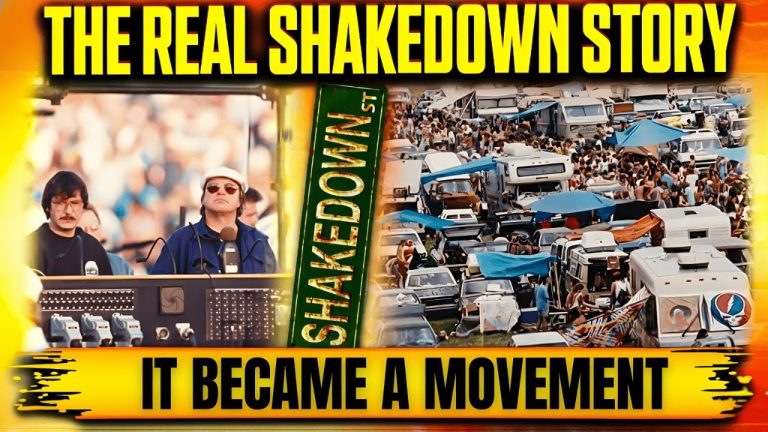
The community that formed around the Grateful Dead was unprecedented in popular music. Deadheads didn’t just attend concerts — they built a culture. Tape trading networks distributed live recordings across the country before the internet existed, creating a shared archive of performances that fans studied with scholarly intensity. The parking lot scene at Dead shows became a self-sustaining economy of food vendors, craft sellers, and itinerant entrepreneurs who followed the band from city to city.
What distinguished Deadhead culture from ordinary fandom was its participatory nature. Deadheads didn’t consume the Grateful Dead’s music passively — they actively shaped the experience. Their energy in the audience influenced the band’s playing. Their tape trading preserved and disseminated the music. Their economic activity in the parking lots created the ecosystem that made extended touring financially viable. The relationship between the Dead and their audience was genuinely symbiotic, each sustaining and inspiring the other across three decades of continuous performance.
The Chemical Reality
Drugs were inseparable from the Grateful Dead’s story, but the relationship was more complex than the caricature suggests. LSD was foundational — the Acid Tests were the crucible in which the Dead’s improvisational approach was forged, and psychedelics informed the expansive, boundary-dissolving quality of their music throughout their career. But the drug culture that surrounded the Dead evolved over the decades, and not always in positive directions.
By the 1980s, harder drugs — particularly cocaine and heroin — had infiltrated both the band and their community. Garcia’s well-documented struggles with heroin addiction took a devastating toll on his health and his playing. The parking lot scene, once dominated by psychedelics, increasingly included dealers selling substances that were addictive and dangerous. The Dead’s open, tolerant culture — which had been a strength in the 1960s and 1970s — became a liability when that openness was exploited by people whose relationship with drugs was destructive rather than exploratory.
Related Articles
- Box of Rain: The Inside Story of the Grateful Dead’s Last Words Together
- Tiger Rose: The Mysterious Album Robert Hunter Tried to Erase From History
- The Messy Truth About Keith Godchaux Leaving the Grateful Dead
The Shakedown Archives publishes new research on Grateful Dead history each week. If you enjoyed this essay, you can subscribe to the companion YouTube channel below.
Subscribe on YouTube