The Grateful Dead on The Festival Express
The Greatest Rolling Concert Never Seen
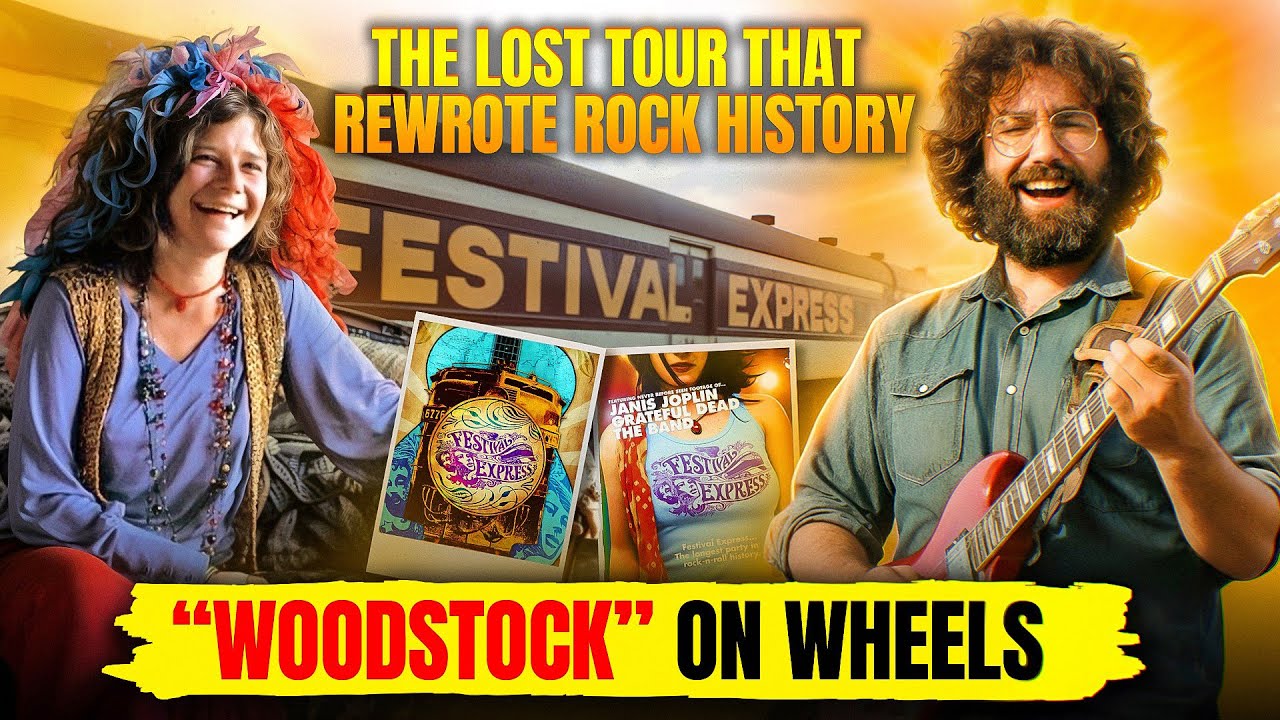
In 1970, the Grateful Dead spent five days aboard a train crossing Canada, jamming with Janis Joplin, The Band, Buddy Guy, and other musical luminaries. Jerry Garcia called it “the best time I’ve had in rock and roll.” The rolling concert, known as the Festival Express, documented live performances, backstage moments, and spontaneous musical encounters that would have been unprecedented in rock history had the footage remained accessible.
But then something remarkable happened: the film disappeared. Ninety hours of film, forty hours of audio—all boxed up, mislabeled, and forgotten in an archive for three decades. The Festival Express became a legend whispered about in musician circles, a story that seemed too good to be true, evidence of something so extraordinary that it had to be hidden away by fate itself.
Five Days in Motion
The Festival Express wasn’t a typical concert tour. It was a train journey turned into a traveling music festival. Musicians lived together, traveled together, and played together in ways that standard touring didn’t permit. The format forced a kind of intimacy and spontaneity that couldn’t be replicated in traditional performance settings. You couldn’t just walk away to separate dressing rooms. You couldn’t retreat to hotels in different parts of the city. You were all there together, musicians from different genres and different worlds, forced to engage with each other in sustained, unfiltered ways.
The Grateful Dead brought their full musical vocabulary to the train. They weren’t constrained by a formal setlist. In the spirit of the Festival Express concept, they played what felt right in the moment, responded to what other musicians were doing, and created music that existed only in that rolling space, only for the people aboard that train.
Janis, The Band, and Unexpected Combinations
The magic of the Festival Express resided in its roster. Janis Joplin brought raw blues power. The Band contributed their deep Americana roots. Buddy Guy brought authentic blues credentials. The Grateful Dead brought their improvisational approach. Musicians who might never have played together in normal circumstances found themselves sharing stages on a moving train, creating combinations that had never existed before and would never exist again.
The film that documented these performances and backstage moments revealed something profound about how musicians related to each other when hierarchies and industry structures dissolved. On a train, there was no “opening act” or “headliner.” There was just music and musicians, responding to each other, inspired by proximity and the unique setting.
When Film Becomes Legend
For thirty years, the Festival Express footage existed in a kind of limbo. Musicians remembered it, told stories about it, spoke of its significance, but the general public couldn’t see it. The mystique only deepened. How good could it have been if it was hidden away? What did it contain that was so extraordinary? The missing film became proof of something almost mythical—a moment so perfect that even preserving it on celluloid couldn’t quite capture its essence.
Collectors and dedicated music historians searched for the footage. Rumors circulated. There were whispers of discovery and false leads. The Festival Express existed primarily in stories, in memory, in what musicians passed down to each other about what had actually happened aboard that train. It became one of rock and roll’s greatest what-if stories.
The Rediscovery and Its Meaning
When the footage was finally recovered and organized, it vindicated everything people had said about the Festival Express. It was extraordinary. Not because it was technically perfect or because every moment was musically flawless, but because it captured something real about how musicians could be together when they weren’t worried about commercial considerations or career positioning. The film showed genuine musical friendship, authentic collaboration, moments of real joy and creative exchange.
The Grateful Dead’s performance aboard the Festival Express train represented them at a particular moment—confident in their abilities, generous in their musicianship, willing to engage deeply with musicians from other traditions. They didn’t dominate the experience or assert their superiority. They participated fully in something bigger than themselves, understanding that the Festival Express was about the music that could only happen because these specific musicians were all in the same place at the same time.
A Train That Changed Everything
The Festival Express ultimately represents a moment in rock history that could never be replicated. No modern touring format would allow for that kind of sustained musician interaction. The economics don’t work the same way. The touring structure is different. But the Festival Express train proved that when you removed certain barriers and forced genuine human interaction, the music that emerged could be transcendent. The footage that was lost for thirty years and finally recovered vindicated Jerry Garcia’s assessment: it was indeed the best time he’d had in rock and roll—a rolling concert through Canada where nothing mattered except the music and the people making it.
Subscribe to The Shakedown Archives for more Grateful Dead documentaries, and explore more stories at TheShakedownArchives.com.
The Shakedown Archives publishes new research on Grateful Dead history each week. If you enjoyed this essay, you can subscribe to the companion YouTube channel below.
Subscribe on YouTube