Shakedown Street: The Album That Failed at Being Mainstream and Created a Movement
In 1978, the Grateful Dead hired Lowell George — the frontman of Little Feat, a musician known for his meticulous studio craft and his deep connection to New Orleans funk — to produce their next album. The choice was a deliberate attempt to do something the Dead had never successfully done: make a commercially competitive studio record. The result was Shakedown Street, an album that pleased almost nobody on release and accidentally created the most enduring symbol of the Grateful Dead‘s cultural legacy.
The context matters. By 1978, the Dead had been through the hiatus — their 1974-1976 break from touring — and returned to a music landscape that had changed dramatically. Punk was happening. Disco was dominating the charts. The extended improvisational rock that the Dead had pioneered felt increasingly out of step with the cultural moment. The band’s previous studio album, Terrapin Station, had already moved toward a more produced, more polished sound under the direction of Keith Olsen. Shakedown Street pushed further in that direction, with Lowell George adding funk, R&B, and disco-adjacent production techniques to the Dead’s raw material.
The title track is a disco song
The title track is a disco song. There’s no other honest way to describe it. The beat is four-on-the-floor. The rhythm guitar is wah-wah inflected. The bass line percolates. Garcia’s vocal is laid back and groove-oriented. Robert Hunter’s lyrics describe a street where anything can happen — a place of commerce, community, and low-level chaos. The song doesn’t sound like the Grateful Dead. It sounds like the Grateful Dead’s attempt to sound like everyone else in 1978, filtered through Garcia’s inherent resistance to anything formulaic.
Critics savaged the album. Rolling Stone called it the Dead’s worst record. Deadheads who’d followed the band through the psychedelic explorations of the late sixties and the acoustic beauty of American Beauty heard Shakedown Street as a betrayal — a commercial capitulation from a band that had always prized musical integrity over market success. The album stalled commercially, never achieving the sales numbers that would have justified the production investment.
But here’s where the story turns. The title track — the one critics dismissed as the Dead’s embarrassing disco experiment — became a live staple. In performance, “Shakedown Street” shed its studio slickness and became something entirely different: a funky, extended jam vehicle that could stretch to fifteen or twenty minutes, with Garcia’s guitar exploring melodic territory over a groove that the rhythm section locked into and refused to release. The song worked onstage because the Dead’s live performances always worked differently than their studio recordings. The studio version was constrained by production decisions. The live version was liberated by improvisation.
More significantly
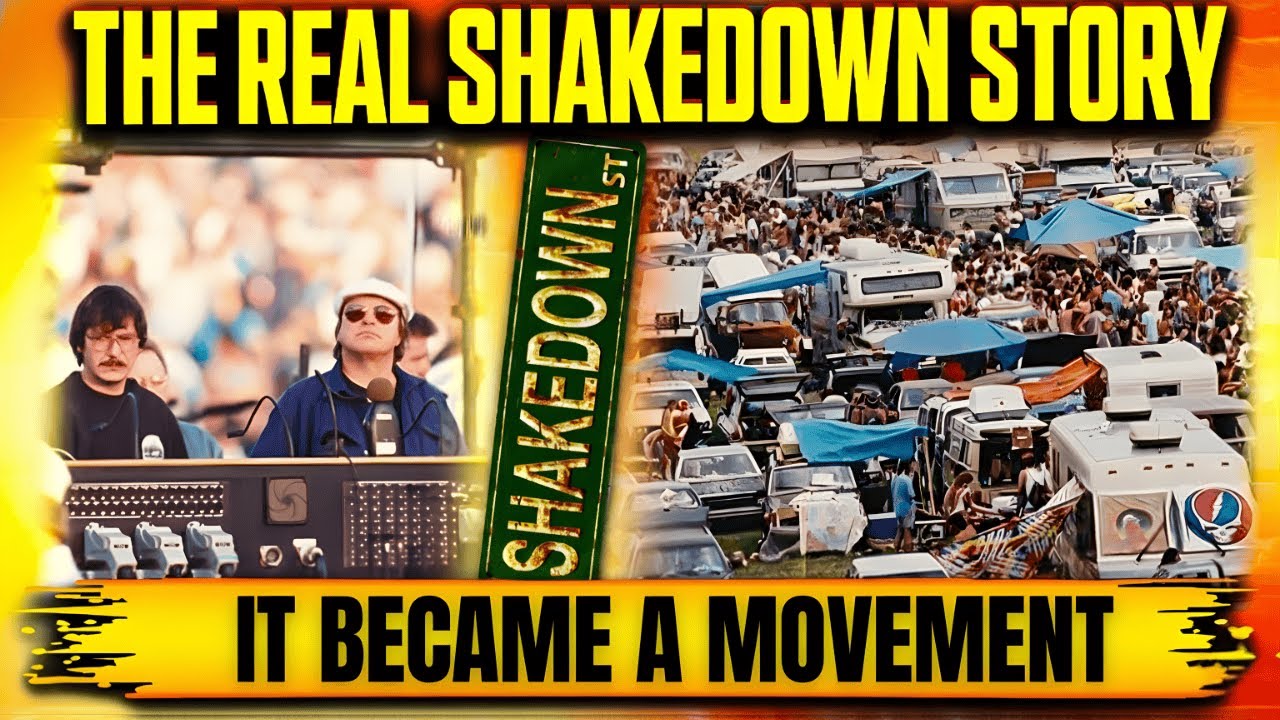
More significantly, the name “Shakedown Street” migrated from the song to the parking lots outside Dead shows. By the early 1980s, the pre-show marketplace — the sprawling, improvised bazaar where vendors sold tie-dyes, grilled cheese sandwiches, bootleg tapes, crystals, burritos, and every conceivable form of Dead merchandise — had become known as Shakedown Street. The name stuck because it fit. Hunter’s lyrics described a place where “nothing’s gonna come to you” and “you got to go out and get it” — a perfect description of the parking lot economy, where commerce was peer-to-peer, informal, and entirely outside the mainstream retail system.
Shakedown Street the parking lot became arguably more culturally significant than the Grateful Dead’s actual performances. It was the visible, tangible expression of the Dead’s communal ethos — a functional alternative economy operating in the shadows of sports stadiums across America. Vendors followed the tour from city to city, selling goods from their cars and vans, creating a mobile marketplace that prefigured the gig economy and the Etsy-style maker culture by decades. The economics were real. People supported themselves and their families by working Shakedown. The lot wasn’t a sideshow to the Dead concert. For many participants, it was the point.
The irony is layered. The Dead made an album trying to be commercially mainstream and failed at it. The album’s title track, widely considered the worst song in their catalog by critics, became one of their most durable live performances. And the song’s name was adopted by a grassroots economic movement that embodied everything the Dead’s failed commercial gambit was trying to leave behind. The Dead’s attempt to join the mainstream accidentally generated one of the most powerful alternatives to it.
Lowell George died on June 29
Lowell George died on June 29, 1979, of a drug-related heart attack, less than a year after Shakedown Street’s release. He was thirty-four. The album he produced for the Dead remained a critical punching bag for decades. But the parking lot that borrowed its name outlived the critics, outlived the band, and continues today at Dead & Company shows, where the next generation of vendors sets up shop in stadium lots and carries on the tradition that a failed disco album accidentally named.
The full story of the album, the lot, and how a commercial failure became a cultural institution is.
Subscribe to The Shakedown Archives on YouTube
youtube.com/@theshakedownarchives
The Song in Context
Understanding any Grateful Dead song requires understanding the partnership between Jerry Garcia and Robert Hunter that produced it. Hunter was not a conventional lyricist — he was a poet who happened to write for a rock band. His words drew from American folk traditions, Beat poetry, and a mythological imagination that created characters and landscapes existing outside of any specific time or place. Garcia’s melodies, in turn, had a quality that musicologists have struggled to categorize — folk-informed but jazz-inflected, simple on the surface but harmonically sophisticated beneath.
The songs they created together entered the Grateful Dead’s live repertoire and evolved constantly. A song might be performed hundreds of times over decades, and no two versions were identical. Tempos shifted, arrangements expanded and contracted, and improvisational passages grew or shrank depending on the band’s collective mood on any given night. For Deadheads, the song as recorded in the studio was merely a starting point — a sketch that live performance would elaborate into something far more complex and unpredictable.
The Live Experience
The Grateful Dead’s live performances were fundamentally different from those of any other major rock band. While most acts rehearsed and repeated a fixed setlist, the Dead approached each show as a unique event. Setlists were chosen shortly before the performance, and the transitions between songs — the spaces where improvisation lived — were entirely spontaneous. A concert might last three hours or more, moving through structured songs, extended jams, and passages of pure collective improvisation that could be transcendent or chaotic, sometimes both simultaneously.
This approach demanded extraordinary musical communication. Each member of the band had to listen constantly to every other member, responding in real time to melodic suggestions, rhythmic shifts, and dynamic changes. Garcia often described it as a conversation — not a performance, but a dialogue between musicians who had developed, over years of playing together, an almost telepathic understanding of each other’s musical instincts. When it worked, the result was music that felt inevitable and surprising at the same time.
The Deadhead Phenomenon
The community that formed around the Grateful Dead was unprecedented in popular music. Deadheads didn’t just attend concerts — they built a culture. Tape trading networks distributed live recordings across the country before the internet existed, creating a shared archive of performances that fans studied with scholarly intensity. The parking lot scene at Dead shows became a self-sustaining economy of food vendors, craft sellers, and itinerant entrepreneurs who followed the band from city to city.
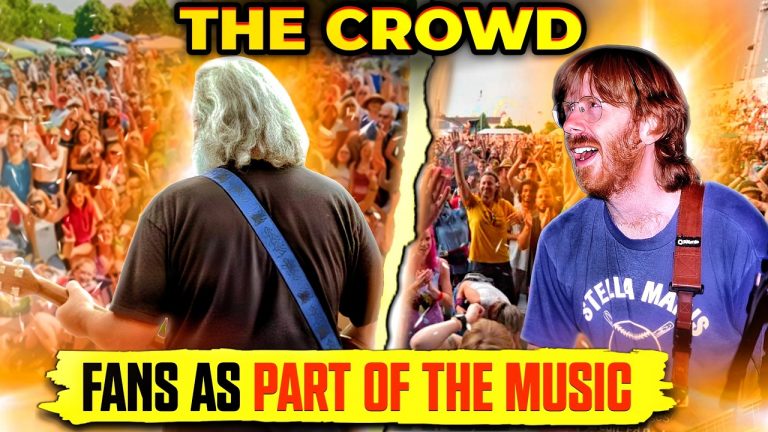
What distinguished Deadhead culture from ordinary fandom was its participatory nature. Deadheads didn’t consume the Grateful Dead’s music passively — they actively shaped the experience. Their energy in the audience influenced the band’s playing. Their tape trading preserved and disseminated the music. Their economic activity in the parking lots created the ecosystem that made extended touring financially viable. The relationship between the Dead and their audience was genuinely symbiotic, each sustaining and inspiring the other across three decades of continuous performance.
The Chemical Reality
Drugs were inseparable from the Grateful Dead’s story, but the relationship was more complex than the caricature suggests. LSD was foundational — the Acid Tests were the crucible in which the Dead’s improvisational approach was forged, and psychedelics informed the expansive, boundary-dissolving quality of their music throughout their career. But the drug culture that surrounded the Dead evolved over the decades, and not always in positive directions.
By the 1980s, harder drugs — particularly cocaine and heroin — had infiltrated both the band and their community. Garcia’s well-documented struggles with heroin addiction took a devastating toll on his health and his playing. The parking lot scene, once dominated by psychedelics, increasingly included dealers selling substances that were addictive and dangerous. The Dead’s open, tolerant culture — which had been a strength in the 1960s and 1970s — became a liability when that openness was exploited by people whose relationship with drugs was destructive rather than exploratory.
Related Articles
- The Messy Truth About Keith Godchaux Leaving the Grateful Dead
- Truckin’: How a New Orleans Drug Bust Became the Grateful Dead’s National Anthem
- His Father Swore on a Bible. Then Robbed the Grateful Dead.
The Shakedown Archives publishes new research on Grateful Dead history each week. If you enjoyed this essay, you can subscribe to the companion YouTube channel below.
Subscribe on YouTube