The Two Nights That Made Europe ’72…And Almost Killed It
▶ Watch the full documentary on YouTube
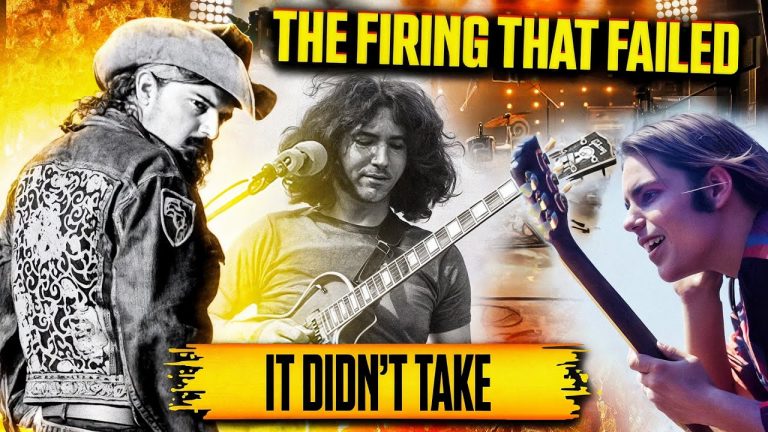
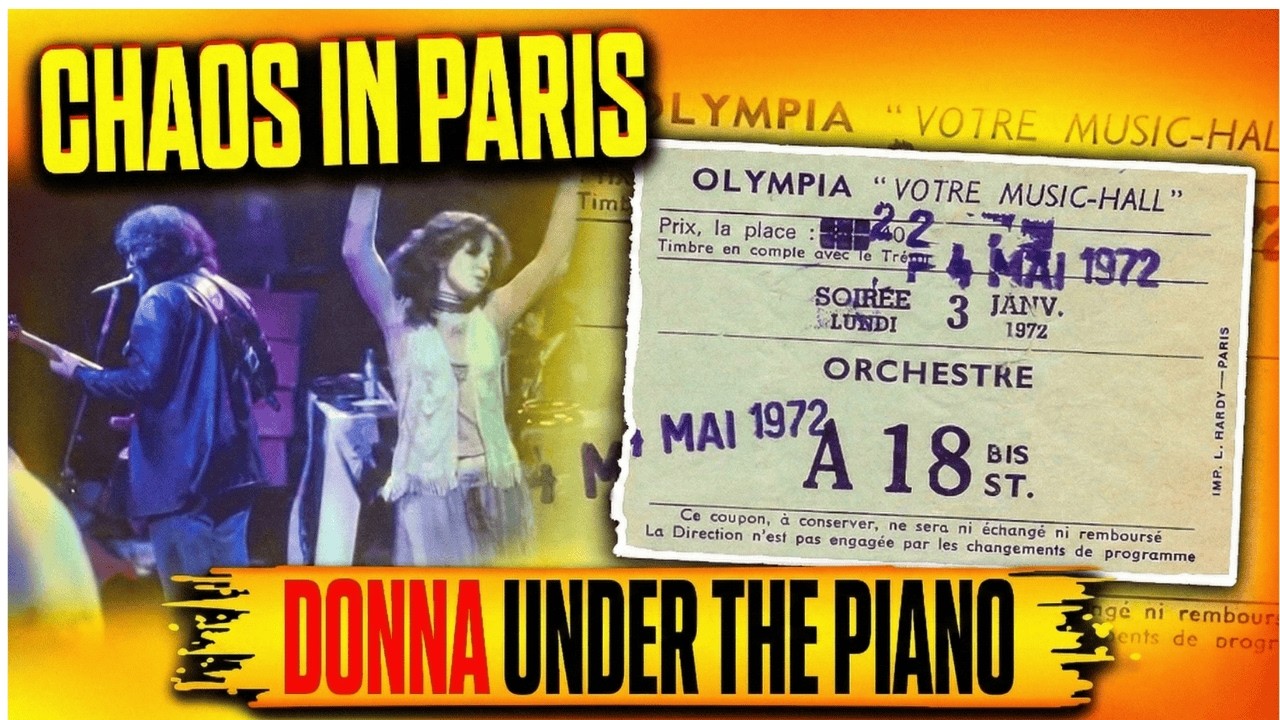
SUBSCRIBE TO THE SHAKEDOWN ARCHIVESGrateful Dead Paris, May 3–4, 1972. Donna Jean Godchaux took fifteen hits of Owsley acid and hid under Keith’s piano. Twenty-four hours later, the band escaped through a bathroom window in a story that became one of the wildest chapters of the Europe ’72 tour.
The Paris Chaos
The Grateful Dead’s 1972 European tour is remembered as the source of one of the greatest live albums ever recorded. But the two nights in Paris — May 3 and 4 at the Olympia Theatre — nearly derailed the entire operation. What happened in those forty-eight hours encapsulates everything dangerous and beautiful about the Grateful Dead’s approach to music and life on the road.
The trouble started before they even took the stage on May 3rd. Donna Jean Godchaux, who had joined the band as a vocalist just months earlier, took what multiple sources describe as fifteen hits of Owsley acid. This wasn’t recreational experimentation — this was a catastrophic miscalculation that left her essentially incapacitated. During the performance, she crawled under Keith Godchaux’s piano and stayed there, unable to function. The band played around her absence, but the set was ragged and unfocused.
The Bathroom Window Escape
The second night brought a different kind of chaos. After the show on May 4th, members of the Hells Angels — who had a complicated, sometimes violent relationship with the Dead dating back to the mid-1960s — showed up at the band’s hotel. What followed was a confrontation that escalated quickly enough that several band members and crew escaped through a bathroom window. The exact details vary depending on who tells the story, but the core fact is consistent: the Grateful Dead, one of the biggest bands in America, fled their own hotel in Paris through a window.
What makes these two nights historically significant isn’t the chaos itself — the Dead’s history is full of chaotic episodes. It’s that they happened in the middle of what would become the Europe ’72 tour, a run of shows so musically transcendent that Warner Bros. released a triple live album from the recordings. The Paris shows weren’t included on that album. They were too messy, too compromised by circumstances that had nothing to do with music.
The Music That Survived
The tour continued after Paris, and the band recovered. The shows in London, Copenhagen, and across Germany produced some of the finest live recordings in the Dead’s catalog. Keith Godchaux’s piano playing reached extraordinary heights. Garcia’s guitar work was lyrical and exploratory. The setlists balanced new material from the forthcoming albums with extended improvisational passages that defined the Dead’s artistic identity.
But the Paris nights remained a cautionary tale within the Dead’s inner circle. They demonstrated the razor-thin margin between the freedom that made the Grateful Dead’s music possible and the chaos that could destroy it. The same openness that allowed for thirty-minute improvisational journeys also allowed for fifteen hits of acid before a show at the Olympia Theatre. The band never fully resolved that tension — it ran through their entire career, from the Acid Tests to Jerry Garcia’s final days.
The Song in Context
Understanding any Grateful Dead song requires understanding the partnership between Jerry Garcia and Robert Hunter that produced it. Hunter was not a conventional lyricist — he was a poet who happened to write for a rock band. His words drew from American folk traditions, Beat poetry, and a mythological imagination that created characters and landscapes existing outside of any specific time or place. Garcia’s melodies, in turn, had a quality that musicologists have struggled to categorize — folk-informed but jazz-inflected, simple on the surface but harmonically sophisticated beneath.
The songs they created together entered the Grateful Dead’s live repertoire and evolved constantly. A song might be performed hundreds of times over decades, and no two versions were identical. Tempos shifted, arrangements expanded and contracted, and improvisational passages grew or shrank depending on the band’s collective mood on any given night. For Deadheads, the song as recorded in the studio was merely a starting point — a sketch that live performance would elaborate into something far more complex and unpredictable.
The Live Experience
The Grateful Dead’s live performances were fundamentally different from those of any other major rock band. While most acts rehearsed and repeated a fixed setlist, the Dead approached each show as a unique event. Setlists were chosen shortly before the performance, and the transitions between songs — the spaces where improvisation lived — were entirely spontaneous. A concert might last three hours or more, moving through structured songs, extended jams, and passages of pure collective improvisation that could be transcendent or chaotic, sometimes both simultaneously.
This approach demanded extraordinary musical communication. Each member of the band had to listen constantly to every other member, responding in real time to melodic suggestions, rhythmic shifts, and dynamic changes. Garcia often described it as a conversation — not a performance, but a dialogue between musicians who had developed, over years of playing together, an almost telepathic understanding of each other’s musical instincts. When it worked, the result was music that felt inevitable and surprising at the same time.
The Chemical Reality
Drugs were inseparable from the Grateful Dead’s story, but the relationship was more complex than the caricature suggests. LSD was foundational — the Acid Tests were the crucible in which the Dead’s improvisational approach was forged, and psychedelics informed the expansive, boundary-dissolving quality of their music throughout their career. But the drug culture that surrounded the Dead evolved over the decades, and not always in positive directions.
By the 1980s, harder drugs — particularly cocaine and heroin — had infiltrated both the band and their community. Garcia’s well-documented struggles with heroin addiction took a devastating toll on his health and his playing. The parking lot scene, once dominated by psychedelics, increasingly included dealers selling substances that were addictive and dangerous. The Dead’s open, tolerant culture — which had been a strength in the 1960s and 1970s — became a liability when that openness was exploited by people whose relationship with drugs was destructive rather than exploratory.