Merl Saunders and Jerry Garcia: The Jazz Soul Behind the Deadhead Legend
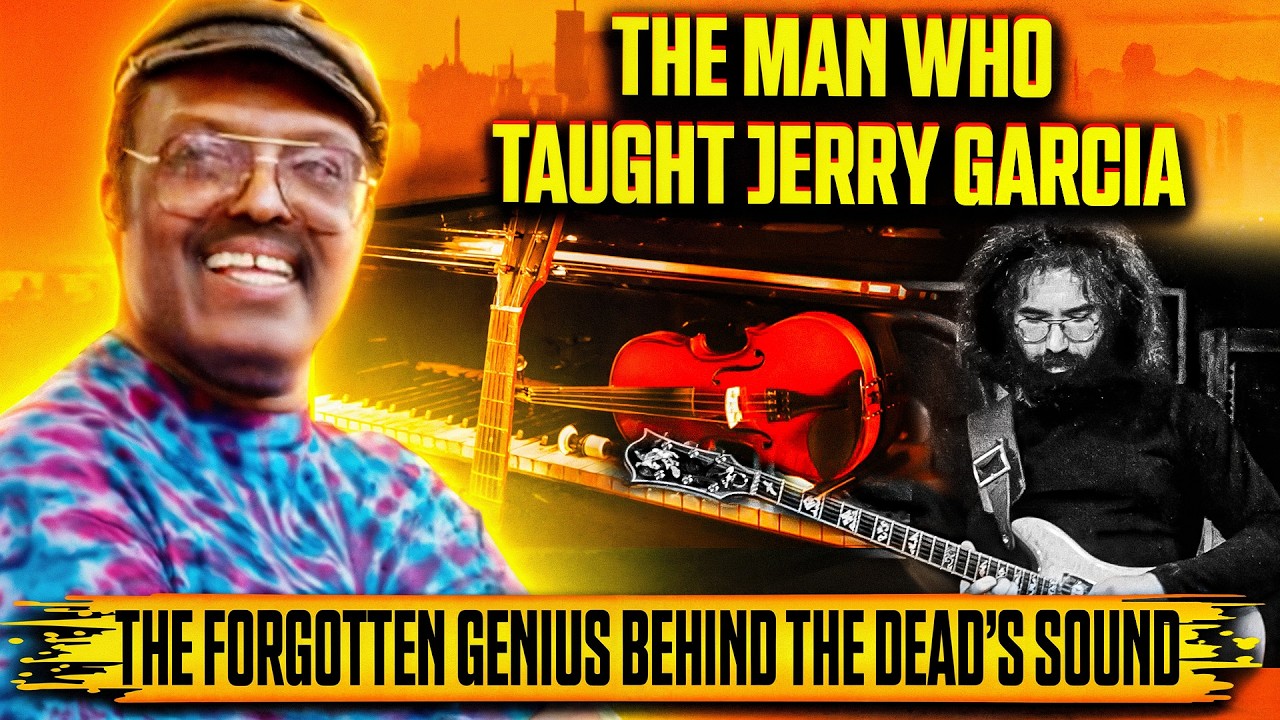
When Jerry Garcia stepped into San Francisco’s Keystone Korner in the early 1970s, it wasn’t as the Grateful Dead frontman or the psychedelic prophet his fans expected. On those intimate club stages, Garcia transformed into something altogether different—a blues-soaked, soulful guitarist trading licks with one of the Bay Area’s finest organists: Merl Saunders. This collaboration would become one of rock and roll’s most underappreciated musical partnerships, a relationship that transcended genre, outlasted trends, and ultimately saved Garcia’s life and career during his darkest hour.
Merl Saunders was no newcomer to American music by the time he and Garcia connected. A classically trained organist and keyboardist steeped in jazz, R&B, and gospel traditions, Saunders had spent decades honing his craft in the smoky clubs and studios of California. His sound was rooted in the groovy, soulful traditions of Jimmy Smith and Jon Hammond Smith—the kind of music that made bodies move and spirits soar. When Garcia brought his guitar into Saunders’ orbit, they discovered something magical: a musical chemistry that neither had expected to find.
The early 1970s San Francisco music scene provided
The early 1970s San Francisco music scene provided the perfect incubator for this partnership. Keystone Korner, located in North Beach, had become the epicenter of Bay Area jazz innovation, hosting everyone from Herbie Hancock to McCoy Tyner. But it was Garcia and Saunders who created a distinctive sound that defied easy categorization. Their repertoire bore virtually no resemblance to the extended, psychedelic excursions that defined Grateful Dead concerts. Instead, they dug deep into jazz standards, Motown covers, blues classics, R&B grooves, and gospel hymns—music that emphasized groove, soul, and improvisational dialogue rather than modal exploration or spacey experimentation.
This was Garcia unburdened by the expectations of 60,000 Deadheads. This was Garcia the musician, not Garcia the icon.
The studio albums and live recordings that captured the Garcia-Saunders partnership stand as testament to their artistry. “Heavy Turbulence” (1972), released during their commercial peak, showcased the duo’s ability to inhabit multiple musical worlds. These weren’t academic jazz exercises or nostalgic covers—they were living, breathing explorations of American vernacular music, filtered through two master musicians who understood how to make a guitar and organ speak to each other with intimacy and purpose.
“Live at Keystone
“Live at Keystone,” recorded in that legendary San Francisco jazz club, captured the essence of their chemistry in real-time. On these recordings, you can hear Garcia’s guitar floating above and weaving through Saunders’ organ lines, the two instruments having conversations that seemed to anticipate each other’s moves. Garcia’s tone was warm and vocal—nothing like the crystalline, digitally-enhanced guitar sound that would dominate rock music in later decades. Instead, his playing had a human quality, full of blues bends and jazz phrasing that spoke to years of listening to players like B.B. King and Wes Montgomery.
For Garcia, playing with Merl Saunders represented something precious: the opportunity to make music without the weight of legacy, expectation, or commercial pressure. With the Grateful Dead, every note carried implications. Set-opening songs had to build energy; middle songs had to maintain momentum; encores had to transcend. The Dead’s extended improvisations required a particular kind of attention and audience investment. But with Saunders, Garcia could simply play—exploring a melody, chasing a groove, discovering new territory in familiar songs.
This freedom was oxygen for Garcia’s creative spirit. Interviews from the period reveal a musician who genuinely relished these collaborations, who felt liberated by the constraints of the blues-based, soul-rooted format. There were no expectations of cosmic revelation, no pressure to achieve transcendence. Just two musicians, an organ, a guitar, and an audience hungry for groovy, soulful music. This is perhaps why the Garcia-Saunders recordings have aged so gracefully—they contain the essence of two musicians playing simply to play, without affectation or agenda.
The Garcia-Saunders partnership took on tragic dimensions in
The Garcia-Saunders partnership took on tragic dimensions in 1986 when Jerry Garcia suffered a diabetic coma that nearly claimed his life. When Garcia emerged from that darkness weeks later, his hands were not what they had been. The muscle memory, the facility that had been second nature for decades, had vanished. Garcia faced the terrifying prospect of having to relearn his instrument from the ground up—a devastating blow for any musician, let alone one of rock’s greatest guitarists.
It was Merl Saunders, operating with the patience and generosity that defined his character, who became Garcia’s rehabilitation partner. Saunders sat with Garcia day after day, teaching him basic chords, simple melodies, fundamental techniques. He created a space of unconditional musical support—no judgment, no urgency, just the presence of an old friend helping another musician rediscover his instrument. This act of grace and friendship was not published in Rolling Stone or celebrated in the rock press. Instead, it happened quietly, in a room where an old master musician taught a temporarily humbled student how to play guitar again.
The Reconstruction band emerged from this period, with Garcia and Saunders reuniting publicly to prove that the magic remained intact. Though Garcia’s playing carried different qualities after his coma—some say more vulnerable, others more mature—the partnership continued to be fertile artistic ground. Garcia’s later career, right up until his death in 1995, was enriched immeasurably by the presence of Merl Saunders as a creative partner and dear friend.
Saunders himself continued evolving
Saunders himself continued evolving. He formed the Rainforest Band, channeling his musical gifts toward environmental activism and consciousness-raising. A stroke in 2002 significantly limited his touring, and Saunders passed away in 2008 at age 82, but his influence on Garcia and on San Francisco’s musical culture remains indelible.
The Merl Saunders-Jerry Garcia partnership represents one of rock and roll’s most beautiful collaborative relationships—one that transcended the music industry’s appetite for narratives of ego and competition. It was rooted instead in mutual respect, shared love of music, and the kind of honest human friendship that can weather any storm. Saunders didn’t ask Garcia to be anything other than a musician; Garcia gave Saunders access to audiences and creative possibilities that complemented his own artistic vision.
The recordings they left behind remind us that Jerry Garcia’s genius extended far beyond the Grateful Dead’s signature sound. His work with Merl Saunders showcases a musician of remarkable versatility, capable of moving seamlessly between psychedelic rock and soulful jazz. And for those who know the full story—how Saunders patiently taught Garcia to play guitar again after his near-fatal coma—it’s impossible to separate the musical achievement from the human grace that defined their friendship. In the end, the Merl Saunders-Jerry Garcia story is a testament to what music can do when it’s motivated purely by love, respect, and the simple joy of making sound together.
The Song in Context
Understanding any Grateful Dead song requires understanding the partnership between Jerry Garcia and Robert Hunter that produced it. Hunter was not a conventional lyricist — he was a poet who happened to write for a rock band. His words drew from American folk traditions, Beat poetry, and a mythological imagination that created characters and landscapes existing outside of any specific time or place. Garcia’s melodies, in turn, had a quality that musicologists have struggled to categorize — folk-informed but jazz-inflected, simple on the surface but harmonically sophisticated beneath.
The songs they created together entered the Grateful Dead’s live repertoire and evolved constantly. A song might be performed hundreds of times over decades, and no two versions were identical. Tempos shifted, arrangements expanded and contracted, and improvisational passages grew or shrank depending on the band’s collective mood on any given night. For Deadheads, the song as recorded in the studio was merely a starting point — a sketch that live performance would elaborate into something far more complex and unpredictable.
Related Articles
- December 15, 1986: The Most Important Show in Grateful Dead History
- How LSD and the Acid Tests Created the Grateful Dead’s Iconic Sound and Performance Philosophy
- Dark Star’s Transformation: From 1968 Single to Grateful Dead’s Live Show Classic
The Shakedown Archives publishes new research on Grateful Dead history each week. If you enjoyed this essay, you can subscribe to the companion YouTube channel below.
Subscribe on YouTube