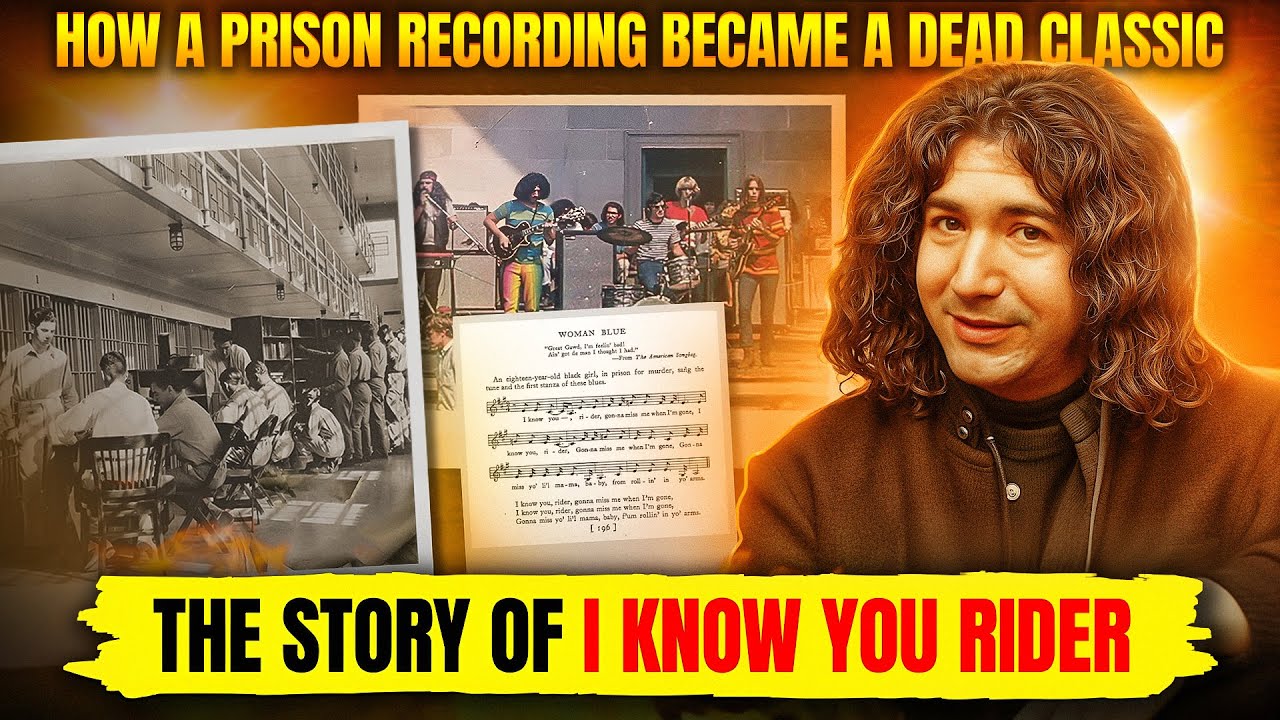
How a 1930s Prison Blues Song Became a Grateful Dead Anthem
The song the Grateful Dead called “I Know You Rider” didn’t start with the Grateful Dead. It didn’t start with anyone whose name history recorded. The earliest known version appears in folk and blues collections from the 1930s — a traditional song, sometimes called “I Know You Rider” or “Woman Blues,” that circulated through the oral tradition of Black American music long before anyone thought to write it down. Prison work songs, field hollers, juke joint standards — the song existed in dozens of variants, none of them definitive, none of them authored.
By the time Jerry Garcia encountered it in the early 1960s, “I Know You Rider” had passed through the folk revival. Joan Baez had performed versions. Various folk and blues artists had recorded it. The song had entered the repertoire of the coffee house and college campus circuit where Garcia was learning his craft — first as a banjo player obsessed with bluegrass and old-time music, then as a guitarist absorbing everything from Reverend Gary Davis to Bill Monroe.
Garcia brought the song into the Dead’s repertoire
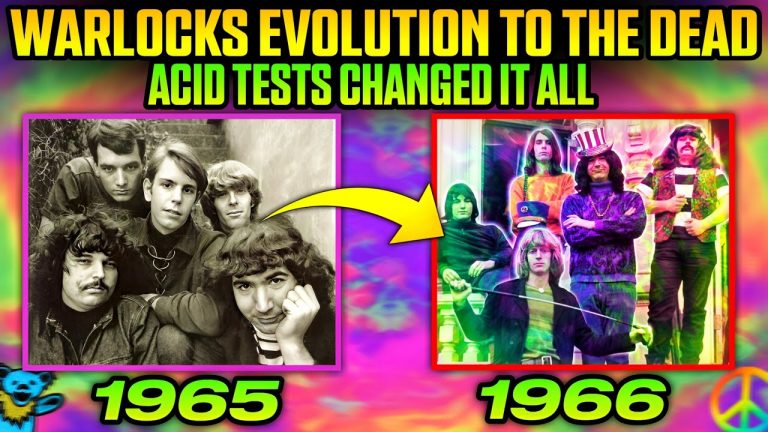
Garcia brought the song into the Dead’s repertoire during the jug band days, before the Warlocks, before LSD, before anything that would later define the Grateful Dead’s identity. It was one of the oldest songs in their catalog — a direct link to the pre-rock, pre-electric tradition that had seeded everything the Dead became. And while the band’s original material grew increasingly complex and experimental, “I Know You Rider” remained simple: a three-chord blues progression, a vocal melody that Garcia could sing in his sleep, and lyrics about longing, travel, and the complicated arithmetic of love on the road.
What made the Dead’s “I Know You Rider” distinctive wasn’t the arrangement — it was the context. Beginning in the late 1960s, the Dead paired “I Know You Rider” with “China Cat Sunflower,” a Garcia-Hunter original from the 1969 album Aoxomoxoa. The pairing became one of the Dead’s signature segues. “China Cat Sunflower” — psychedelic, harmonically adventurous, built on a Garcia riff that slithered between major and minor tonalities — would dissolve into an extended jam, and out of that jam, the unmistakable opening notes of “I Know You Rider” would emerge.
The segue worked because of the contrast. “China Cat Sunflower” is one of the weirdest songs in the Dead’s catalog — Hunter’s lyrics are surreal, almost Dadaist, and the musical structure is deliberately disorienting. “I Know You Rider” is one of the simplest — a straight blues with no ambiguity, no abstraction, just direct emotional expression. Moving from one to the other felt like emerging from a fever dream into clear air. The audience response was reliable and volcanic. The moment the “Rider” riff materialized out of the “China Cat” jam, the crowd would erupt.
The song also served a structural purpose in
The song also served a structural purpose in the Dead’s sets. “I Know You Rider” was almost always a first-set closer or a first-set peak — a moment of communal release before the intermission. Its placement was strategic: after the exploratory passages of “China Cat” and whatever jam preceded it, “Rider” provided resolution. It told the audience that the journey had arrived somewhere, that the improvisational risks had paid off, that the band and the crowd were in the same place. In a band that resisted resolution as a compositional principle, “I Know You Rider” was one of the few songs that consistently delivered catharsis.
The Dead played “I Know You Rider” over five hundred times across thirty years. The song was present at virtually every phase of the band’s evolution — from the Fillmore to the stadiums, from the psychedelic era through the Keith and Donna years through the Brent era and into the final shows. Its persistence in the setlist wasn’t laziness. It was necessity. “I Know You Rider” connected the Dead to the musical tradition they’d emerged from and provided an emotional anchor that their more experimental material couldn’t supply.
There’s something worth noting about what happens when a traditional song — an unauthored, communal artifact — gets absorbed by a specific band and played so many times that the band’s version becomes definitive. The Dead’s “I Know You Rider” isn’t really the traditional song anymore. Garcia’s vocal phrasing, the band’s rhythmic treatment, the way the song emerges from the “China Cat” jam — all of it is specific to the Grateful Dead. They took something that belonged to everyone and made it their own without changing a word.
The full history of the song
The full history of the song — where it came from, how it entered the Dead’s world, and why it became the second half of their most beloved pairing — is.
Subscribe to The Shakedown Archives on YouTube
youtube.com/@theshakedownarchives
The Song in Context
Understanding any Grateful Dead song requires understanding the partnership between Jerry Garcia and Robert Hunter that produced it. Hunter was not a conventional lyricist — he was a poet who happened to write for a rock band. His words drew from American folk traditions, Beat poetry, and a mythological imagination that created characters and landscapes existing outside of any specific time or place. Garcia’s melodies, in turn, had a quality that musicologists have struggled to categorize — folk-informed but jazz-inflected, simple on the surface but harmonically sophisticated beneath.
The songs they created together entered the Grateful Dead’s live repertoire and evolved constantly. A song might be performed hundreds of times over decades, and no two versions were identical. Tempos shifted, arrangements expanded and contracted, and improvisational passages grew or shrank depending on the band’s collective mood on any given night. For Deadheads, the song as recorded in the studio was merely a starting point — a sketch that live performance would elaborate into something far more complex and unpredictable.
The Live Experience
The Grateful Dead’s live performances were fundamentally different from those of any other major rock band. While most acts rehearsed and repeated a fixed setlist, the Dead approached each show as a unique event. Setlists were chosen shortly before the performance, and the transitions between songs — the spaces where improvisation lived — were entirely spontaneous. A concert might last three hours or more, moving through structured songs, extended jams, and passages of pure collective improvisation that could be transcendent or chaotic, sometimes both simultaneously.
This approach demanded extraordinary musical communication. Each member of the band had to listen constantly to every other member, responding in real time to melodic suggestions, rhythmic shifts, and dynamic changes. Garcia often described it as a conversation — not a performance, but a dialogue between musicians who had developed, over years of playing together, an almost telepathic understanding of each other’s musical instincts. When it worked, the result was music that felt inevitable and surprising at the same time.
The Chemical Reality
Drugs were inseparable from the Grateful Dead’s story, but the relationship was more complex than the caricature suggests. LSD was foundational — the Acid Tests were the crucible in which the Dead’s improvisational approach was forged, and psychedelics informed the expansive, boundary-dissolving quality of their music throughout their career. But the drug culture that surrounded the Dead evolved over the decades, and not always in positive directions.
By the 1980s, harder drugs — particularly cocaine and heroin — had infiltrated both the band and their community. Garcia’s well-documented struggles with heroin addiction took a devastating toll on his health and his playing. The parking lot scene, once dominated by psychedelics, increasingly included dealers selling substances that were addictive and dangerous. The Dead’s open, tolerant culture — which had been a strength in the 1960s and 1970s — became a liability when that openness was exploited by people whose relationship with drugs was destructive rather than exploratory.
Related Articles
- The Messy Truth About Keith Godchaux Leaving the Grateful Dead
- From Jug Bands to Grateful Dead: The Folk and Bluegrass Roots of American Rock
- Altamont 1969: How the Grateful Dead Processed America’s Darkest Moment Through Three Apocalyptic Songs
The Shakedown Archives publishes new research on Grateful Dead history each week. If you enjoyed this essay, you can subscribe to the companion YouTube channel below.
Subscribe on YouTube