How Woodstock’s Worst Set Created the Grateful Dead’s Empire
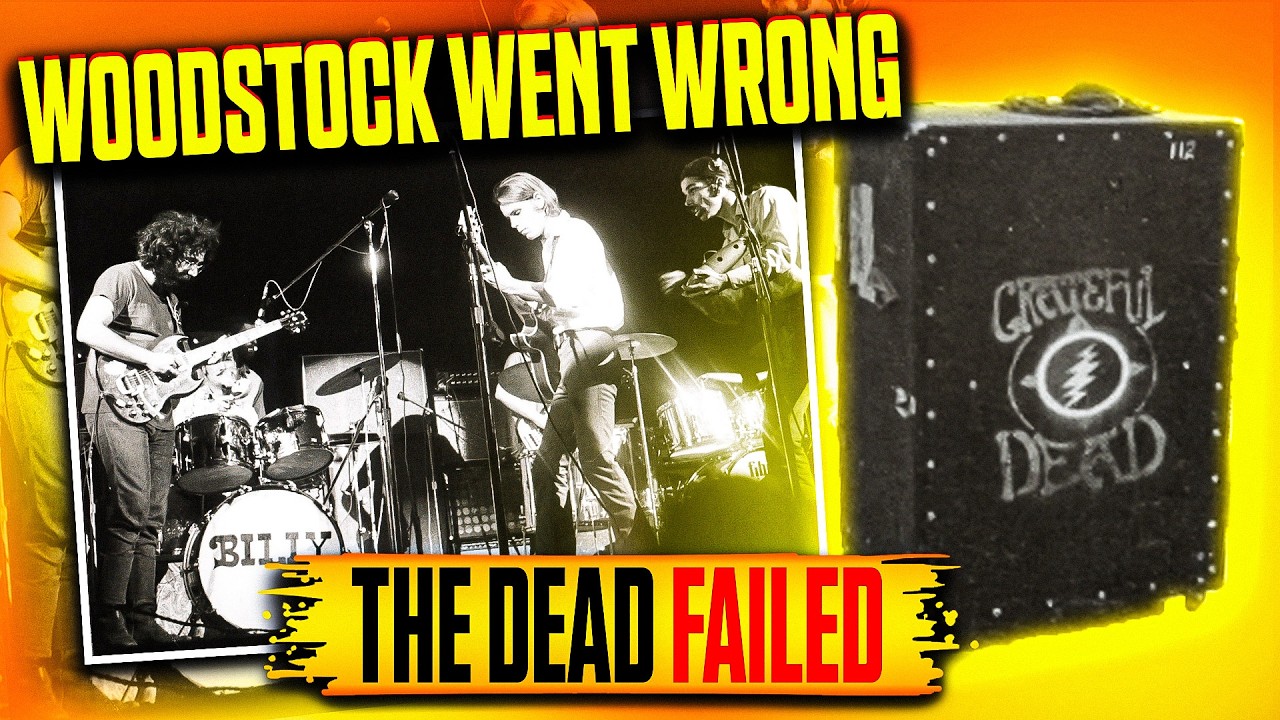
On August 16, 1969, the Grateful Dead took the stage at Woodstock and delivered what is widely considered one of the worst performances in the festival’s history. Equipment malfunctions, electrical shocks, and a rain-soaked stage turned their set into a legendary disaster. But what happened next would define the band’s entire future.
While nearly every other major act at Woodstock parlayed the festival into mainstream fame through the iconic concert film and triple album, the Grateful Dead made an extraordinary decision: they refused to be included. No footage in the movie, no tracks on the soundtrack. In an era when every band was chasing the exposure that Woodstock offered, the Dead walked away from it entirely.
That refusal forced the Dead to build something no other band had ever attempted — a completely self-sustaining ecosystem. Without the Woodstock publicity machine, they created their own recording infrastructure, their own ticketing system, their own distribution network, and cultivated a fan community that would become the model for artist-fan relationships in the modern era. The worst set of their career became the foundation for the greatest grassroots empire in rock history.
The Setup
By August 1969, the Grateful Dead were already veterans of the San Francisco psychedelic scene. They had played the Fillmore, the Avalon Ballroom, and hundreds of smaller venues. They had survived the Acid Tests, recorded three studio albums, and built a devoted following that traveled to see them perform. When they arrived at Max Yasgur’s farm in Bethel, New York, they expected to play a festival. What they got was something no one had planned for.
Woodstock was chaos. The crowd — estimated at 400,000 — was far larger than organizers had anticipated. The infrastructure was overwhelmed. Rain turned the site into a mud pit. The schedule ran hours behind. By the time the Dead took the stage on Saturday evening, August 16th, the logistics of the festival had descended into a kind of benevolent anarchy that should have suited a band built on improvisation.
What Went Wrong
The Dead’s set was plagued by technical problems from the start. The stage was wet, and band members reported receiving electrical shocks from their microphones and instruments — a genuine safety hazard that made it difficult to focus on the music. The sound system, adequate for a normal concert, was hopelessly inadequate for a crowd that stretched to the horizon. The band couldn’t hear themselves clearly, which is fatal for a group whose music depends on real-time listening and response.
The setlist itself was solid — “St. Stephen,” “Mama Tried,” “Dark Star,” “Turn On Your Lovelight” — but the performances were tentative and disconnected. Garcia later described the set as one of the worst they had ever played. The band’s improvisational language required a feedback loop between musicians and audience that the Woodstock conditions made impossible. They were playing into a void, unable to feel the crowd’s energy or calibrate their playing to the moment.
The Empire That Followed
Here is the paradox of the Dead’s Woodstock performance: it was terrible, and it changed everything. The festival was filmed and recorded, and while the Dead’s performance was poor enough that they asked to be excluded from the Woodstock film (their music appears only briefly in the director’s cut), their presence at the festival placed them in the cultural narrative of the counterculture’s defining moment.
More importantly, Woodstock taught the Dead what they didn’t want to be. They didn’t want to be a festival band, dependent on promoters and shared stages and sound systems they couldn’t control. They wanted to be self-contained — to own their own sound, control their own environment, and create their own events. This realization led directly to the development of the Wall of Sound, the Dead’s legendary custom PA system that gave them complete control over their live sound. It led to their preference for multi-night runs at familiar venues over one-off festival appearances. It led to the entire Grateful Dead touring model that would sustain them for the next quarter century.
The worst set at Woodstock created the Grateful Dead’s empire because it showed them exactly what they needed to build. Every decision they made after August 1969 — the sound system, the touring schedule, the relationship with their audience, the taping policy — was informed by the experience of standing on a wet stage in front of half a million people and failing. Failure, for the Grateful Dead, was always the beginning of something better.
The Live Experience
The Grateful Dead’s live performances were fundamentally different from those of any other major rock band. While most acts rehearsed and repeated a fixed setlist, the Dead approached each show as a unique event. Setlists were chosen shortly before the performance, and the transitions between songs — the spaces where improvisation lived — were entirely spontaneous. A concert might last three hours or more, moving through structured songs, extended jams, and passages of pure collective improvisation that could be transcendent or chaotic, sometimes both simultaneously.
This approach demanded extraordinary musical communication. Each member of the band had to listen constantly to every other member, responding in real time to melodic suggestions, rhythmic shifts, and dynamic changes. Garcia often described it as a conversation — not a performance, but a dialogue between musicians who had developed, over years of playing together, an almost telepathic understanding of each other’s musical instincts. When it worked, the result was music that felt inevitable and surprising at the same time.
The Deadhead Phenomenon
The community that formed around the Grateful Dead was unprecedented in popular music. Deadheads didn’t just attend concerts — they built a culture. Tape trading networks distributed live recordings across the country before the internet existed, creating a shared archive of performances that fans studied with scholarly intensity. The parking lot scene at Dead shows became a self-sustaining economy of food vendors, craft sellers, and itinerant entrepreneurs who followed the band from city to city.
What distinguished Deadhead culture from ordinary fandom was its participatory nature. Deadheads didn’t consume the Grateful Dead’s music passively — they actively shaped the experience. Their energy in the audience influenced the band’s playing. Their tape trading preserved and disseminated the music. Their economic activity in the parking lots created the ecosystem that made extended touring financially viable. The relationship between the Dead and their audience was genuinely symbiotic, each sustaining and inspiring the other across three decades of continuous performance.
The Chemical Reality
Drugs were inseparable from the Grateful Dead’s story, but the relationship was more complex than the caricature suggests. LSD was foundational — the Acid Tests were the crucible in which the Dead’s improvisational approach was forged, and psychedelics informed the expansive, boundary-dissolving quality of their music throughout their career. But the drug culture that surrounded the Dead evolved over the decades, and not always in positive directions.
By the 1980s, harder drugs — particularly cocaine and heroin — had infiltrated both the band and their community. Garcia’s well-documented struggles with heroin addiction took a devastating toll on his health and his playing. The parking lot scene, once dominated by psychedelics, increasingly included dealers selling substances that were addictive and dangerous. The Dead’s open, tolerant culture — which had been a strength in the 1960s and 1970s — became a liability when that openness was exploited by people whose relationship with drugs was destructive rather than exploratory.
Related Articles
The Shakedown Archives publishes new research on Grateful Dead history each week. If you enjoyed this essay, you can subscribe to the companion YouTube channel below.
Subscribe on YouTube