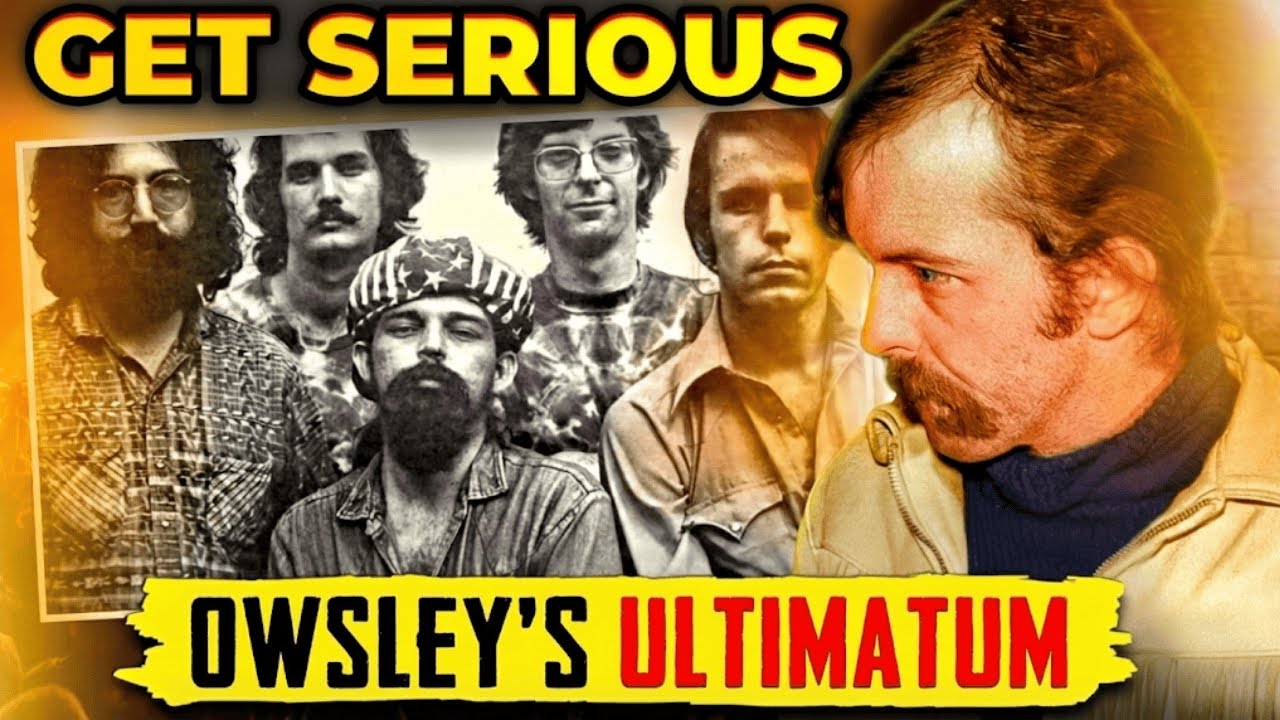
Owsley’s Ultimatum: The Grateful Dead’s 1970 Breaking Point
By early 1970, the Grateful Dead were falling apart. The communal utopia of 710 Ashbury was long gone. Pigpen was drinking himself into the hospital. Mickey Hart’s father had stolen the band’s money and vanished. The group was broke, directionless, and playing shows that alternated between brilliant and disastrous with no predictable pattern. And Owsley “Bear” Stanley — the LSD manufacturer, sound engineer, and self-appointed quality controller who’d invested more money, time, and obsessive energy into the Dead than any single person outside the band — decided he’d had enough.
The ultimatum wasn’t a polite conversation. Owsley confronted the band directly, laying out what he saw as a crisis of standards. The Dead’s live sound was inconsistent. Their performances were sloppy. Pigpen, the original frontman, was increasingly unable to contribute musically as the band moved deeper into psychedelic and jazz-influenced improvisation. The equipment — which Owsley had personally funded and helped design — wasn’t being maintained to his specifications. The organization, such as it was, had no discipline, no accountability, and no plan.
Owsley’s position was that the Grateful Dead owed their audience — and owed him — a standard of excellence that they were failing to meet. He’d spent tens of thousands of dollars building the Dead’s sound system from scratch. He’d insisted on recording every show at a time when nobody else thought preservation mattered. He’d moved into the band’s communal house and treated the Dead’s music as a personal mission. And now, watching the band stumble through performances while Pigpen stood at the side of the stage with nothing to play and Garcia argued with the sound crew, Owsley felt betrayed.
The confrontation exposed fault lines that had been building for years. Owsley and Garcia had always had a complicated relationship. Garcia respected Owsley’s intelligence and acknowledged the material support that had been essential to the Dead’s early survival. But Garcia resisted being told what to do by anyone, and Owsley’s insistence on control — over the PA mix, over the stage volume, over the band’s musical direction — chafed against Garcia’s deep-rooted aversion to authority.
The screaming match that reportedly occurred between Garcia and Owsley during this period has been described by multiple witnesses. Garcia, normally the most even-tempered member of the band, erupted. The specifics vary depending on the source, but the core conflict was clear: Owsley wanted the Dead to operate like a precision instrument, with every element optimized and every performer held to a measurable standard. Garcia wanted the Dead to operate like an organism, with room for failure, for drift, for the kind of messy, undirected exploration that occasionally produced transcendence. Owsley’s vision was engineering. Garcia’s vision was ecology. They were fundamentally incompatible.
The Pigpen problem was at the center of the dispute. Owsley had never been comfortable with Pigpen’s role in the band. McKernan’s blues-based approach didn’t fit Owsley’s vision of the Dead as a vehicle for consciousness expansion through sonic precision. Pigpen’s organ work was rudimentary by the standards Owsley wanted to enforce. His stage presence — charismatic, unpredictable, rooted in a musical tradition that predated psychedelia — represented exactly the kind of imprecision that drove Owsley crazy.
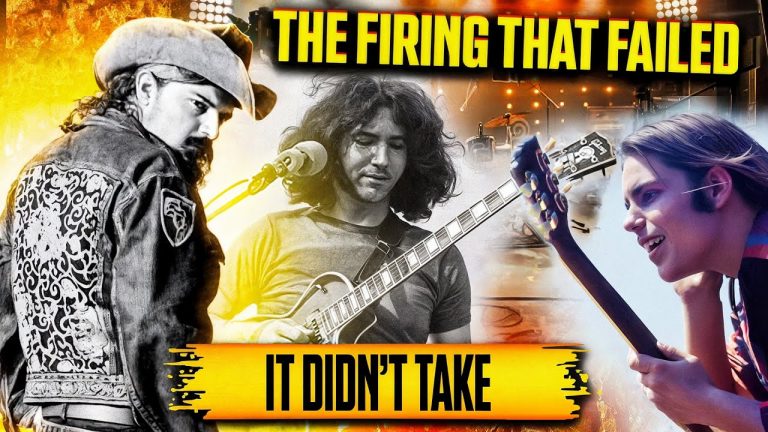
But Pigpen was a founding member. He was family. And Garcia, for all his frustration with McKernan’s musical limitations, wasn’t willing to sacrifice a founding member to satisfy Owsley’s demand for optimization. The Dead’s communal structure — their refusal to operate as a hierarchy — made it impossible to fire Pigpen the way a normal band would fire an underperforming musician. They’d already tried once, in 1968, and it hadn’t stuck.
The ultimatum didn’t result in Owsley leaving permanently. He remained involved with the Dead’s sound operations, and his influence continued to shape the band’s approach to live audio for years. The Wall of Sound, the legendary 604-speaker PA system that debuted in 1974, was the ultimate expression of Owsley’s vision — a system so precise that it eliminated the distinction between what the band heard onstage and what the audience heard in the venue. But the relationship between Owsley and the band was permanently altered by the 1970 confrontation. The unconditional patronage was over. Owsley remained an ally, but no longer a member of the household.
The 1970 crisis is significant because it forced the Dead to choose what kind of band they wanted to be. Owsley’s model — disciplined, optimized, held to external standards — would have produced a different Grateful Dead. Probably a more consistent one. Possibly a less interesting one. Garcia’s model — organic, unpredictable, allergic to quality control — produced the band that Deadheads followed for thirty years, with all the brilliant nights and terrible nights that model implies.
The full story of the ultimatum, the confrontation, and what it cost both sides is in the documentary above.
Subscribe to The Shakedown Archives on YouTube
youtube.com/@theshakedownarchives