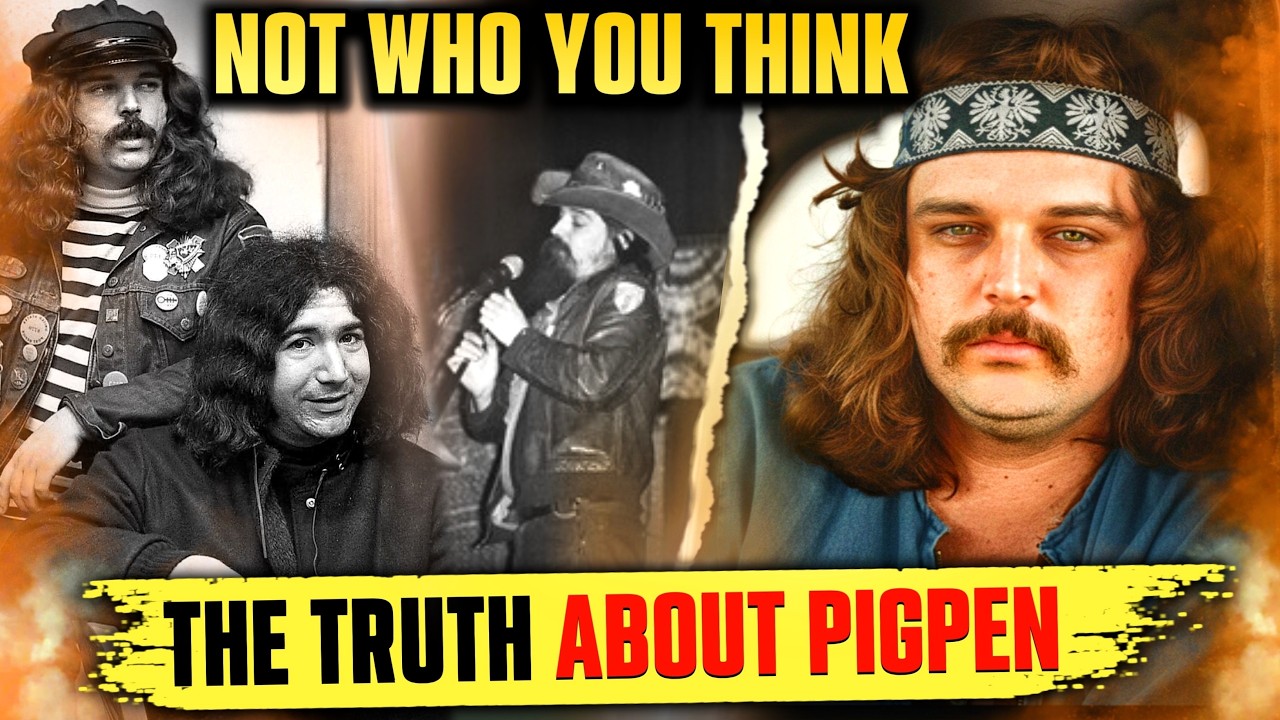
The Myth of Pigpen: Ron McKernan Held the Grateful Dead Together
The standard Pigpen narrative goes like this: Ron McKernan was the Grateful Dead’s original frontman, a blues-obsessed singer and organist who couldn’t keep up when the band went psychedelic. As Garcia, Lesh, and the others pushed into experimental territory — twenty-minute improvisations, modal explorations, atonal explorations of inner space — Pigpen stood at the side of the stage with nothing to play. He was the relic, the holdover from the jug band days, and the psychedelic revolution left him behind. Then he drank himself to death at twenty-seven.
That narrative is loud. It’s clean. And it misses almost everything that mattered about Ron McKernan.
Start with the founding. The Grateful Dead existed because of Pigpen. Not Garcia, not Lesh, not Weir. Pigpen. It was McKernan who connected the future band members at Dana Morgan’s music store in Palo Alto. It was Pigpen who had the record collection — Lightnin’ Hopkins, Jimmy Reed, Bobby Bland, Elmore James — that gave the group its early repertoire. It was Pigpen who fronted Mother McCree’s Uptown Jug Champions, the jug band that preceded the Warlocks and then the Dead. Without McKernan’s obsession with Black American music and his willingness to perform it with a conviction that bordered on possession, there is no band.
Pigpen wasn’t a bystander during the psychedelic era, either. The myth says he stood around uselessly while the Dead explored cosmic improvisation. The reality is more nuanced. Pigpen’s organ work on the 1966-1968 recordings provides the harmonic bed that Garcia’s lead lines float over. Listen to the Fillmore West performances from early 1969 — Pigpen’s organ sustains the tonal center while the rest of the band orbits around it. He’s not soloing. He’s not showing off. He’s holding the music together. The fact that his contribution was structural rather than flashy made it easy to overlook, but remove Pigpen from those recordings and the whole thing collapses.
Then there was the showmanship. Whatever the Dead lost in improvisational range by having a blues singer onstage, they gained in audience connection. Pigpen could work a crowd in a way that Garcia — introverted, uncomfortable with performance, happiest when he forgot the audience was there — never could. McKernan’s extended rap on “Turn On Your Lovelight” could run for thirty, forty, fifty minutes, with Pigpen improvising lyrics, engaging with individuals in the audience, building and releasing energy like a tent-revival preacher. It wasn’t psychedelic music. It was something older, something rooted in the call-and-response tradition of the Black church and the blues juke joint. And it kept audiences locked in during a period when the Dead’s extended jams could lose people who hadn’t taken acid.
The drinking mythology also requires correction. Yes, Pigpen drank. Heavily. But the characterization of him as a sloppy drunk who stumbled through performances distorts the timeline. Through 1970, McKernan was functional and often brilliant. His performances on the 1969 and early 1970 live recordings are commanding. The deterioration was visible by 1971, and by 1972, his health had become a genuine crisis — the gastrointestinal problems that would kill him were already manifesting as weight loss, fatigue, and pain. But the drinking narrative collapses a seven-year career into its worst months and treats the decline as the whole story.
There’s also the question of what Pigpen meant to the Dead’s identity. The Grateful Dead’s public image was Garcia — the bearded, avuncular figure who became the face of the counterculture whether he wanted to or not. But within the band’s community, Pigpen was the soul. He was the one who lived the blues he sang. He didn’t come from a middle-class Palo Alto family like Garcia and Lesh. His father was an R&B DJ, and Ron grew up surrounded by music that was raw, emotionally direct, and unconcerned with the intellectual abstractions that fascinated the rest of the band. Pigpen grounded the Dead. When the improvisations drifted too far into space, McKernan could pull the band back to earth with a blues turnaround that reminded everyone where the music came from.
Pigpen’s last show was June 17, 1972, at the Hollywood Bowl. He died on March 8, 1973, of a gastrointestinal hemorrhage caused by years of alcohol abuse. He was twenty-seven — joining the grim statistical cluster of rock musicians who died at that age. The band played “He’s Gone” at their next show. The song had been written about Lenny Hart’s embezzlement, but from that night forward, it belonged to Pigpen.
The myth says Pigpen was the one who got left behind. The truth is that the Grateful Dead never fully replaced what he provided — the blues authority, the audience connection, the grounding force that kept experimental music tethered to emotional reality. The full case for Pigpen’s real importance is in the documentary above.
Subscribe to The Shakedown Archives on YouTube
youtube.com/@theshakedownarchives