How the Grateful Dead Made Bill Walton an NBA Champion
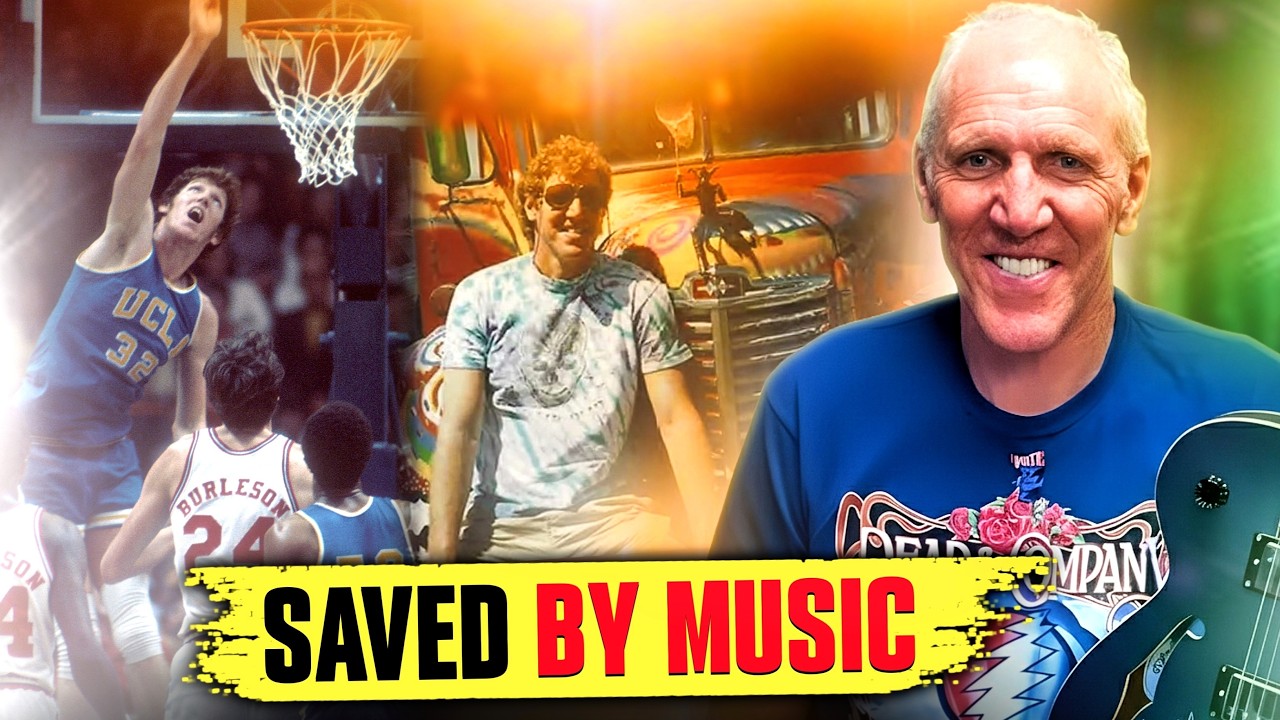
In 1967, a lanky teenager named Bill Walton attended his first Grateful Dead concert and experienced something that would shape the rest of his life. The connection between the NBA Hall of Famer and the Grateful Dead wasn’t just fandom — it was a philosophy that Walton credits with making him a champion.
Walton’s basketball career was defined by devastating injuries that threatened to end it multiple times. Through chronic foot problems, knee surgeries, and a broken spine, the Dead’s music became his refuge and his motivation. He attended over 850 shows across his lifetime, often arriving on crutches or in a wheelchair, finding in the music a transcendence that physical pain couldn’t touch.
But the connection runs deeper than mere inspiration. Walton has spoken extensively about how the Dead’s improvisational approach — the way five musicians listen to each other, adapt in real time, and create something greater than the sum of their parts — directly influenced his understanding of team basketball. The principles of collective improvisation he learned from watching Garcia, Weir, and Lesh translate directly to the court, where his championship teams at UCLA and Portland played a style of basketball that was, in essence, jazz.
The First Show
Bill Walton was fourteen years old when he attended his first Grateful Dead concert in 1967 at a small venue in San Diego. The experience didn’t just introduce him to a band — it introduced him to a philosophy of collective improvisation that would shape his understanding of basketball, teamwork, and life itself. Walton would go on to attend over 850 Grateful Dead shows, making him one of the most devoted and visible Deadheads in the community’s history.
What connected basketball and the Grateful Dead for Walton was the concept of flow. In both, individual virtuosity mattered less than the ability to listen, respond, and surrender to a collective rhythm. A great Dead jam worked the same way as a great fast break — each participant reading the others, making split-second decisions, creating something that no individual could produce alone.
The Portland Trail Blazers Championship
Walton’s 1977 NBA Championship with the Portland Trail Blazers is often cited as one of the purest team achievements in basketball history. The Blazers didn’t have the most talented roster in the league — they had Bill Walton, a transcendent center, surrounded by complementary players who understood their roles. What they had was chemistry, an almost telepathic understanding of where each player would be and what they would do.
Walton credited the Grateful Dead directly. In interviews spanning decades, he explained that attending Dead shows taught him how to be part of something larger than himself. He learned to listen — really listen — to what was happening around him and respond in real time rather than imposing a predetermined plan. On the basketball court, this translated into an ability to read the flow of a game and make decisions that elevated everyone around him.
After Basketball
The connection between Walton and the Dead deepened after his playing career ended. He became a regular presence at shows, often visible in the crowd — at six feet eleven inches, he was hard to miss. He developed personal friendships with band members, particularly Mickey Hart and Bob Weir. When Walton was inducted into the Basketball Hall of Fame in 1993, he wore a tie-dyed shirt under his suit.
Walton’s story matters to the Grateful Dead’s legacy because it demonstrates how the band’s influence extended far beyond music. The Dead didn’t just create songs — they created a model for collaborative creativity that resonated with athletes, technologists, entrepreneurs, and anyone who had experienced the transcendence of being part of a group that achieved more than the sum of its parts. Walton understood this intuitively. He heard in the Dead’s music the same thing he felt on the basketball court: the sublime possibility of human beings in perfect sync.
The Song in Context
Understanding any Grateful Dead song requires understanding the partnership between Jerry Garcia and Robert Hunter that produced it. Hunter was not a conventional lyricist — he was a poet who happened to write for a rock band. His words drew from American folk traditions, Beat poetry, and a mythological imagination that created characters and landscapes existing outside of any specific time or place. Garcia’s melodies, in turn, had a quality that musicologists have struggled to categorize — folk-informed but jazz-inflected, simple on the surface but harmonically sophisticated beneath.
The songs they created together entered the Grateful Dead’s live repertoire and evolved constantly. A song might be performed hundreds of times over decades, and no two versions were identical. Tempos shifted, arrangements expanded and contracted, and improvisational passages grew or shrank depending on the band’s collective mood on any given night. For Deadheads, the song as recorded in the studio was merely a starting point — a sketch that live performance would elaborate into something far more complex and unpredictable.
The Live Experience
The Grateful Dead’s live performances were fundamentally different from those of any other major rock band. While most acts rehearsed and repeated a fixed setlist, the Dead approached each show as a unique event. Setlists were chosen shortly before the performance, and the transitions between songs — the spaces where improvisation lived — were entirely spontaneous. A concert might last three hours or more, moving through structured songs, extended jams, and passages of pure collective improvisation that could be transcendent or chaotic, sometimes both simultaneously.
This approach demanded extraordinary musical communication. Each member of the band had to listen constantly to every other member, responding in real time to melodic suggestions, rhythmic shifts, and dynamic changes. Garcia often described it as a conversation — not a performance, but a dialogue between musicians who had developed, over years of playing together, an almost telepathic understanding of each other’s musical instincts. When it worked, the result was music that felt inevitable and surprising at the same time.
The Deadhead Phenomenon
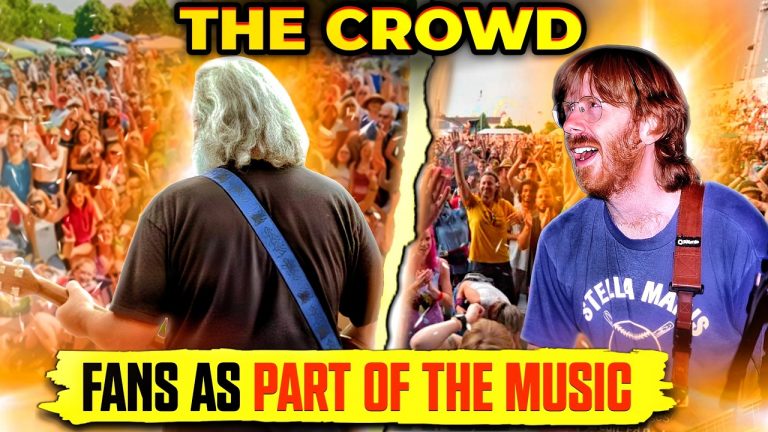
The community that formed around the Grateful Dead was unprecedented in popular music. Deadheads didn’t just attend concerts — they built a culture. Tape trading networks distributed live recordings across the country before the internet existed, creating a shared archive of performances that fans studied with scholarly intensity. The parking lot scene at Dead shows became a self-sustaining economy of food vendors, craft sellers, and itinerant entrepreneurs who followed the band from city to city.
What distinguished Deadhead culture from ordinary fandom was its participatory nature. Deadheads didn’t consume the Grateful Dead’s music passively — they actively shaped the experience. Their energy in the audience influenced the band’s playing. Their tape trading preserved and disseminated the music. Their economic activity in the parking lots created the ecosystem that made extended touring financially viable. The relationship between the Dead and their audience was genuinely symbiotic, each sustaining and inspiring the other across three decades of continuous performance.
Related Articles
- Why The Dead Took 7 Years To Rise Again
- Warren Haynes Had to be Jerry Garcia and Duane Allman — In the Same Year
- Bob Weir Has Died. What Happens to the Grateful Dead Now?
The Shakedown Archives publishes new research on Grateful Dead history each week. If you enjoyed this essay, you can subscribe to the companion YouTube channel below.
Subscribe on YouTube