Why Robert Hunter Left the Road: The Poet Who Wrote the Dead Without Touring
Robert Hunter is everywhere and nowhere in Grateful Dead history. His lyrics haunt the band’s greatest songs—”Truckin’,” “Dark Star,” “Ripple,” “Mississippi Half-Step,” and dozens of standards that defined the Dead’s sound. Yet if you attended a Grateful Dead show in 1973, you wouldn’t see him onstage. If you went in 1985 or 1995, he still wouldn’t be there. This absence is one of rock music’s most curious paradoxes: the architect of some of the Dead’s most essential material actively avoided the touring lifestyle that made those songs legendary.
Robert Hunter wasn’t always a man of solitude. In the spring of 1972, as the Grateful Dead prepared for their legendary European tour, Hunter actually did the unthinkable—he joined them. He was credited as a band member, listed on materials, and expected to be part of the rolling circus that was the Dead’s touring operation. For a brief moment, Hunter stepped into the arena. The experience would change how he worked forever.
Europe ’72 was simultaneously one of the greatest and most chaotic tours the Dead ever undertook. The band was in peak form musically, delivering transcendent performances night after night. But off-stage, the scene was bedlam. Buses filled with band members, crew, family, and hangers-on careened across the European continent. Drugs flowed freely—acid, cocaine, heroin, whatever was available. The culture was one of hedonism and excess, with authority figures nonexistent and consequences distant. Food fights erupted on the tour buses. Arguments and drama consumed downtime. The lifestyle was intoxicating in the literal sense, with decisions made in altered states and boundaries constantly tested.
Hunter, however, was different from the rock and roll archetype. He was a poet first and a musician second. He’d studied literature seriously and carried himself with an intellectual bearing that set him apart from the free-spirited debauchery surrounding him. While others were lost in the moment, Hunter observed. While others celebrated the chaos, he questioned it. The contrast between his temperament and the touring lifestyle became increasingly apparent.
In response to what he witnessed, Hunter took an unprecedented step: he wrote down his vision for how people should conduct themselves on the road. He created what became known as his “10 Commandments”—a manifesto of proper behavior for touring musicians and crew. It was a remarkable document, reflecting Hunter’s values around sobriety, respect, professionalism, and personal conduct. The commandments represented his blueprint for how a band could tour responsibly, maintaining both artistic integrity and human dignity.
There was one major problem: nobody followed them.
The commandments were essentially ignored or dismissed as the idealistic musings of a poet who didn’t understand rock and roll culture. The partying continued. The food fights persisted. The drugs remained omnipresent. The very culture Hunter hoped to reform seemed impervious to his attempt at guidance. After Europe ’72, Hunter faced a choice: continue touring and compromise his values and mental health, or withdraw and find another way to contribute to the Dead’s music.
He chose to leave the road.
But this wasn’t a rejection of songwriting or collaboration—it was a rejection of touring as a necessary component of artistic output. Hunter recognized something that most musicians of his era didn’t: that proximity to a band didn’t require physical presence. Technology and mail could bridge distances. A lyricist didn’t need to be in the studio every moment or on the road every night. What mattered was quality of words and compatibility of vision.
So Hunter retreated to his home—first in San Francisco, later in other locations—and established a work pattern that would define his entire career with the Dead. He would write lyrics, often inspired by poetry he was reading, philosophical concepts he was exploring, or melodies Jerry Garcia would send his way. Garcia would send Hunter tapes of instrumental compositions or chord progressions, and Hunter would craft words to match. This remote collaboration became the deadlock that drove some of the greatest songwriting partnerships in rock history.
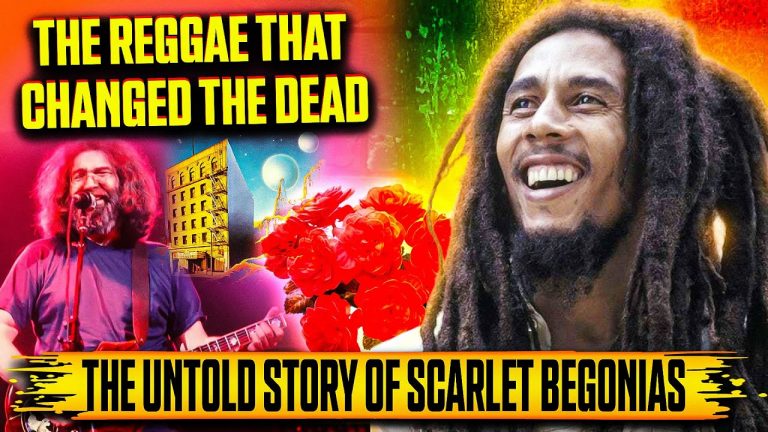
From his voluntary exile, Hunter produced an astonishing catalog. “Dark Star” emerged from this arrangement. “Ripple” did as well. “Eyes of the World,” “Cassidy,” “Scarlet Begonias,” “Beat It Down,” “Ship of Fools”—the list extends for pages. Songs that became the backbone of Dead concerts and fan devotion were written by a man who wasn’t at rehearsals, wasn’t on tour buses, and wasn’t part of the daily scene. Hunter proved that a great lyricist’s power came from what was written on a page, not from presence in a room.
This arrangement actually preserved both Hunter’s sanity and his creativity. Had he continued touring, he likely would have either burned out entirely or, worse, been consumed by the lifestyle in ways that diminished his output. Instead, by maintaining boundaries and limiting his involvement to the essential work—songwriting—Hunter created a sustainable model for artistic contribution. He showed that a band could have a primary lyricist who functioned almost like a contractor or partner, delivering exceptional work without the personal cost of constant touring.
Hunter became one of rock and roll’s greatest invisible figures. Concert audiences didn’t know what he looked like. People who went to hundreds of Dead shows might never have seen him. Yet his words were inescapable. They were sung thousands of times, heard by hundreds of thousands of fans, recorded and released on albums that defined generations. His absence from the stage paradoxically made his presence in the band’s music more pure and more powerful.
The lesson of Robert Hunter’s exit from touring is deeper than simple preference or personality quirk. It speaks to the importance of understanding where your genius lies and protecting the conditions necessary for that genius to flourish. For Hunter, that meant solitude. It meant distance from excess. It meant the freedom to be a poet rather than a rock star. While that choice isolated him from the camaraderie of touring, it created something more lasting: a body of work so essential that the Grateful Dead would have been a completely different band without it.
Hunter’s withdrawal from the road in 1972 was the beginning of his greatest artistic contribution to the Dead—a contribution that, by its very nature, required his absence from the stage and the touring circus. In choosing not to tour, he chose to write unforgettable songs. It was the best decision he never made on a tour bus.